
Loading, please wait...


LOT 0916
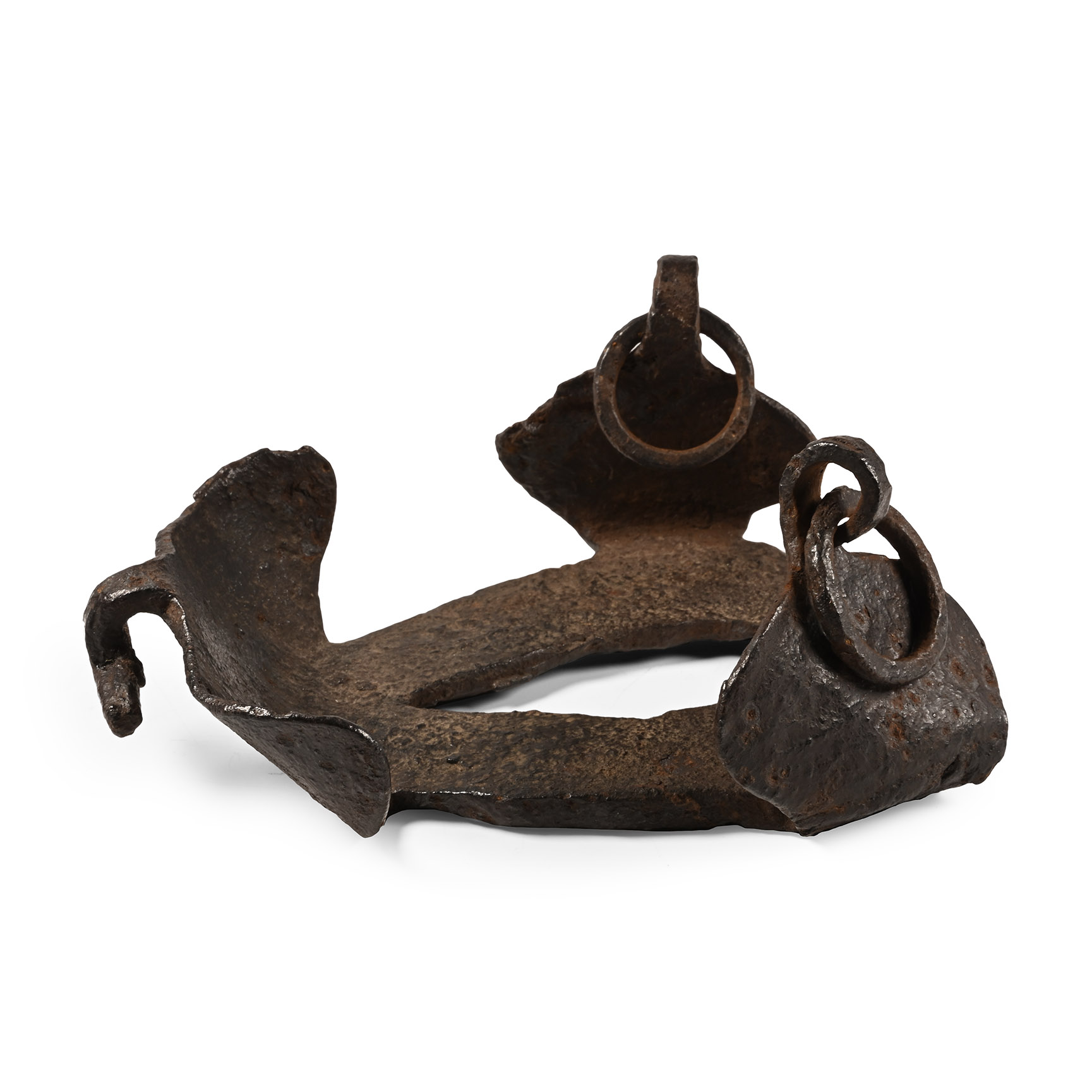
Iron 'Hippo Sandal' Military Horse Shoe
1ST-4TH CENTURY A.D.
6 in. (363 grams, 15 cm).
Iron shoe with lateral curved plates with attachment rings rear panel with bar also for attachment. [No Reserve]
ProvenanceFrom the collection of the famous author, writer and speaker, Gordon Bailey, Essex, UK; formed since 1968.
LiteratureCf. Junkelmann, M., Die Reiter Roms, Teil III: Zubehor, Reitweise Bewaffnung, Mainz, 1992, fig.100-102, for the type (type I of Junkelmann's classification).
FootnotesHipposandals (soleae ferreae) were used on horses with injured hooves, a sort of equine orthopaedic shoe used by the mulomedicus, i.e. a Roman military veterinarian. Another important function was that to protect the hooves of the horse from injuries and damages from hard objects. The hippo sandal of type 1 was formed from a sub-oval plate which tapered towards the front and rear with projections at the front, back and on either side. The heel was upturned at about 45 degrees and flared outwards. It would have terminated with a downward facing hook, now missing. The base of the sole was flat.
CONDITIONTimeLine Auctions follows a vetting process to ensure the authenticity and legality of all items, reinforcing our commitment to integrity and responsible trading. Each antiquity, antique, and coin lot undergoes thorough examination by a vetting committee of at least ten external specialists, professional trade association members, scientists, and archaeologists: Our Vetting Process
AUCTIONS:
TimeLine is a leading auction house specialising in antiquities, ancient art, collectables, natural history, coins, medals, and books. Our auctions offer museums, collectors, historians, and enthusiasts the opportunity to acquire unique and historically significant pieces.
-
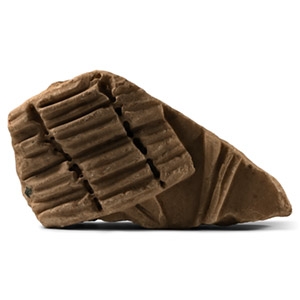
Roman Marble Capital Fragment
5th century A.D.Estimate: £200 - 300 (+bp*)
Opening Bid: £100
Sub-triangular in plan with arched segmented panel with ribbed surface, raised spandrel detail. 6.2 kg, 31 cm
Private collection, England. -
.jpg)
Roman Votive Terracotta Hand Group
Circa 1st century A.D.Sold for (Inc. bp): £124
Each moulded with finger detailing to one face; or from children's dolls. 23 grams total, 34-53 mm
Ex German art market, 2000s. Acquired from an EU collector living in London. From the collection of Surrey, UK, gentleman. -
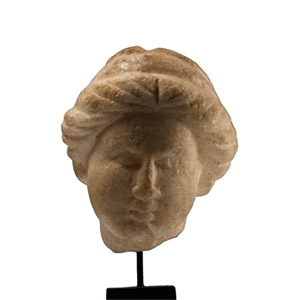
Marble Head of a Woman
Roman, 2nd-3rd century A.D. or laterSold for (Inc. bp): £182
Carved in the round in good quality marble, with plump cheeks, a flat nose and lentoid sockets at the eyes, the hair modelled in a chignon, small socket at the right ear; mounted on a custom-made stand. 230 grams total, 12 cm including stand
London art market, 1992.
The eyes have been prepared to accept silver or other inserts, and the ear likewise would have been provided with a model earring.
