
Loading, please wait...
LOT 0311
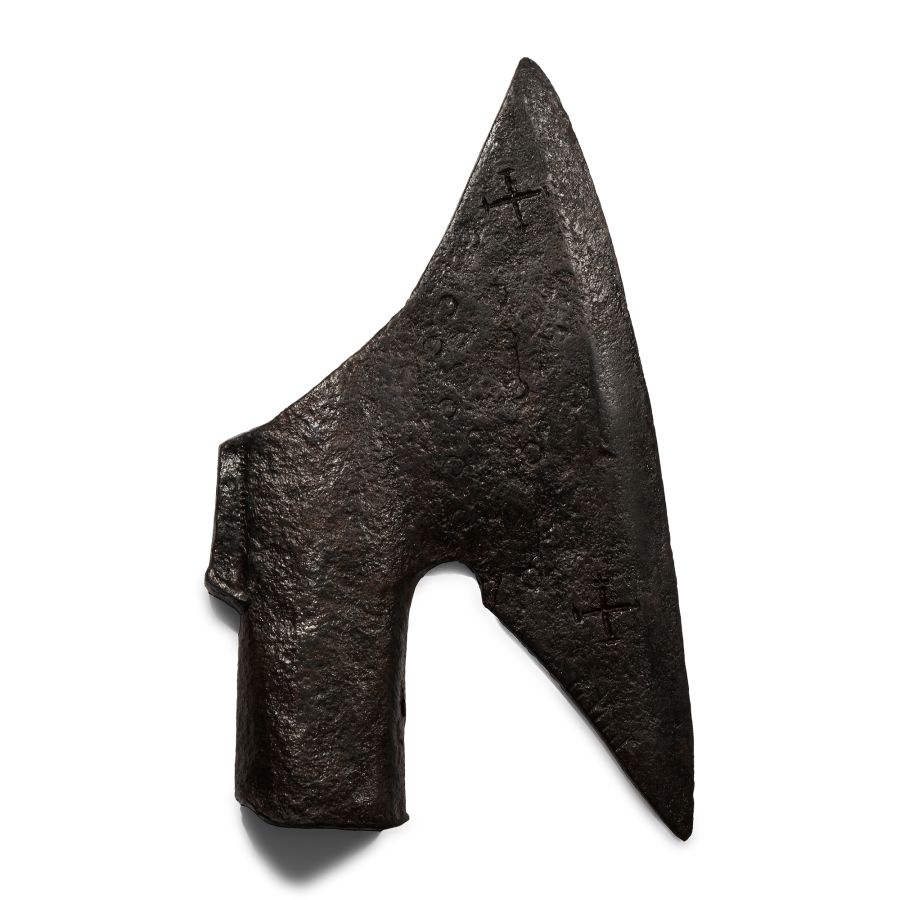
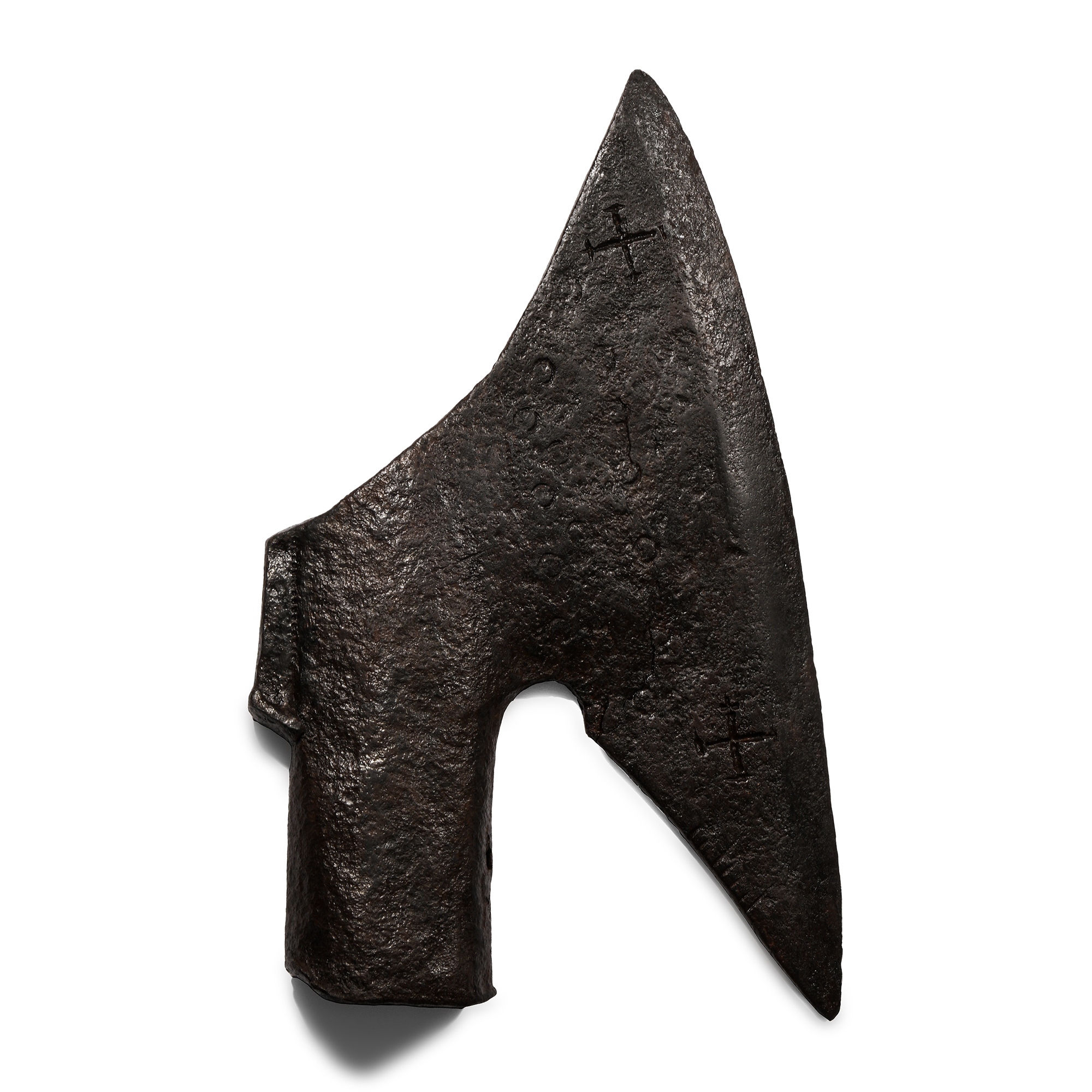
Iron Executioner's Axehead
CIRCA 16TH-17TH CENTURY A.D.
13 in. (2.8 kg, 33 cm high).
With substantial D-section socket and flange to the rear at the mouth; trapezoidal blade offset to one side, with punched cross crosslet motifs to one face. [No Reserve]
ProvenanceFrom the private collection of a London gentleman, from his grandfather's collection formed before the early 1970s.
CONDITIONTimeLine Auctions follows a vetting process to ensure the authenticity and legality of all items, reinforcing our commitment to integrity and responsible trading. Each antiquity, antique, and coin lot undergoes thorough examination by a vetting committee of at least ten external specialists, professional trade association members, scientists, and archaeologists: Our Vetting Process
AUCTIONS:
TimeLine is a leading auction house specialising in antiquities, ancient art, collectables, natural history, coins, medals, and books. Our auctions offer museums, collectors, historians, and enthusiasts the opportunity to acquire unique and historically significant pieces.
-
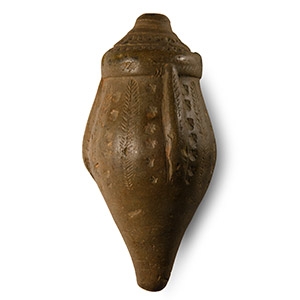
Turco-Mongol Ceramic Fire Bomb or Hand Grenade
13th-15th century A.D.Sold for (Inc. bp): £182
A hollow ceramic vessel with cylindrical body, carinated shoulder, short neck and domed mouth, bands of impressed herringbone patterns to the shoulder, waist and body, alternated with floral pattern around a groove; intended to be filled with explosive liquid and a wick, and used as a hand grenade. 520 grams, 17 cm
Acquired 1980-2015. Ex Abelita family collection. Accompanied by an academic paper by military specialist Dr Raffaele D'Amato, dated 15 July 2019 and titled 'Eastern Roman Empire - Greek Fire Bomb or Hand Grenade (μεσαίον kακάβιον) 9th-11th century AD'.
This piece was a sort of ceramic fire grenade, similar to the ones used by the Eastern Romans but of Turco-Mongol type. Apart from the use of manual flame-throwers, special corps of soldiers employed terracotta grenades, in the form of small jars, abundantly evidenced in archaeological excavations. -
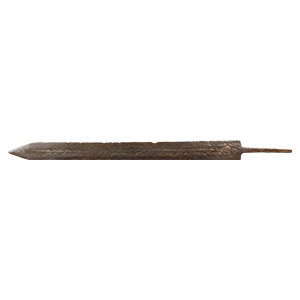
Roman Pattern-Welded Iron Spatha with Inlaid Military Figure
Late 2nd-early 3rd century A.D.Sold for (Inc. bp): £5,850
With double-edged blade of Lauriacum Hromówka typology with blood channels running for the most of its length; inlaid figure of standing Mars Ultor wearing armour (statos) and plumed galea helmet, holding a shield (aspis) and a spear; the blade cleaned and conserved on one side. 467 grams, 82 cm
From the private collection of a London gentleman, from his grandfather's collection formed before the early 1970s. Accompanied by an academic report by Dr Raffaele D’Amato. This lot has been checked against the Interpol Database of stolen works of art and is accompanied by search certificate number no.11922-209659. -
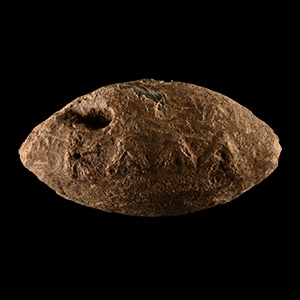
Hellenistic Rhodian Lead Slingshot with Scorpion
3rd century B.C.Sold for (Inc. bp): £234
Lentoid-section and depicting a stylised scorpion to one side and inscription 'ΚΑΛΑ' on the other. 26 grams, 31 mm
Ex Cummings collection, UK, 1990s.
Together with the Balearic slingers, Rhodian slingers were considered to be the best of the Hellenistic world, and they were also used in the Roman army. The slingshots with an image of a scorpion on one side and with an inscription ΚΑΛΑ on the other are believed to originate from the Island of Rhodes. On these sling bullets ΚΑΛΑ should be translated as “nice things.” Of course, ironically, these “nice things” were designed to kill enemies and to sting like a scorpion, and the message of those with the image of a scorpion could be understood, as proposed ny M. Manov and N. Torbov, as: “nice things sting like a scorpion.”
