
Loading, please wait...
LOT 0580
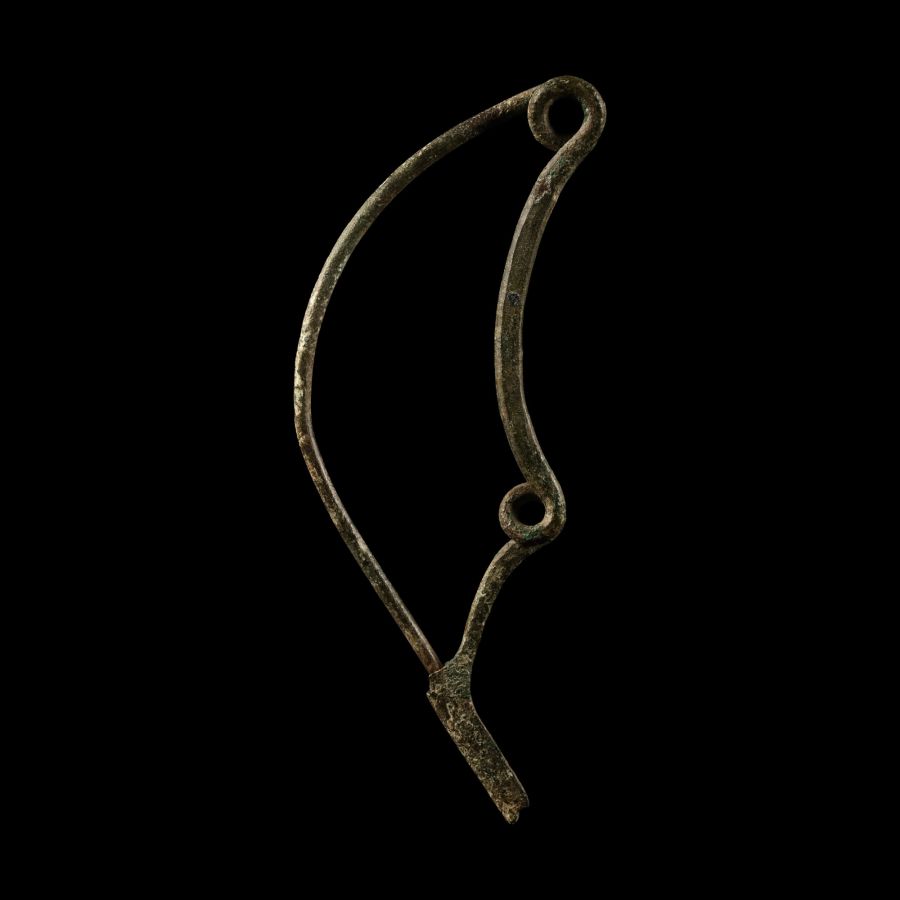
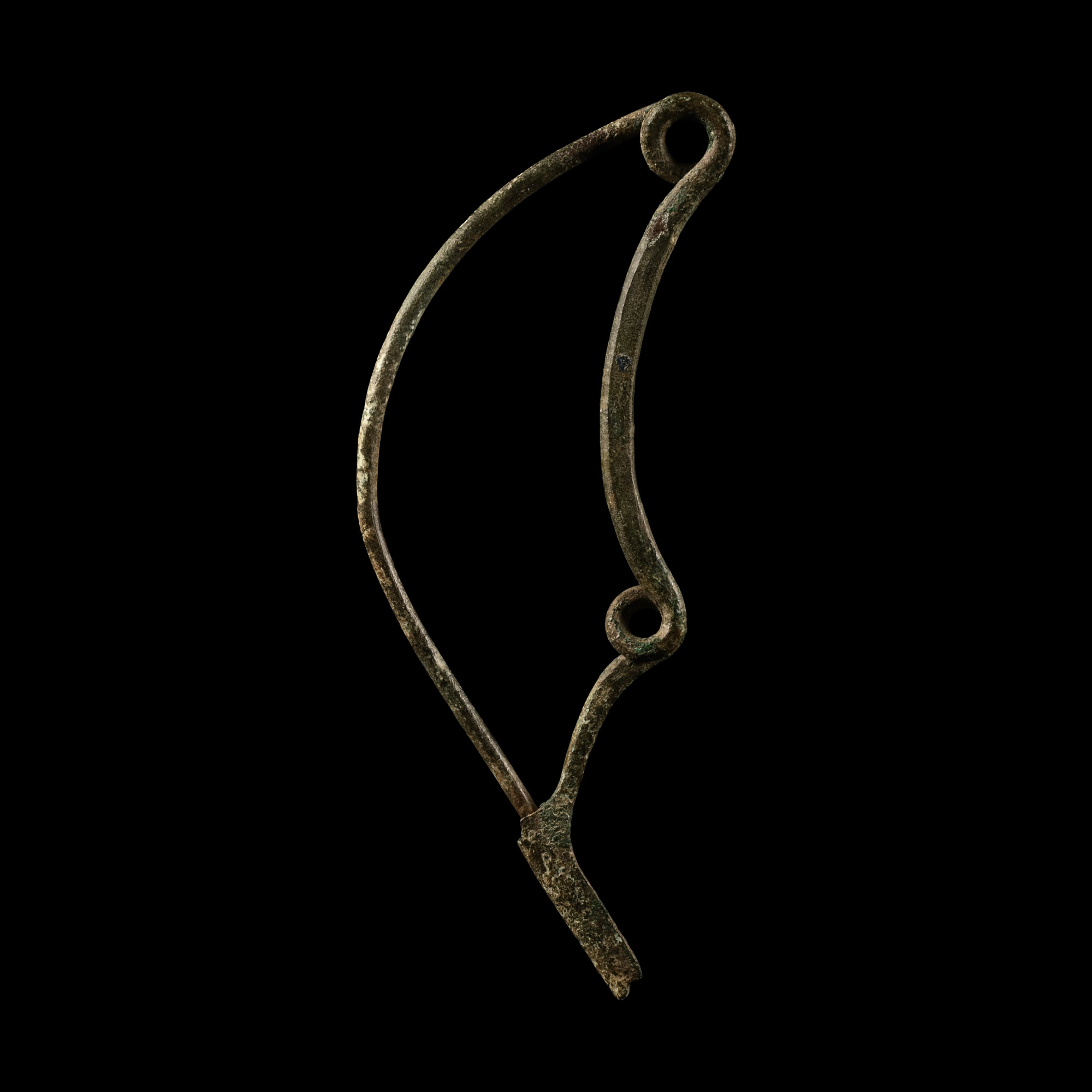
Iron Age Italic Bronze Bow Brooch
10TH-8TH CENTURY B.C.
3 3/4 in. (10.3 grams, 94 mm).
Fibula with two spring coils, scooped catch and curved pin. [No Reserve]
ProvenanceFrom the collection of the famous author, writer and speaker, Gordon Bailey, Essex, UK; formed since 1968.
LiteratureCf. Hattatt, R., Ancient and Romano-British Brooches, Sherborne, 1982, item 1349.
CONDITIONTimeLine Auctions follows a vetting process to ensure the authenticity and legality of all items, reinforcing our commitment to integrity and responsible trading. Each antiquity, antique, and coin lot undergoes thorough examination by a vetting committee of at least ten external specialists, professional trade association members, scientists, and archaeologists: Our Vetting Process
AUCTIONS:
TimeLine is a leading auction house specialising in antiquities, ancient art, collectables, natural history, coins, medals, and books. Our auctions offer museums, collectors, historians, and enthusiasts the opportunity to acquire unique and historically significant pieces.
-
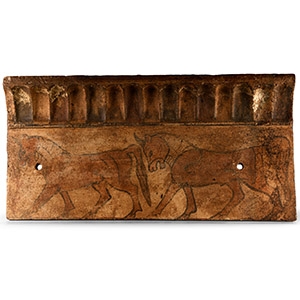
Large Etruscan Architectural Plaque with Bulls
6th century B.C.Estimate: £5,000 - 7,000 (+bp*)
Opening Bid: £2,500
For a temple pediment (sima), comprising a curved upper band with polychrome tongue-shaped grooves, a relief depicting a procession of bulls below, the bulls depicted in a dynamic pose with curving necks and raised tails, the horns painted in black; two attachment holes. 4.66 kg, 50 cm
Acquired on the European art market between 1960s-1980s. Property of a gentleman. with Bertolami Fine Arts Ltd, Auction 66, no.1. Accompanied by an academic report by Dr Raffaele D’Amato. This lot has been checked against the Interpol Database of stolen works of art and is accompanied by search certificate number no.12162-218594.
Terracotta plaques like this sima were used in the pediments of temples (Minerva at Veii, Portonaccio Sanctuary, 540-530 BC), or decorated the architecture of tombs. The procession of the bulls recalls the style of painting on a similar slab with a procession of hunting dogs, probably from Caere. -
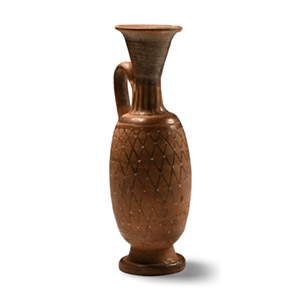
Greek Apulian Net Lekythos
Circa 300 B.C.Sold for (Inc. bp): £312
On a set-off ring foot with long cylindrical neck and funnel-shaped rim; the body with net-pattern decoration in umber, highlighted with white dots at the junctions, framed by brown bands above and below; handle, spout and the outside of the ring foot also in brown; from Apulian Greek colonies of southern Italy, surface chip to the body, usage wear. 156 grams, 14.3 cm
From a Swiss collection, since at least 1978. Ex Swiss collection, Mr. P.B. Basel-Landschaft, acquired on the Swiss art market. -
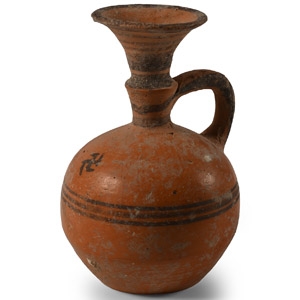
Cypriot Terracotta Vessel
8th-7th century B.C.Sold for (Inc. bp): £338
With globular body and flat base, trumpet-shaped neck and mouth with stepped profile, strap handle to the rear; three painted bands to the equator, painted detailing to the mouth and handle; gammadion to the shoulder. 45 grams, 78 mm
Acquired in the mid 1980s-1990s. Private collection, Switzerland, thence by descent. Private collection, since the late 1990s.
