
Loading, please wait...
LOT 1560
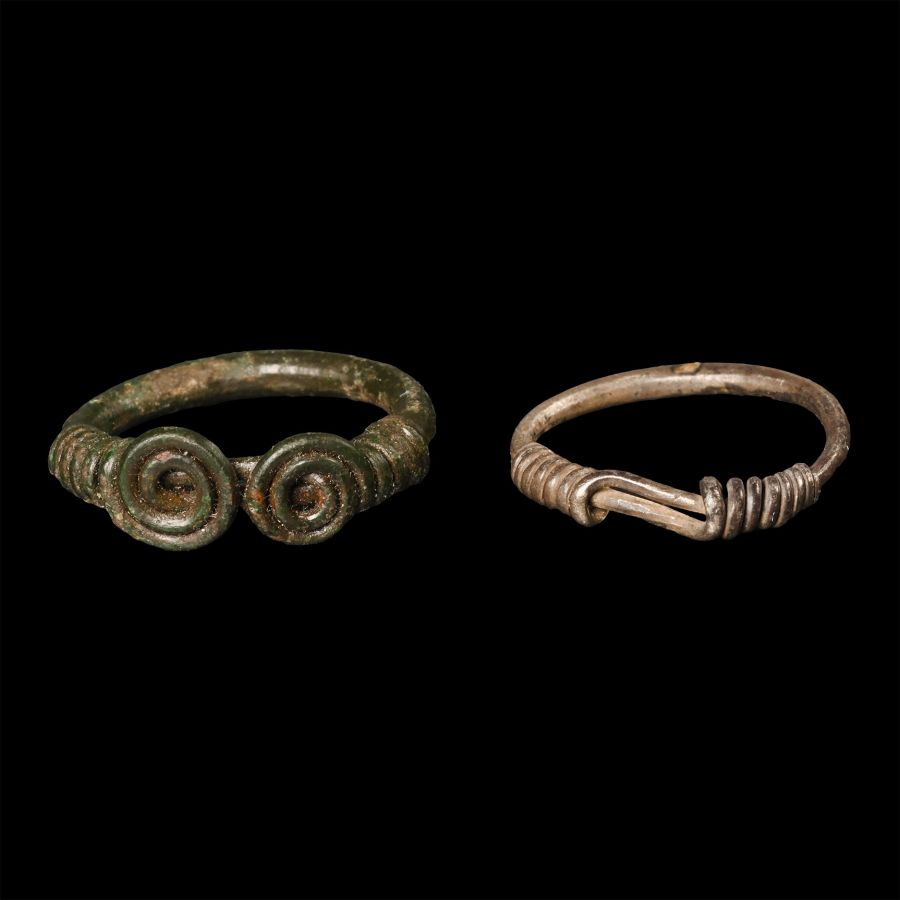
Iron Age Coiled Ring Pair
1ST CENTURY B.C.-2ND CENTURY A.D.
3/4 in. (3.76 grams total, 18-21 mm).
Pair of rings comprising: a bronze ring with overlapping terminals tapering into coiled discoid plaques, coiled wire sleeves; a silver ring with overlapping terminals coiled around the hoop. [2, No Reserve]
ProvenanceUK private collection before 2000.
On the UK art market.
Property of a London gentleman.
TimeLine Auctions follows a vetting process to ensure the authenticity and legality of all items, reinforcing our commitment to integrity and responsible trading. Each antiquity, antique, and coin lot undergoes thorough examination by a vetting committee of at least ten external specialists, professional trade association members, scientists, and archaeologists: Our Vetting Process
AUCTIONS:
TimeLine is a leading auction house specialising in antiquities, ancient art, collectables, natural history, coins, medals, and books. Our auctions offer museums, collectors, historians, and enthusiasts the opportunity to acquire unique and historically significant pieces.
-
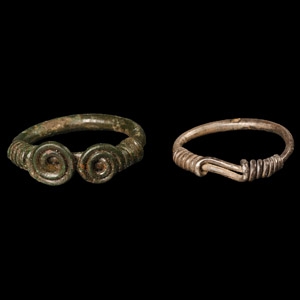
Iron Age Coiled Ring Pair
1st century B.C.-2nd century A.D.Sold for (Inc. bp): £124
Pair of rings comprising: a bronze ring with overlapping terminals tapering into coiled discoid plaques, coiled wire sleeves; a silver ring with overlapping terminals coiled around the hoop. 3.76 grams total, 18-21 mm
UK private collection before 2000. On the UK art market. Property of a London gentleman. -
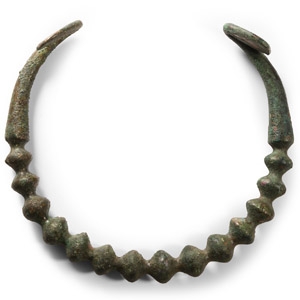
European Iron Age Celtic Bronze Torc
Circa 3rd-2nd century B.C.Sold for (Inc. bp): £234
The penannular body formed with graduated biconical bulbs, recurved tapering terminals. 275 grams, 14.5 cm
Ex old English collection. London art market, 1980s. -
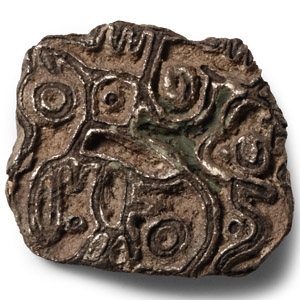
Iron Age Silver Die Matrix
1st century B.C.-1st century A.D.Sold for (Inc. bp): £85
With integral loop to the reverse; the design a grotesque stylised face in profile. 4.7 grams, 23 mm
Acquired 1950s-1970s. Ex London, UK, private collection. Property of a Kent lady collector.
