
Loading, please wait...
LOT 1494
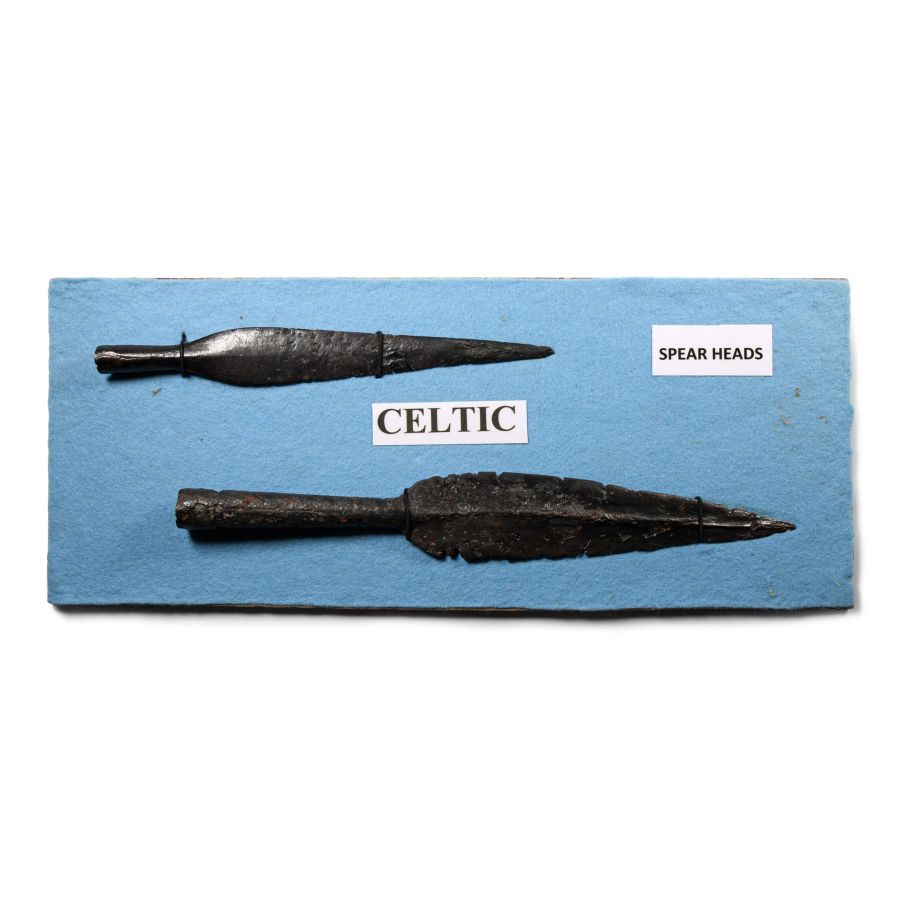
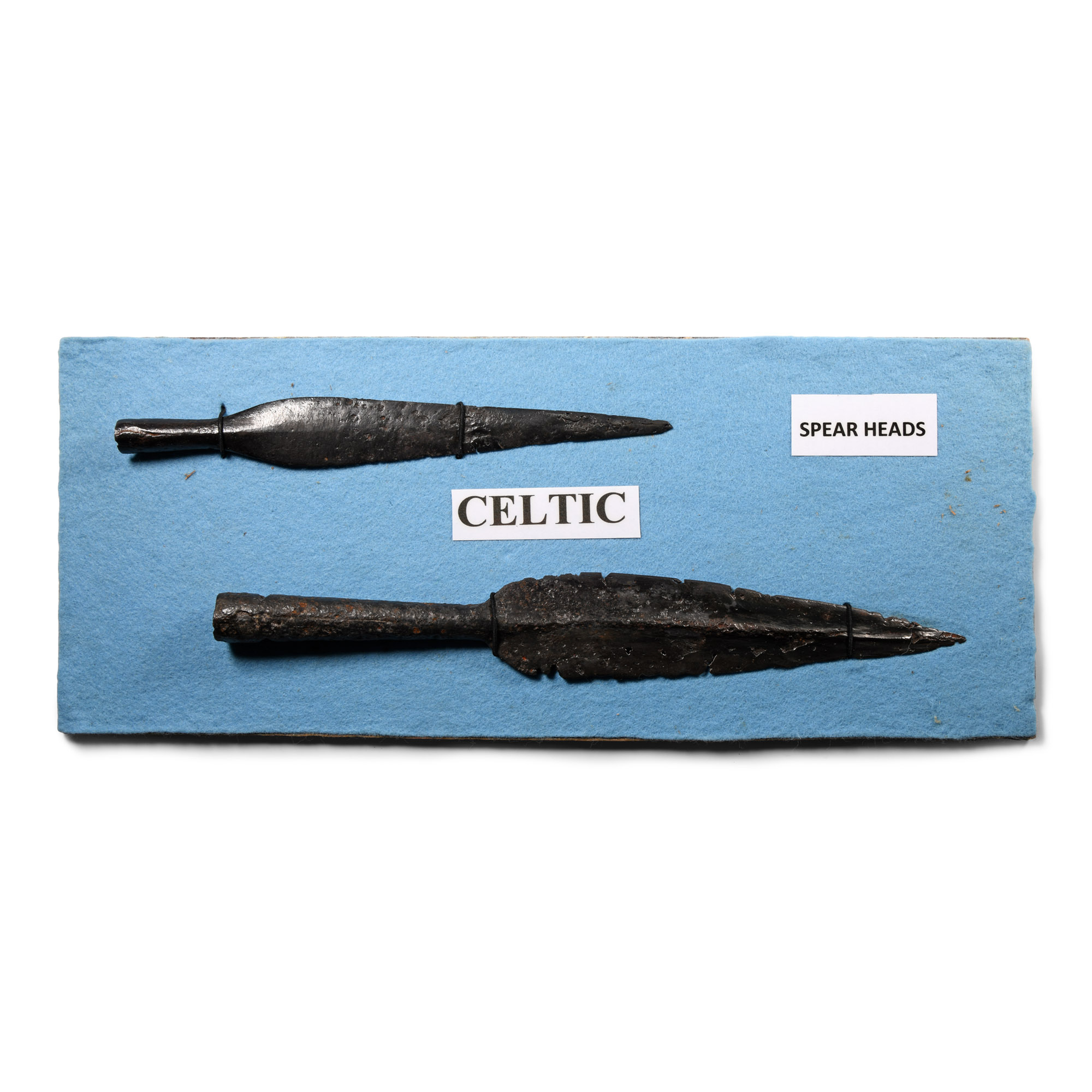
Iron Age Celtic Iron Spearhead Display
CIRCA 2ND CENTURY B.C.-1ST CENTURY A.D.
8 1/4 - 11 1/4 in. (429 grams total, spearheads: 21-28.5 cm).
Comprising two spearheads, each with a split socket and leaf-shaped blade, shallow midribs. [2, No Reserve]
ProvenanceFrom the collection of the famous author, writer and speaker, Gordon Bailey, Essex, UK; formed since 1968.
LiteratureCf. Allen, S., Celtic Warrior 300 BC-AD 100, Oxford, 2001, p.31, for similar.
FootnotesIn the Celtic world the spear was the primary weapon and symbol of a warrior. The Greek historian Strabo comments that the Celts carried two types of spear: a larger, heavier one for thrusting; and a smaller, lighter javelin that could be both thrown and used at closed quarters.
CONDITIONTimeLine Auctions follows a vetting process to ensure the authenticity and legality of all items, reinforcing our commitment to integrity and responsible trading. Each antiquity, antique, and coin lot undergoes thorough examination by a vetting committee of at least ten external specialists, professional trade association members, scientists, and archaeologists: Our Vetting Process
AUCTIONS:
TimeLine is a leading auction house specialising in antiquities, ancient art, collectables, natural history, coins, medals, and books. Our auctions offer museums, collectors, historians, and enthusiasts the opportunity to acquire unique and historically significant pieces.
-
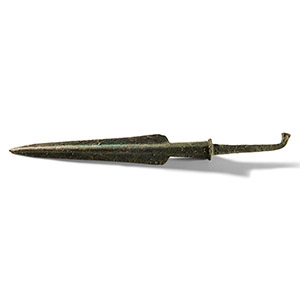
Western Asiatic Bronze Spearhead
1500-1000 B.C.Estimate: £300 - 400 (‡+bp*)
Opening Bid: £150
With heavily ridged and tapered blade, short collared shaft and tapered bent tang with round stud terminal. 247 grams, 28.5 cm
Acquired in Europe in 1997. European private collection. -
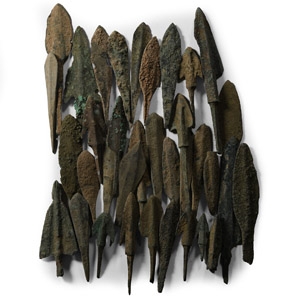
Luristan Bronze Arrowhead Collection
Circa late 2nd millennium-6th century B.C.Sold for (Inc. bp): £234
Including leaf-shaped, barbed and other types. 367 grams total, 3.4-10.7 cm
Ex London, UK, collection, 1990s.
A number of arrowheads of this type have been excavated in Luristan and in the South-Caspian region. Many parallels are from a burial context, but a large hoard of them was found in a non-funerary context. This type of arrowhead has been in use from the late 2nd millennium B.C. Other arrowheads are clearly Achaemenid. -
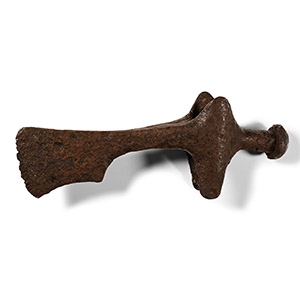
Viking Age Ugro-Finnian Battle Axehead
11th-12th century A.D.Sold for (Inc. bp): £117
A hand-forged iron axehead with square chin to the blade, flanges raised to the socket, rear round hammer-head. 200 grams, 15.5 cm
From the private collection of a London gentleman, from his grandfather's collection formed before the early 1970s.
The more commonly used weapons of the Finno-Ugrian people were axes, commonly found in all Finnic areas, as well as spears. Iron axeheads of this typology show a sub-trapezoidal asymmetrical blade.
