
Loading, please wait...
LOT 1558
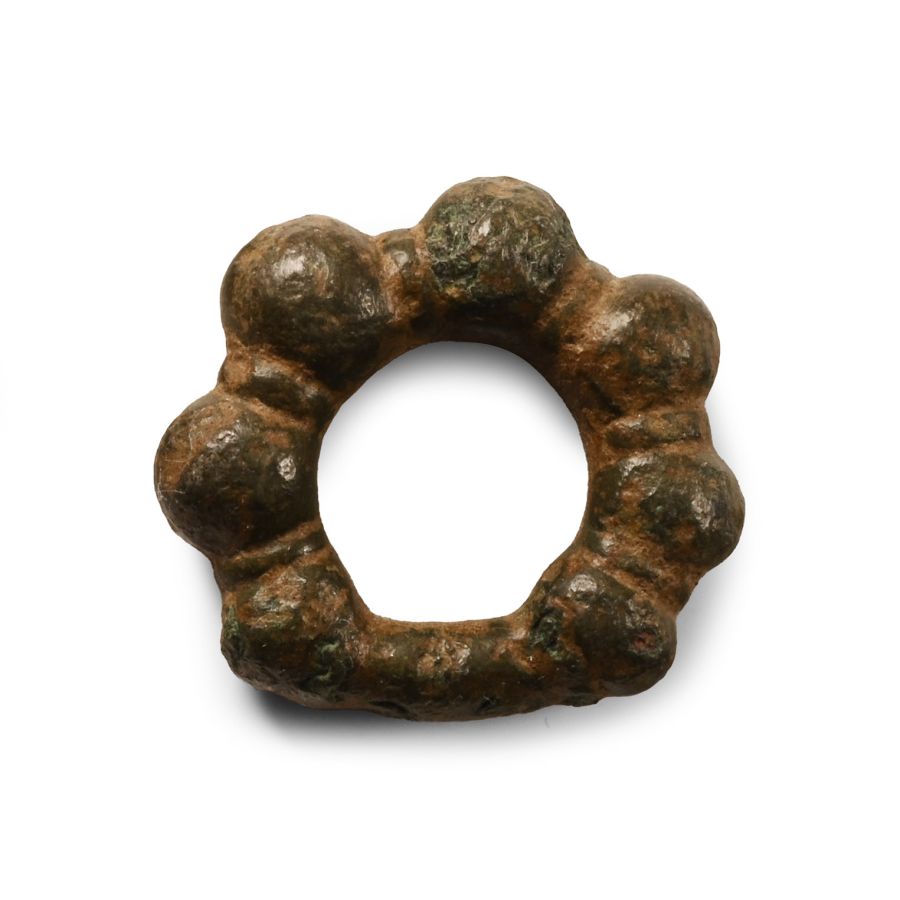
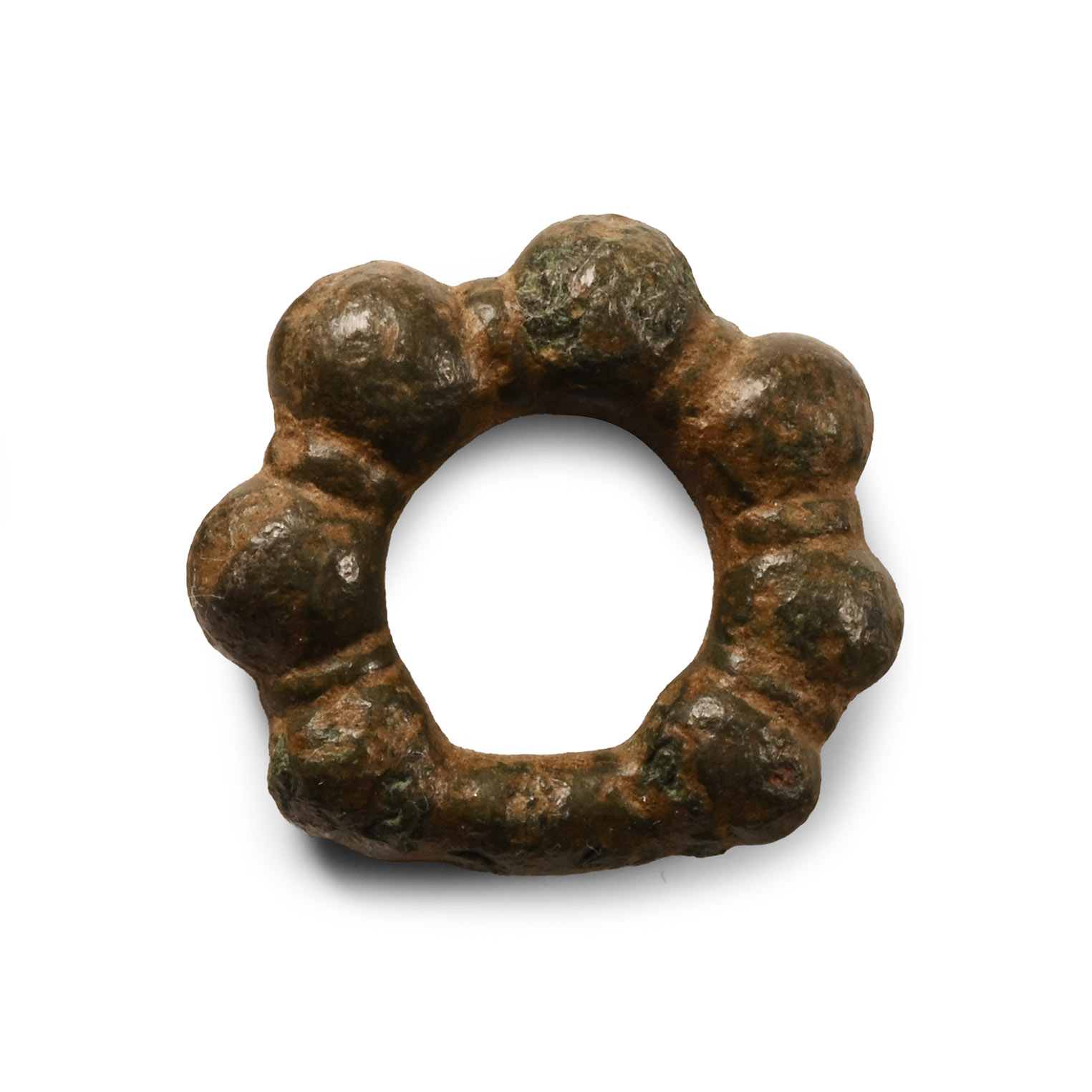
Iron Age Celtic 'East Anglia' Bronze Terret Ring
1ST CENTURY B.C.-1ST CENTURY A.D.
1 in. (11.7 grams, 25 mm).
Comprising a round-section expanding shank, segmented bulbs. [No Reserve]
ProvenanceFound whilst searching with a metal detector in East Anglia, UK.
LiteratureSee discussion in Spratling, M.G., Southern British Decorated Bronzes of the Late Pre-Roman Iron Age, Institute of Archaeology, 1972.
CONDITIONTimeLine Auctions follows a vetting process to ensure the authenticity and legality of all items, reinforcing our commitment to integrity and responsible trading. Each antiquity, antique, and coin lot undergoes thorough examination by a vetting committee of at least ten external specialists, professional trade association members, scientists, and archaeologists: Our Vetting Process
AUCTIONS:
TimeLine is a leading auction house specialising in antiquities, ancient art, collectables, natural history, coins, medals, and books. Our auctions offer museums, collectors, historians, and enthusiasts the opportunity to acquire unique and historically significant pieces.
-
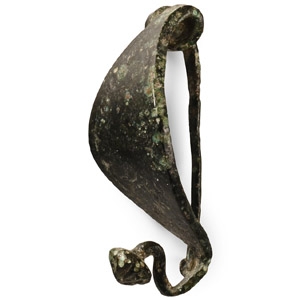
Iron Age Celtic Bronze La Tene Fibula
1st century B.C.-1st century A.D.Sold for (Inc. bp): £104
With wide bow and S-curved tail with conical knop; integral spring and pin. 3.34 grams, 28 mm
Ex M Braham and Lord Alistair McAlpine collections, 1970-1980s. -
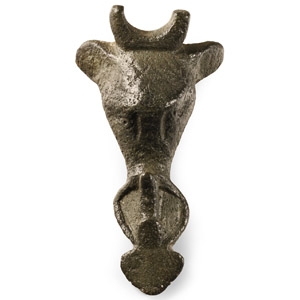
Iron Age Celtic Bronze Bull's Head Bowl Mount
1st century B.C.-1st century A.D.Sold for (Inc. bp): £59
With splayed ears and hatched brow, loop above the brow, pelta-shaped terminal. 20 grams, 48 mm
Found Cambridgeshire, UK in the 1980s. Property of a Kent lady collector. -

'The Kilburn' Iron Age Celtic Bovine Bowl Mount
Circa 100 B.C.-300 A.D.Sold for (Inc. bp): £1,820
A substantial head with a convex front and concave back with a loop above, pierced eye sockets to accept glass inserts with one in situ; large projecting horns curving forwards in front of the ears; remains of two ferrous rivets to the reverse. 80.8 grams, 68 mm
Found whilst searching with a metal detector near North Yorkshire, UK, in 3 August 2020, by Mark Didlick. Accompanied by a copy of the British Museum's Portable Antiquities Scheme (PAS) report no.YORYM-76CAE2.
