
Loading, please wait...
LOT 1557
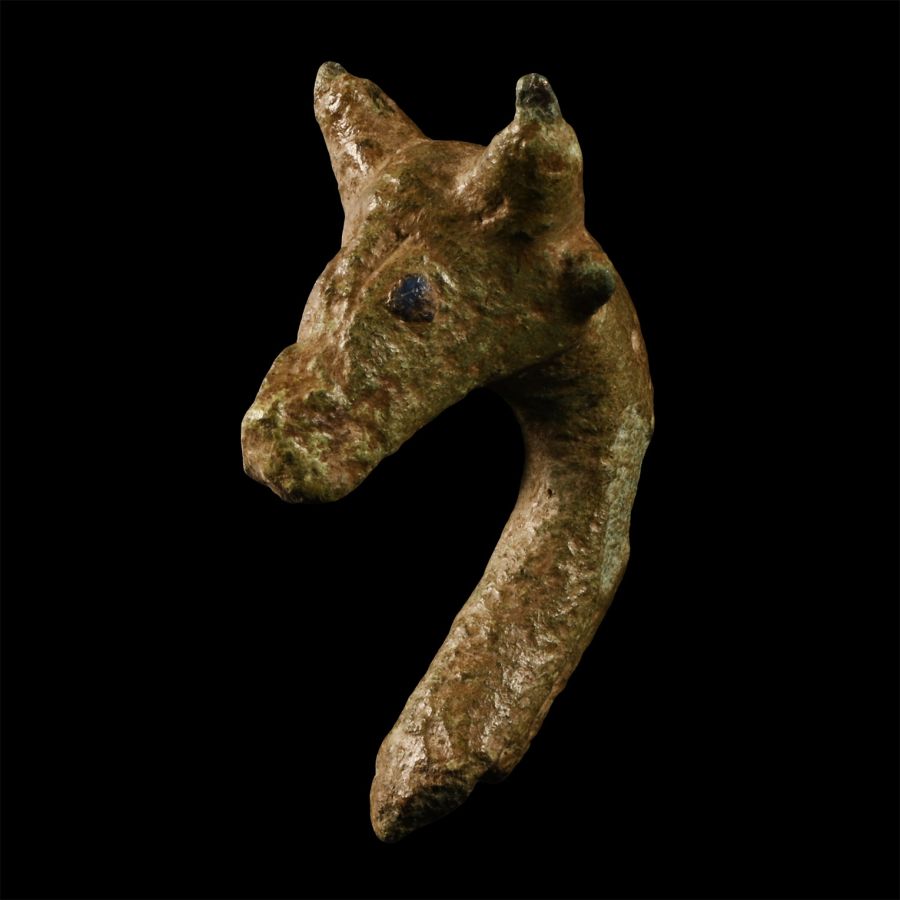
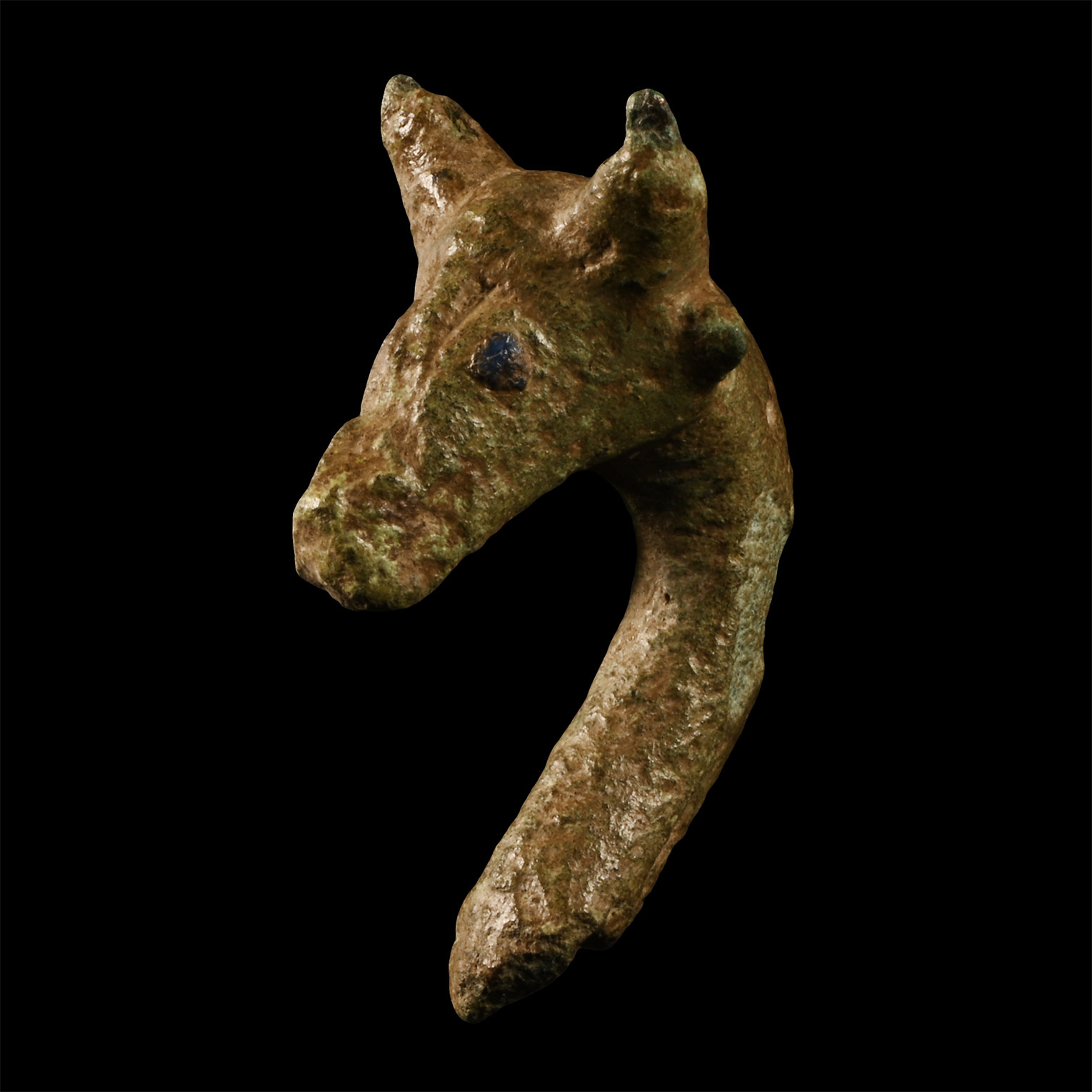
Iron Age Celtic Bronze Votive Horse's Head
CIRCA 1ST CENTURY B.C.-1ST CENTURY A.D.
1 3/8 in. (12 grams, 34 mm).
With carinated arching neck, crescent 'horns' above the forehead, inset blue glass eyes. [No Reserve]
ProvenanceFrom a collection acquired on the UK art market from various auction houses and collections mostly before 2000.
From an important Cambridgeshire estate; thence by descent.
Cf. Durham, E., Metal Figurines in Roman Britain, vol. 2, Reading, 2010, plates 287, 289, for type.
CONDITIONTimeLine Auctions follows a vetting process to ensure the authenticity and legality of all items, reinforcing our commitment to integrity and responsible trading. Each antiquity, antique, and coin lot undergoes thorough examination by a vetting committee of at least ten external specialists, professional trade association members, scientists, and archaeologists: Our Vetting Process
AUCTIONS:
TimeLine is a leading auction house specialising in antiquities, ancient art, collectables, natural history, coins, medals, and books. Our auctions offer museums, collectors, historians, and enthusiasts the opportunity to acquire unique and historically significant pieces.
-
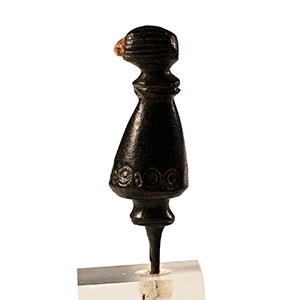
Iron Age British Celtic Bronze Cosmetic Implement
Circa 1st century B.C.-1st century A.D.Estimate: £100 - 140 (+bp*)
Opening Bid: £50
A nail-cleaner comprising a flat blade, waisted stem and conical bulb with band of ring-and-dot motifs alternating with double pellets, gusseted bulb and ovoid finial with hatching; mounted on a custom-made stand. 22.2 grams total, 58 mm including stand
Found East Anglia, UK; before 2000. Acquired in the 2000s. From the private collection of John Lawton, Surrey, UK. Accompanied by a copy of a previous catalogue information page. -
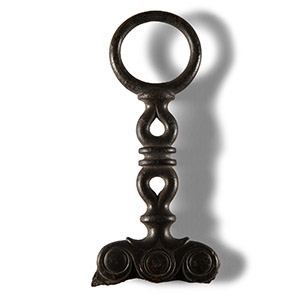
Iron Age Celtic Bronze Mirror Handle
Circa 1st century B.C.-1st century A.D.Sold for (Inc. bp): £1,170
Handle for a hand-mirror formed as a large ring finial, two loops connected by a gussetted oblate bar, upper end developing to a volute scroll with symmetrically placed discs; La Tène design with swept curves throughout. 92 grams, 11.2 cm
From a collection acquired on the UK art market from various auction houses and collections mostly before 2000. From an important Cambridgeshire estate; thence by descent. -
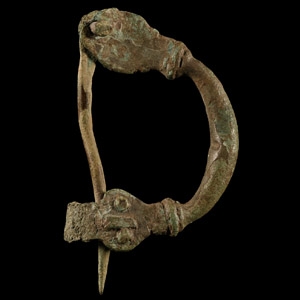
Iron Age Bronze Brooch
Circa 1st century B.C.Sold for (Inc. bp): £59
Arched bow-brooch tapering to each end, one with flat palmette panels holding a pivoting pin and the other a ribbed catch with two small posts supporting a sprung plate. 9.02 grams, 49 mm
Acquired on the London art market in the late 1980s-1990s. From the family collection of an East London, UK, gentleman.
