
Loading, please wait...
LOT 1554
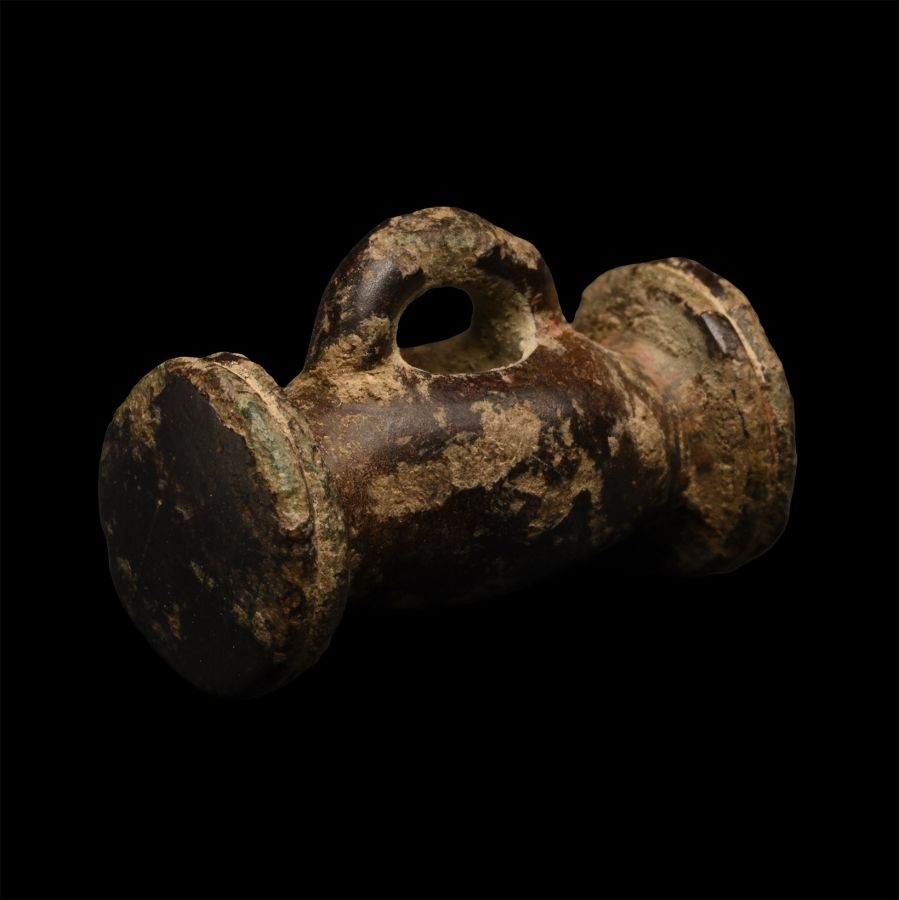
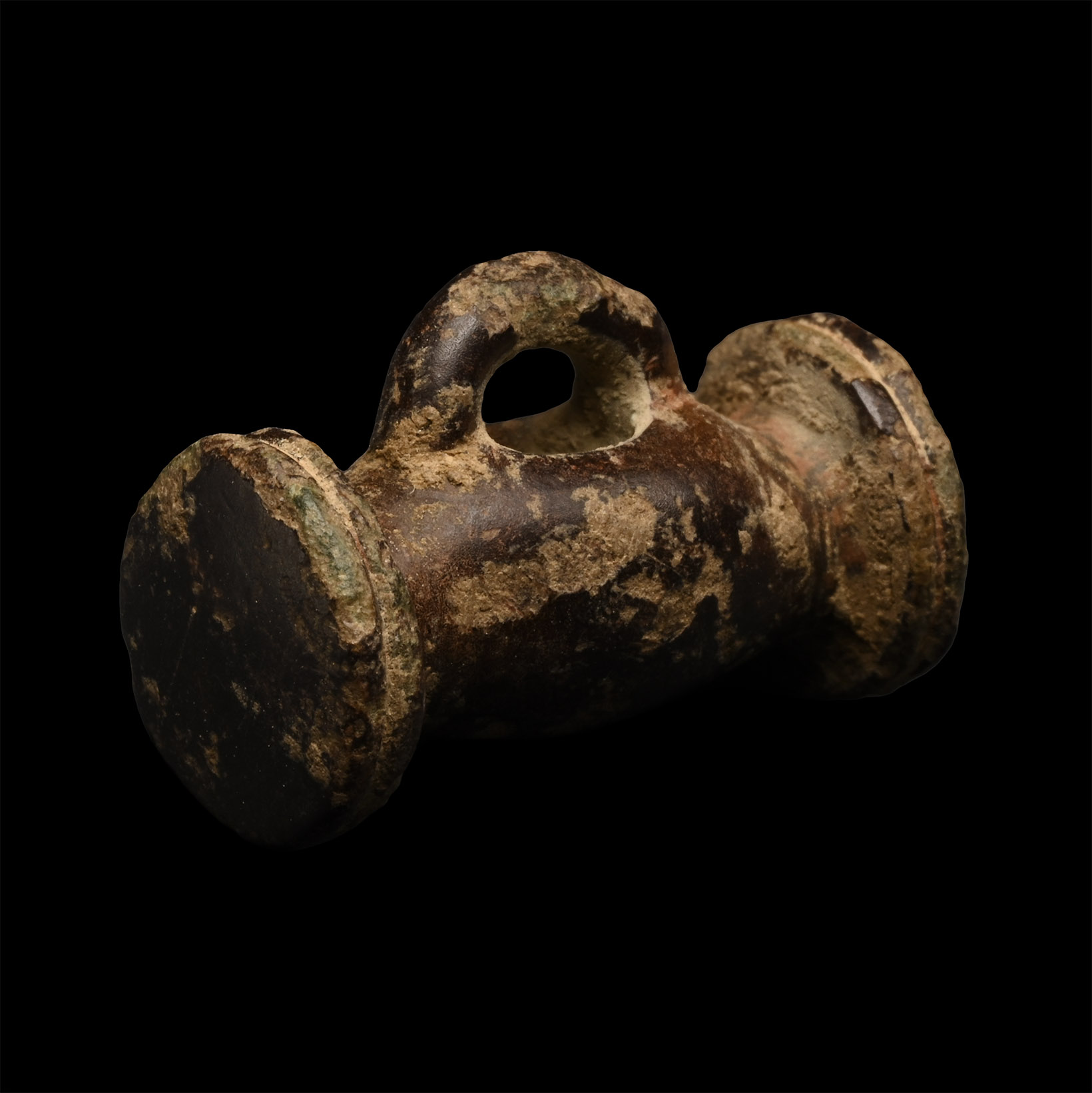
Iron Age Celtic Bronze Toggle Fastener
2ND CENTURY B.C.-1ST CENTURY A.D.
1 in. (14.6 grams, 25 mm).
With median loop and gusseted disc finials. [No Reserve]
ProvenanceFound Suffolk, UK.
Accompanied by a copy of the British Museum's Portable Antiquities Scheme (PAS) report no.SF-189EE3.
Recorded with the Portable Antiquities Scheme under reference SF-189EE3.
CONDITIONTimeLine Auctions follows a vetting process to ensure the authenticity and legality of all items, reinforcing our commitment to integrity and responsible trading. Each antiquity, antique, and coin lot undergoes thorough examination by a vetting committee of at least ten external specialists, professional trade association members, scientists, and archaeologists: Our Vetting Process
AUCTIONS:
TimeLine is a leading auction house specialising in antiquities, ancient art, collectables, natural history, coins, medals, and books. Our auctions offer museums, collectors, historians, and enthusiasts the opportunity to acquire unique and historically significant pieces.
-
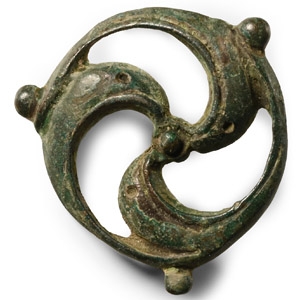
Romano-Celtic Bronze Dolphin Whorl Brooch
1st-2nd century A.D.Sold for (Inc. bp): £312
Openwork plate brooch, La Tène swirl with pellets to centre and rim; catch and pin-lug to reverse. 7.53 grams, 31 mm
Ex German art market, 2000s. Acquired from an EU collector living in London. From the collection of Surrey, UK, gentleman. -
.jpg)
Iron Age La Tene Brooch Group
3rd century B.C.Sold for (Inc. bp): £39
Comprising three bow brooches with conical finials; a brooch with an arrow-shaped plaque and coiled spring to the pin. 19.8 grams total, 34-69 mm
Property of the vendor's grandfather, thence by family descent, circa 1985. From the private collection of a New York, USA gentleman. -
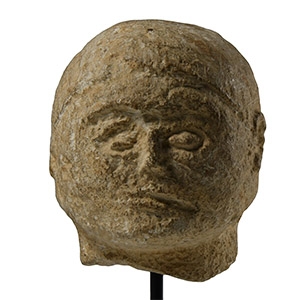
Romano-Celtic Marble Head of a Warrior
1st-2nd century A.D. or laterSold for (Inc. bp): £286
Squat carved head of a warrior with the hair cut close; reserved aquiline nose, incised lentoid eyes with carinated centres, slit mouth; old collector's label '286' to reverse; mounted on a custom-made display stand. 1.17 kg total, 15.7 cm including stand
From a collection acquired on the UK art market from various auction houses and collections mostly before 2000. From an important Cambridgeshire estate; thence by descent.
