
Loading, please wait...
LOT 1539
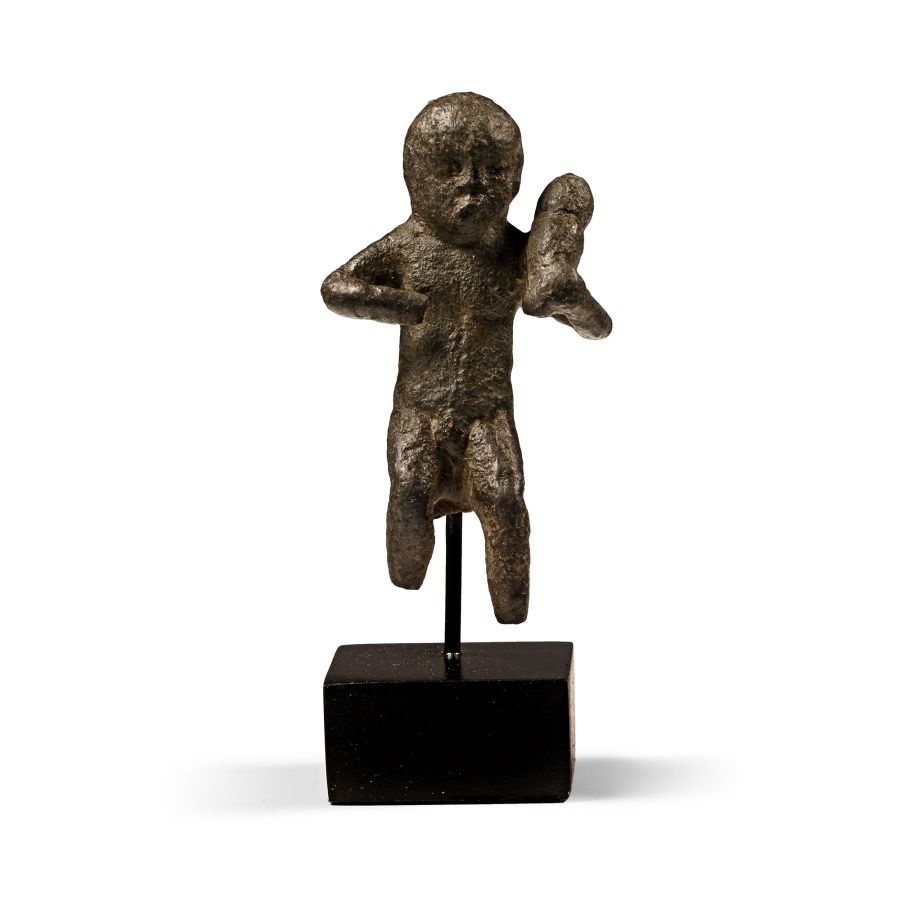
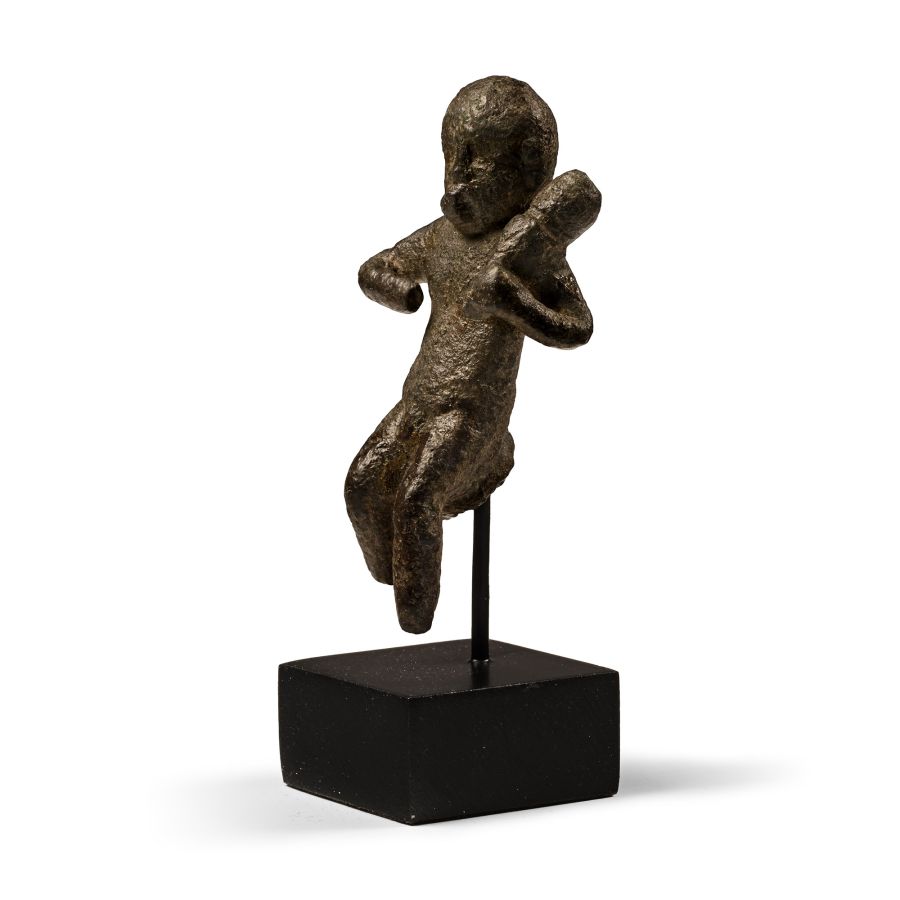
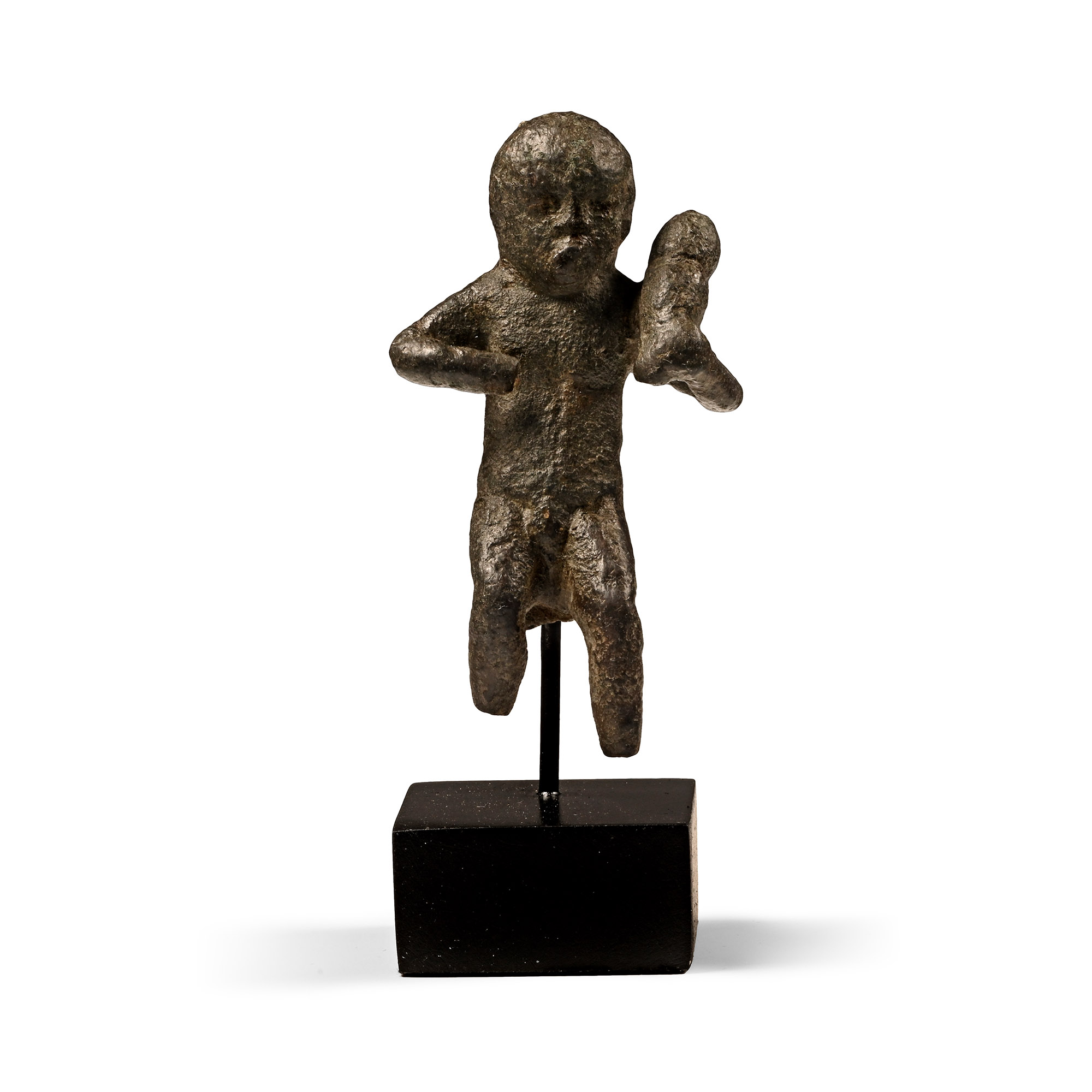
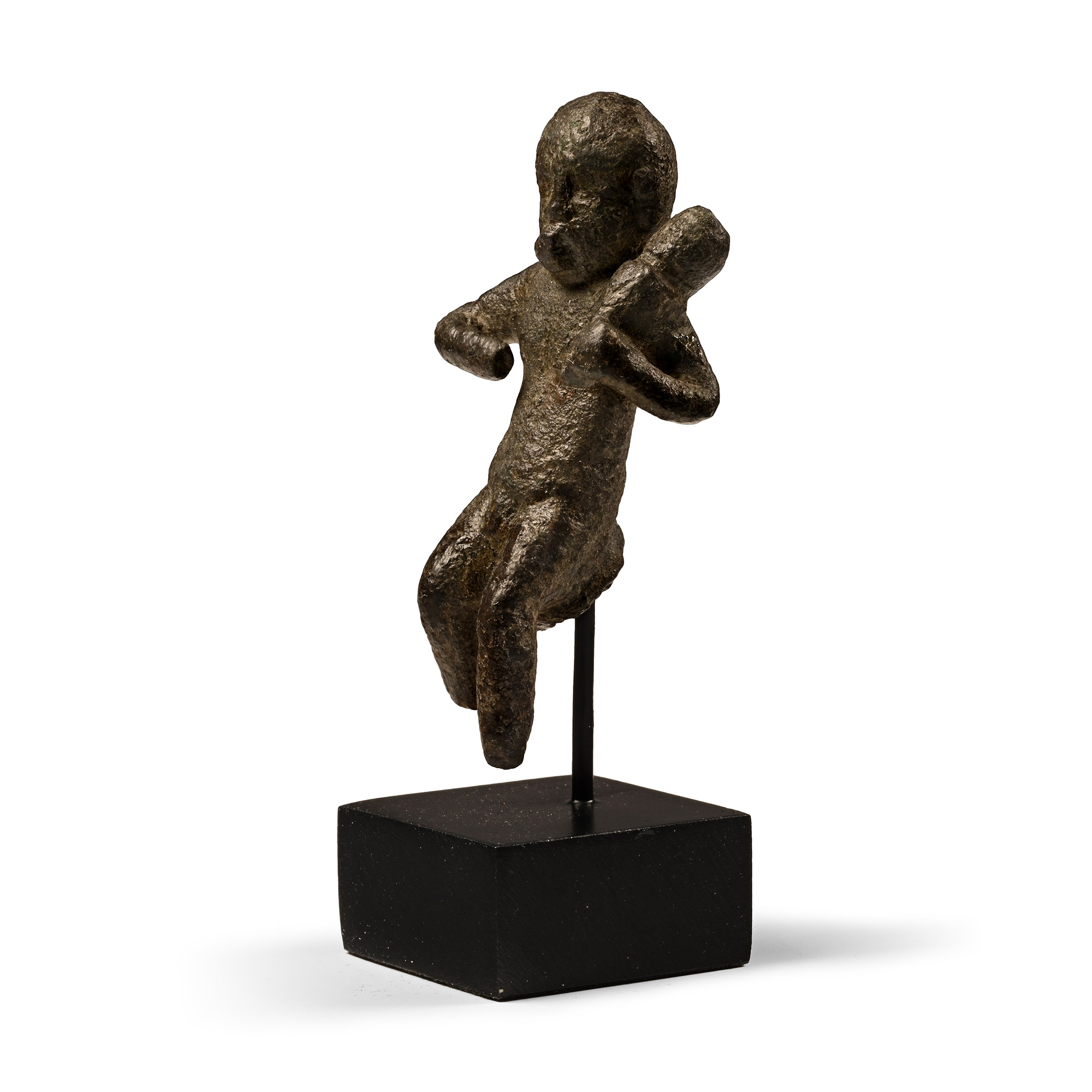
Iron Age Celtic Bronze Naked Male Figure
1ST-2ND CENTURY A.D.
3 3/8 in. (90.4 grams total, 86 mm including stand).
Modelled in the round nude male with arms bent, the left arm supporting a bundle; discoid pad to the rump, probably the point of attachment to a larger item; mounted on a custom-made display stand. [No Reserve]
ProvenanceFrom a collection acquired on the UK art market from various auction houses and collections mostly before 2000.
From an important Cambridgeshire estate; thence by descent.
Cf. Rolland, H., Bronzes Antiques de Haute Provence, Paris, 1965, items 102, 103, for type.
CONDITIONTimeLine Auctions follows a vetting process to ensure the authenticity and legality of all items, reinforcing our commitment to integrity and responsible trading. Each antiquity, antique, and coin lot undergoes thorough examination by a vetting committee of at least ten external specialists, professional trade association members, scientists, and archaeologists: Our Vetting Process
AUCTIONS:
TimeLine is a leading auction house specialising in antiquities, ancient art, collectables, natural history, coins, medals, and books. Our auctions offer museums, collectors, historians, and enthusiasts the opportunity to acquire unique and historically significant pieces.
-
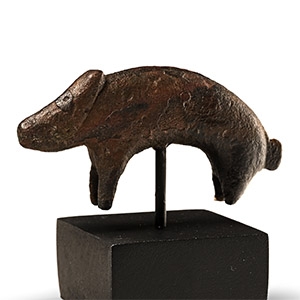
Iron Age Celtic Bronze Boar Statuette
Circa 2nd century B.C.-1st century A.D.Sold for (Inc. bp): £286
Modelled in the round with elegantly arched back, small tail and hindlegs, sturdy forelegs; the head with strong conical profile and raised dorsal ridge; mounted on a custom-made display stand. 49.18 grams total, 50 mm wide including stand
From a collection acquired on the UK art market from various auction houses and collections mostly before 2000. From an important Cambridgeshire estate; thence by descent. -
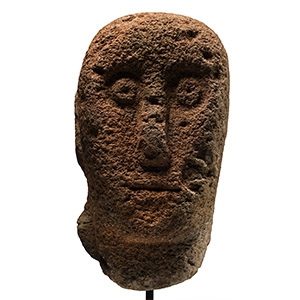
Iron Age Celtic Stone Head
2nd century B.C.-1st century A.D. or laterSold for (Inc. bp): £910
Sub-rectangular carved head with mount to the rear, elongated facial features, reserved disc eyes and wedge-shaped nose, slit mouth, rounded brow; mounted on a custom-made display stand. 7.7 kg total, 32 cm including stand
From a collection acquired on the UK art market from various auction houses and collections mostly before 2000. From an important Cambridgeshire estate; thence by descent.
The cult of the human head was prevalent in the Celtic world, being associated with warding-off evil spirits and bearing of good luck. -
.jpg)
Iron Age Celtic 'Dorset' Stone Head
Circa 2nd century B.C.-1st century A.D.Sold for (Inc. bp): £910
Carved stone male head with almond-shaped eyes, snub nose, prominent moustache; surface abraded due to prolonged immersion in a river; mounted on a custom-made display stand. 262 grams total, 10.7 cm including stand
Found Dorset, UK. From a collection acquired on the UK art market from various auction houses and collections mostly before 2000. From an important Cambridgeshire estate; thence by descent.
