
Loading, please wait...
LOT 0317
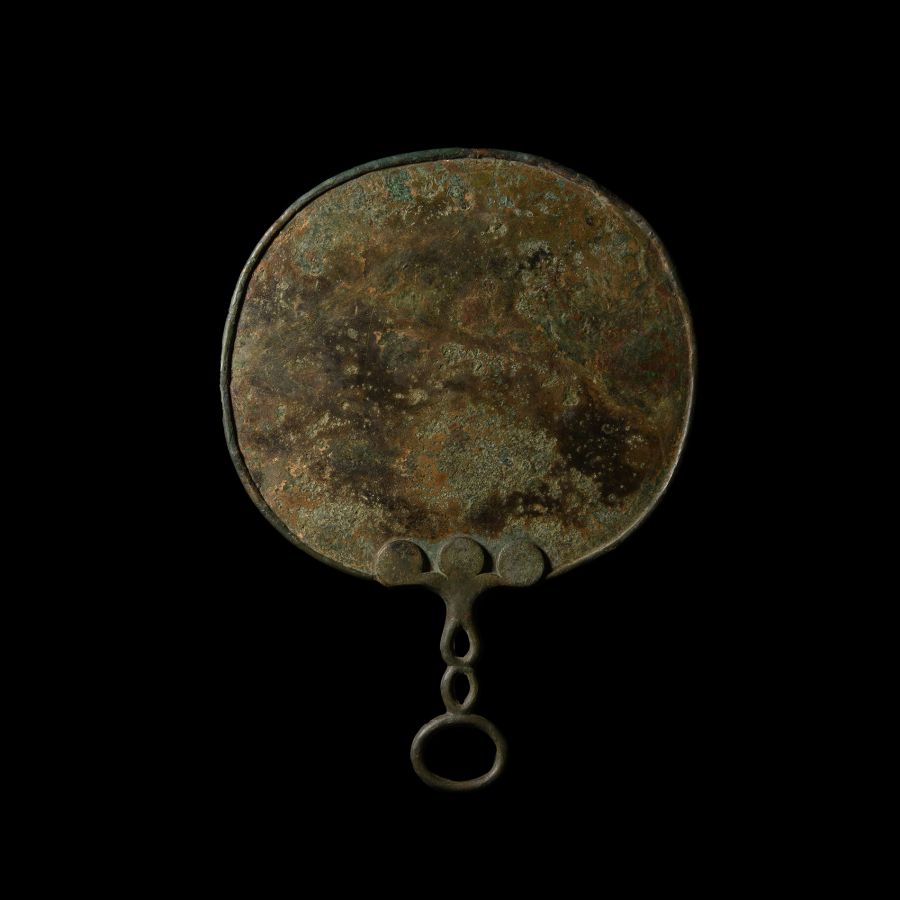
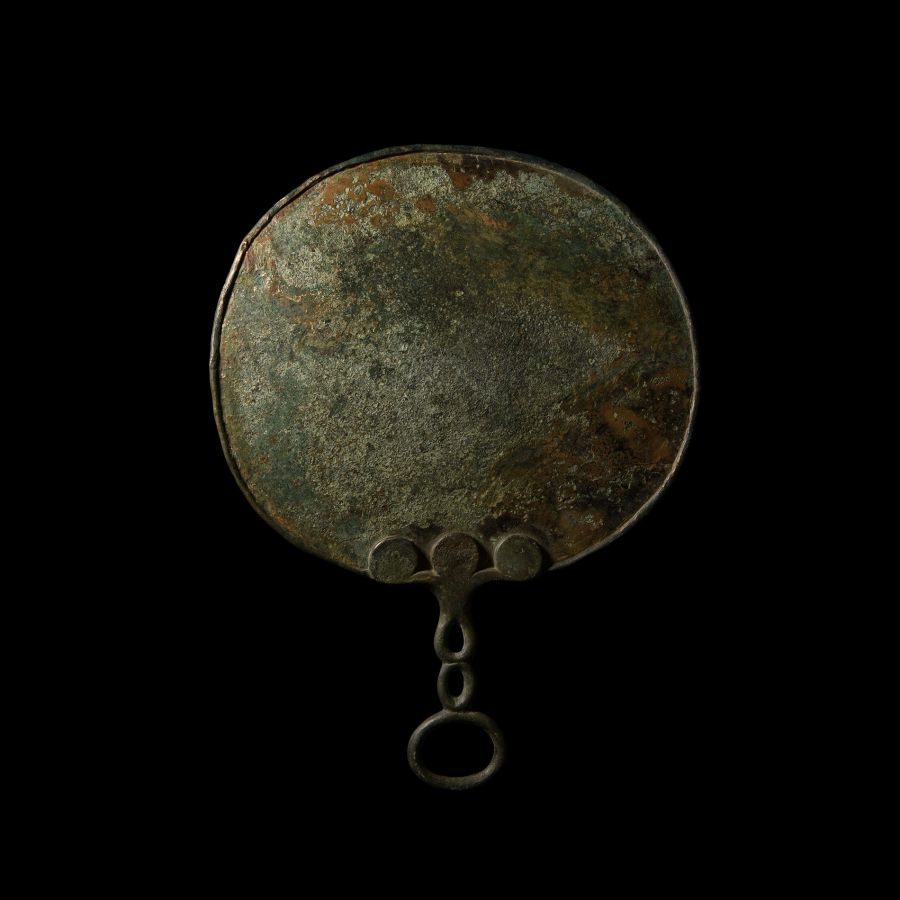
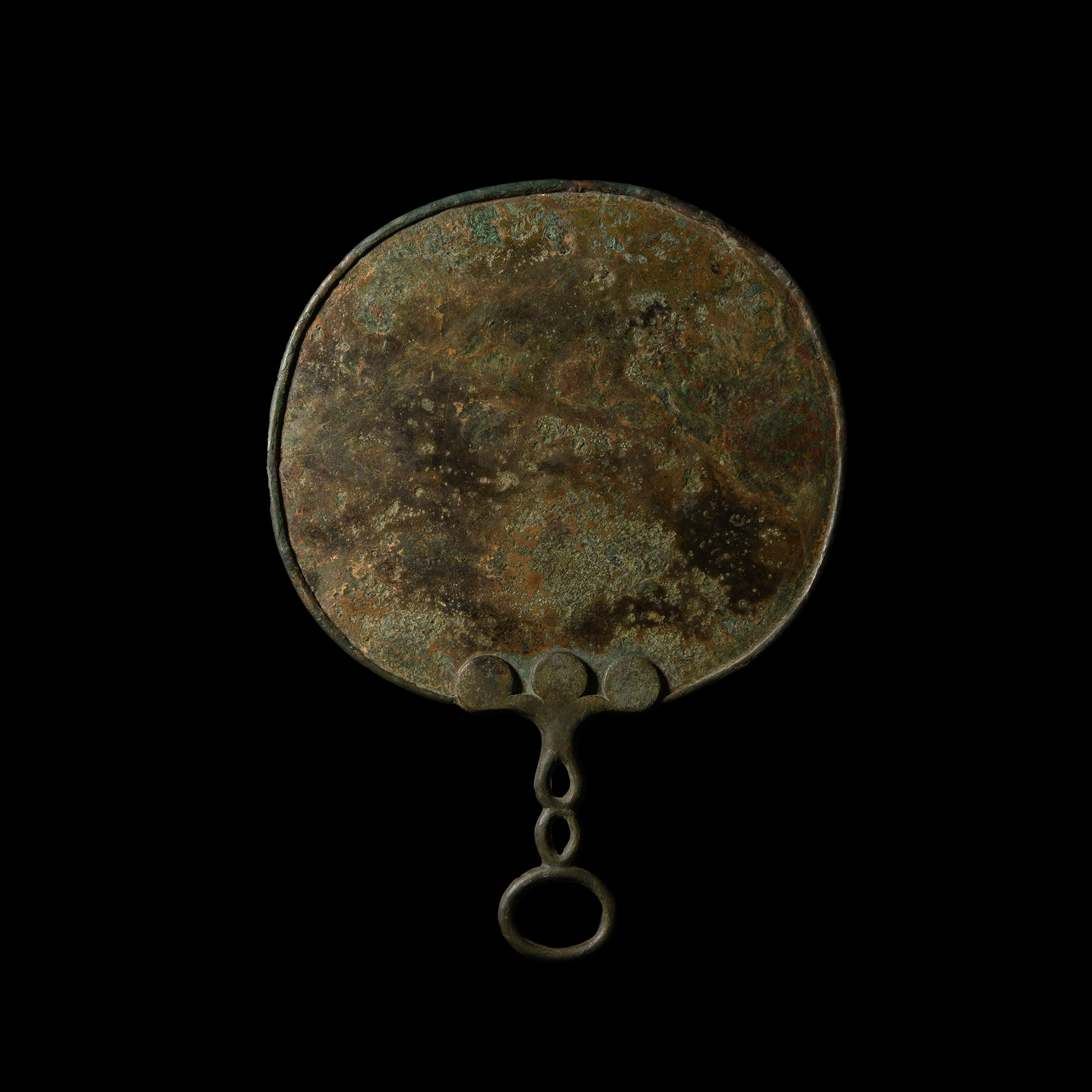
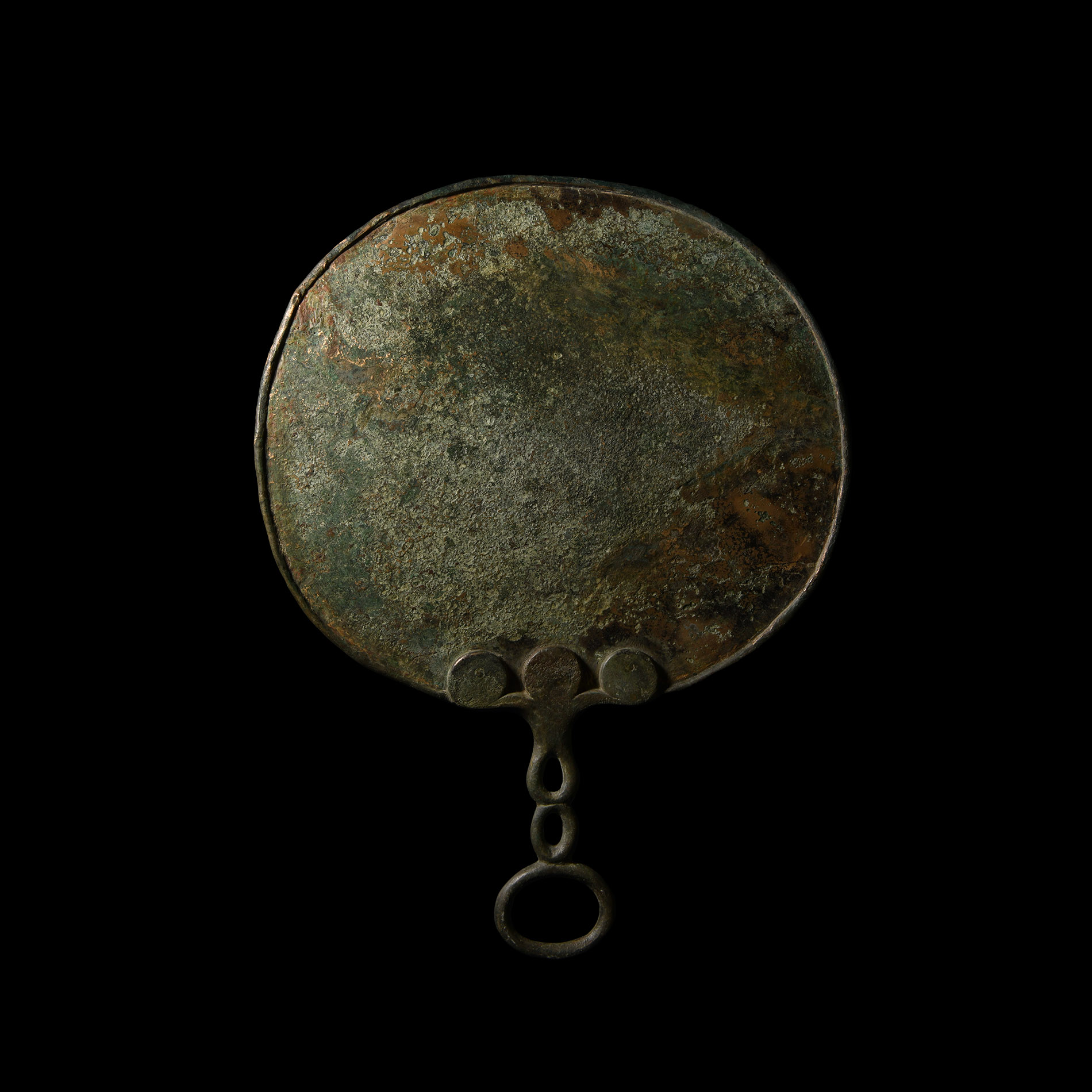
Iron Age Celtic Bronze Mirror
1ST CENTURY B.C.-1ST CENTURY A.D.
10 1/2 in. (355 grams, 27 cm).
Of tripartite form, comprising: the handle, the main mirror plate and tubular binding edge; the reverse of the mirror plate with traces of volute and spiral decoration, once covering the entire surface, thick applied border; separate handle comprising three fastening lobes and three openwork rings forming the grip, possibly a marriage.
ProvenancePrivate collection since the late 1990s.
Property of an English collector.
Accompanied by an academic report by Dr Raffaele D’Amato.
This lot has been checked against the Interpol Database of stolen works of art and is accompanied by search certificate number no.10603-174116.
Cf. The British Museum, museum number 1924,0109.1, for a broadly similar example.
FootnotesSuch mirrors were a unique product of the Celts in Britain, during a period between 300 B.C. and 100 A.D., when they were buried in the graves of queens, high-born princesses and other noblewomen, or in treasure hoards. The majority of these graves are dated between 100 B.C. and 100 A.D. Most of the specimens come from Britain (Desborough, Oxfordshire, Old Warden, Shillington, Trelan Bahow, Mayer mirrors), and a few were found in the nearby regions of France or the Low Countries (e.g. the Dordrecht mirror).
CONDITIONTimeLine Auctions follows a vetting process to ensure the authenticity and legality of all items, reinforcing our commitment to integrity and responsible trading. Each antiquity, antique, and coin lot undergoes thorough examination by a vetting committee of at least ten external specialists, professional trade association members, scientists, and archaeologists: Our Vetting Process
AUCTIONS:
TimeLine is a leading auction house specialising in antiquities, ancient art, collectables, natural history, coins, medals, and books. Our auctions offer museums, collectors, historians, and enthusiasts the opportunity to acquire unique and historically significant pieces.
-

Iron Age Bronze Scabbard Fitting Set
Circa 5th century B.C.Sold for (Inc. bp): £351
For a parallel-sided cavalry sword scabbard comprising: three bronze sleeves, with median openwork panels of triangles, bands of ring-and-dot ornament, open to the reverse; a similar fitting with two lateral lugs, straight sided plaque with V-shaped voids, upper discoid plaque with central oval hole, all with ring-and-dot ornament. 144 grams total, 4.5-10.7 cm
Acquired in the early 1970s. Ex property of a Surrey collector. -
Iron Age Celtic La Tene Socketted Axe
Circa 4th century B.C.Sold for (Inc. bp): £65
Forged in iron with folded rectangular-section socket and flared crescent-edge blade. 303 grams, 11.5 cm
Formerly with Hermann Historica, Germany. Ex property of a UK gentleman. -
Iron Age Celtic Bronze Catuvellauni Clothes Fastener
1st century B.C.-1st century A.D.Sold for (Inc. bp): £59
Composed of a boss-and-loop with straight edge to loop. 8.96 grams, 25 mm
Found Higham Ferrers, Northants, UK. Ex Chris Rudd collection, Norfolk, UK; formed since the 1970s; collection number CE35. Accompanied by a Chris Rudd information card.
Chris Rudd has collected ancient coins and antiquities since the 1940s. As an amateur archaeologist he found many himself at Badbury Rings, Dorset, 1952-53. He also dug at Hod Hill with Professor Sir Ian Richmond and at Wroxeter with Dame Kathleen Kenyon and Dr Graham Webster. Today he is best known as a Celtic coin dealer. His catalogues have been described as ‘an important research source’ by Professor Sir Barry Cunliffe and ‘treasure houses of delight’ by Dr Anne Ross. Coins and artefacts associated with Chris Rudd – as a collector, dealer and valuer – can be seen in The British Museum and other museums. This collection was formed since the 1970s.
