
Loading, please wait...
LOT 1564
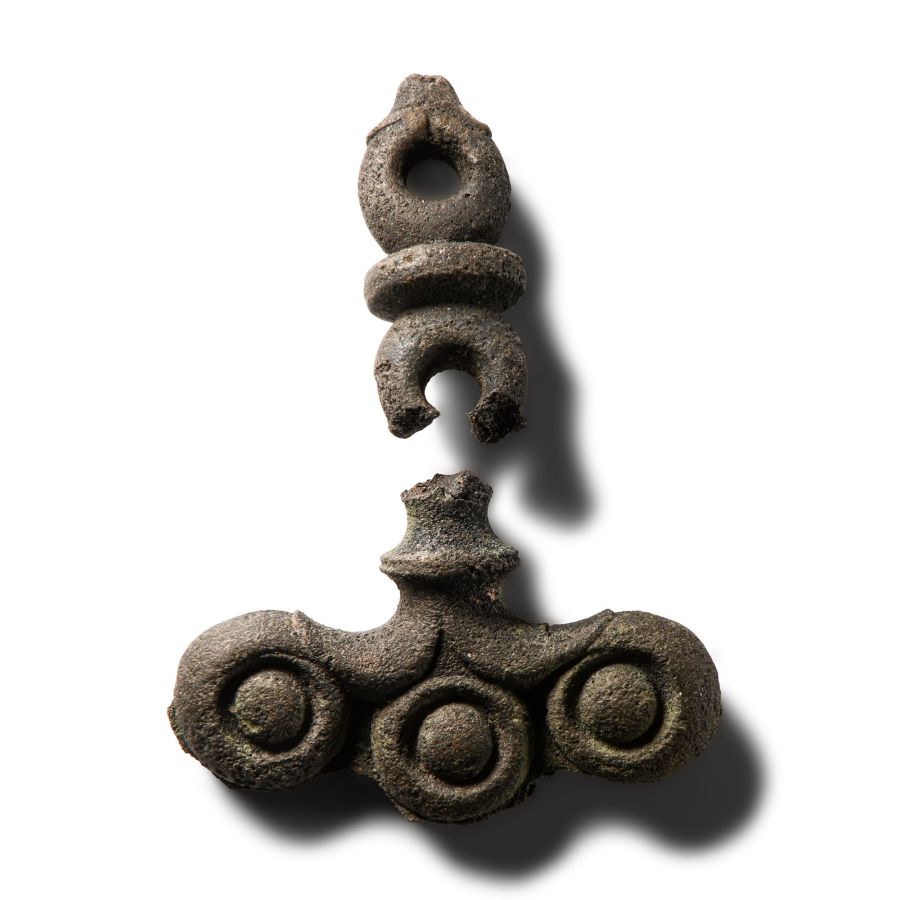
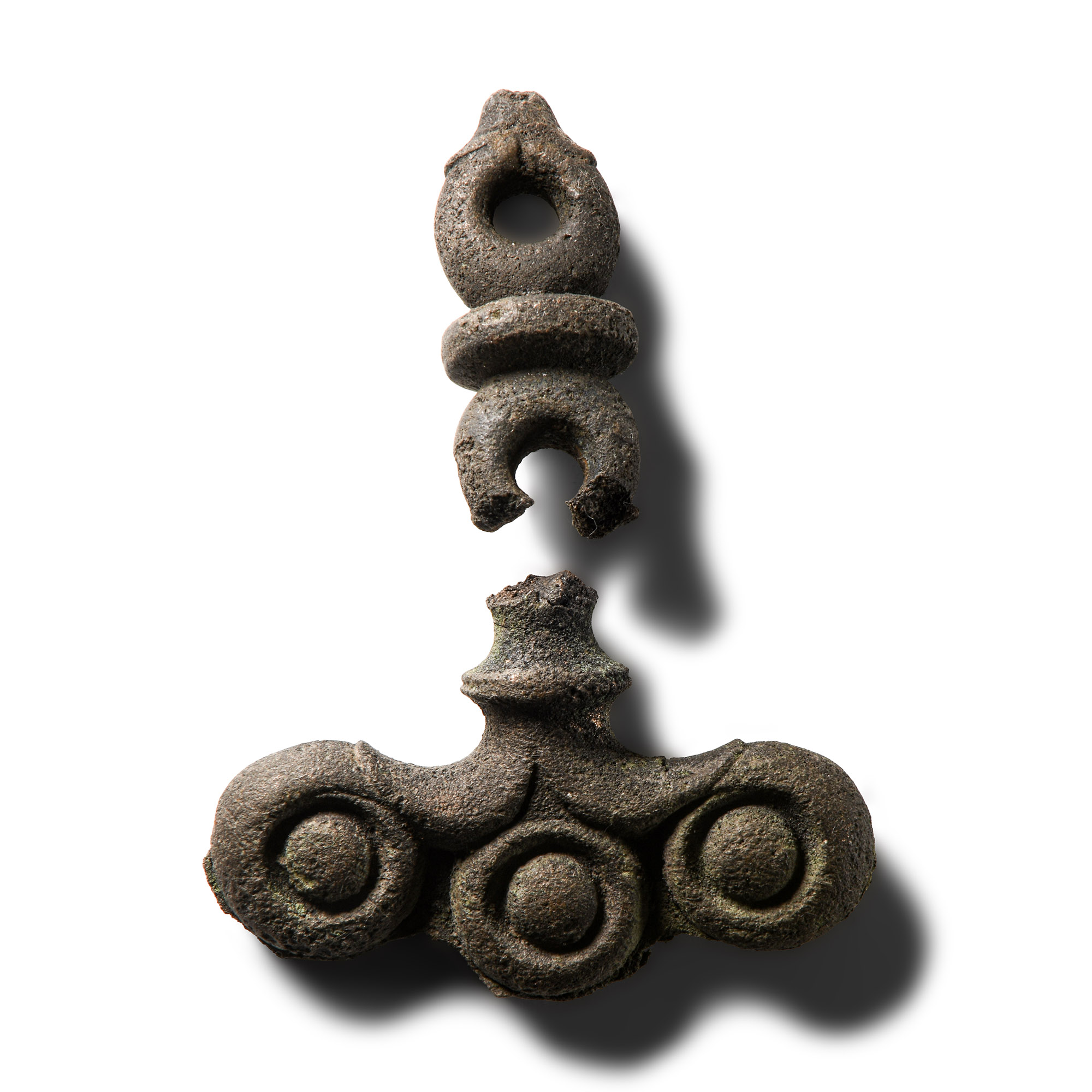
Iron Age Celtic Bronze Mirror Handle
CIRCA 1ST CENTURY B.C.-1ST CENTURY A.D.
1 3/4 - 2 5/8 in. (132 grams total, 46-67 mm).
Two fragments from a decorative mirror handle comprising a portion of the shank formed as two loops joined by a transverse disc, and a bifacial finial with volute scroll enclosing three domed discs (reversed and three round sockets for enamelled studs (obverse). [2, No Reserve]
ProvenanceFrom a collection acquired on the UK art market from various auction houses and collections mostly before 2000.
From an important Cambridgeshire estate; thence by descent.
Cf. similar in the British Museum under accession no.1981,0504.1.
CONDITIONTimeLine Auctions follows a vetting process to ensure the authenticity and legality of all items, reinforcing our commitment to integrity and responsible trading. Each antiquity, antique, and coin lot undergoes thorough examination by a vetting committee of at least ten external specialists, professional trade association members, scientists, and archaeologists: Our Vetting Process
AUCTIONS:
TimeLine is a leading auction house specialising in antiquities, ancient art, collectables, natural history, coins, medals, and books. Our auctions offer museums, collectors, historians, and enthusiasts the opportunity to acquire unique and historically significant pieces.
-
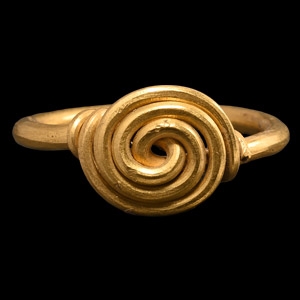
Iron Age Celtic Coiled Gold Ring
Circa 1st millennium B.C.Sold for (Inc. bp): £4,680
Formed as a one continuous bar forming the hoop and spiral bezel. 6.60 grams, 25.43 mm overall, 19.02 mm internal diameter (approximate size British Q, USA 8, Europe 17.49, Japan 16)
Acquired in the 2000s. From the private collection of John Lawton, Surrey, UK. Accompanied by a copy of a previous cataloguing information page. -
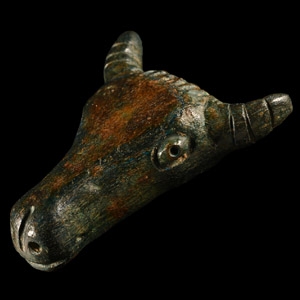
Iron Age Celtic Bronze Bull's Head Mount
Circa 1st century B.C.-1st century A.D.Sold for (Inc. bp): £130
Modelled in the half-round with hatched fur detailing to the forehead, tiers to the horns. 46 grams, 41 mm
From a collection acquired on the UK art market from various auction houses and collections mostly before 2000. From an important Cambridgeshire estate; thence by descent. -
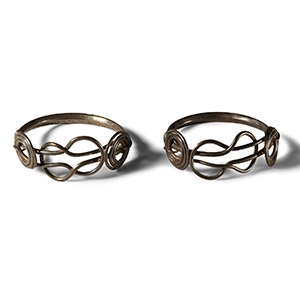
Iron Age Celtic Coiled Silver Bracelet Pair
1st century B.C.-1st century A.D.Sold for (Inc. bp): £1,300
Comprising a matched pair, each a keeled band with round-section finials formed as coiled bosses and linked loops forming a Hercules' knot at the centre, the ends coiled around the band. 101 grams total, 73-74 mm
Acquired in the early 1970s. Ex property of a Surrey collector. From the Horton collection, UK.
