
Loading, please wait...
LOT 1283
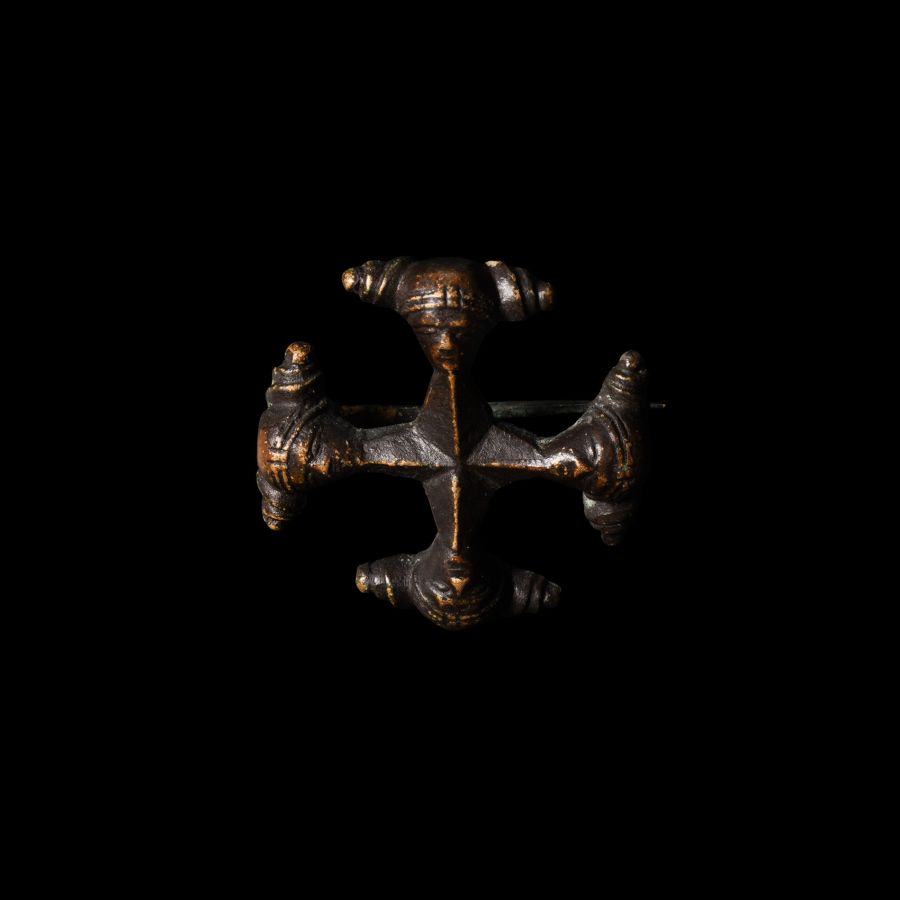
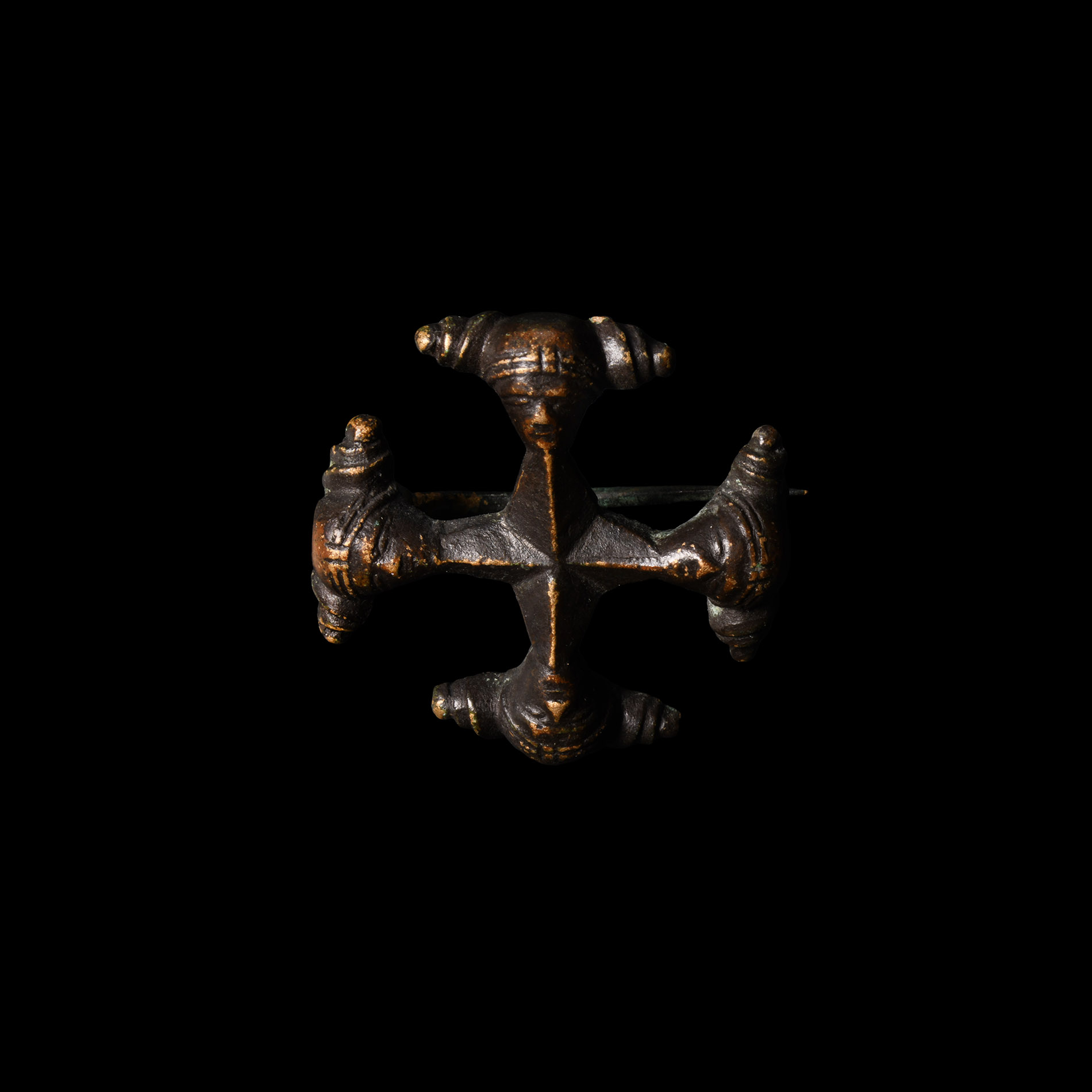
Iron Age Celtic Bronze Cruciform Brooch
1ST CENTURY B.C.-1ST CENTURY A.D.
1 3/8 in. (19 grams, 36 mm).
Formed as a facetted cross, each arm terminating in a human mask with helical projection to each temple; the masks depicting a triangular face with lentoid eyes and close-fitting cap; to the reverse, a substantial pin and catchplate; complete. [No Reserve]
ProvenanceFound Ringstead, Norfolk, UK, 1989.
Acquired late 1980s-early 1990s.
Private collection, Nottinghamshire, UK.
TimeLine Auctions follows a vetting process to ensure the authenticity and legality of all items, reinforcing our commitment to integrity and responsible trading. Each antiquity, antique, and coin lot undergoes thorough examination by a vetting committee of at least ten external specialists, professional trade association members, scientists, and archaeologists: Our Vetting Process
AUCTIONS:
TimeLine is a leading auction house specialising in antiquities, ancient art, collectables, natural history, coins, medals, and books. Our auctions offer museums, collectors, historians, and enthusiasts the opportunity to acquire unique and historically significant pieces.
-
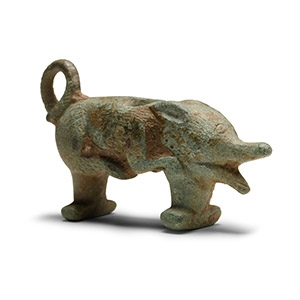
Iron Age Celtic Bronze Boar
1st century B.C.-1st century A.D.Estimate: £500 - 700 (+bp*)
Opening Bid: £278
Modelled couchant or running on two inverted T-shaped mounting lugs, curled tail forming a suspension loop, circular socket to back, stylised detailing to the coat and facial features. 27.7 grams, 43 mm
‘The Ancient Menagerie Collection’ formerly the property of a Cambridgeshire lady, collected since the 1990s and acquired from auctions and dealers throughout Europe and the USA, now ex London collection. -
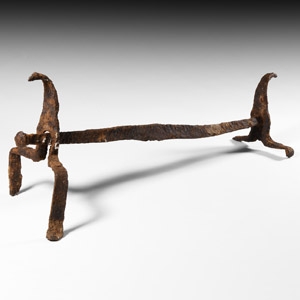
Iron Age Celtic Firedog
3rd century B.C.-2nd century A.D.Sold for (Inc. bp): £46
Comprising a square-section iron bar with tapering ends, separate finials each with two angled legs and a curved upper arm. 1.6 kg, 50 cm
Acquired on the European art market in the 1990s. Property of a Suffolk collector. -
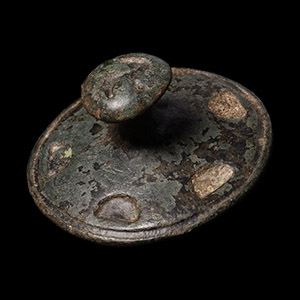
Iron Age Celtic Horse Harness Strap Distributor
2nd century B.C.-1st century A.D.Sold for (Inc. bp): £33
Four loops to the underside, five D-shaped radiating cells for enamel fill, central stud with triskele motif. 31.9 grams, 42 mm
Acquired London market, 1990s. Ex property of a London, UK collector.
