
Loading, please wait...
LOT 1293
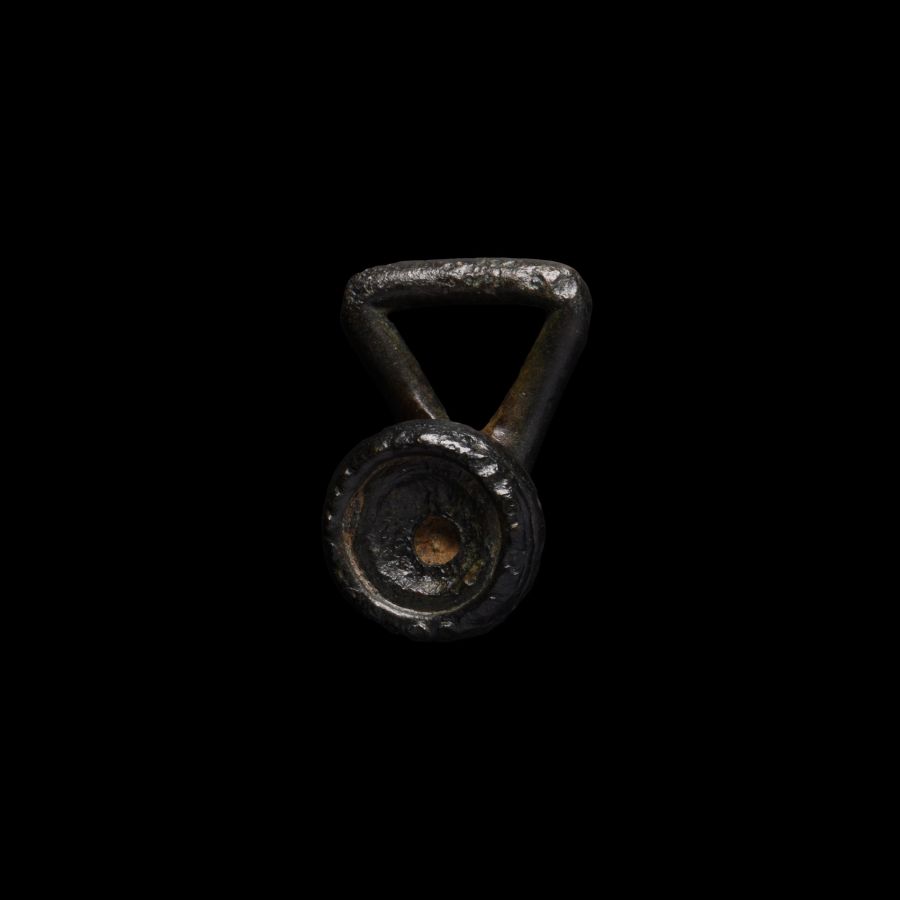
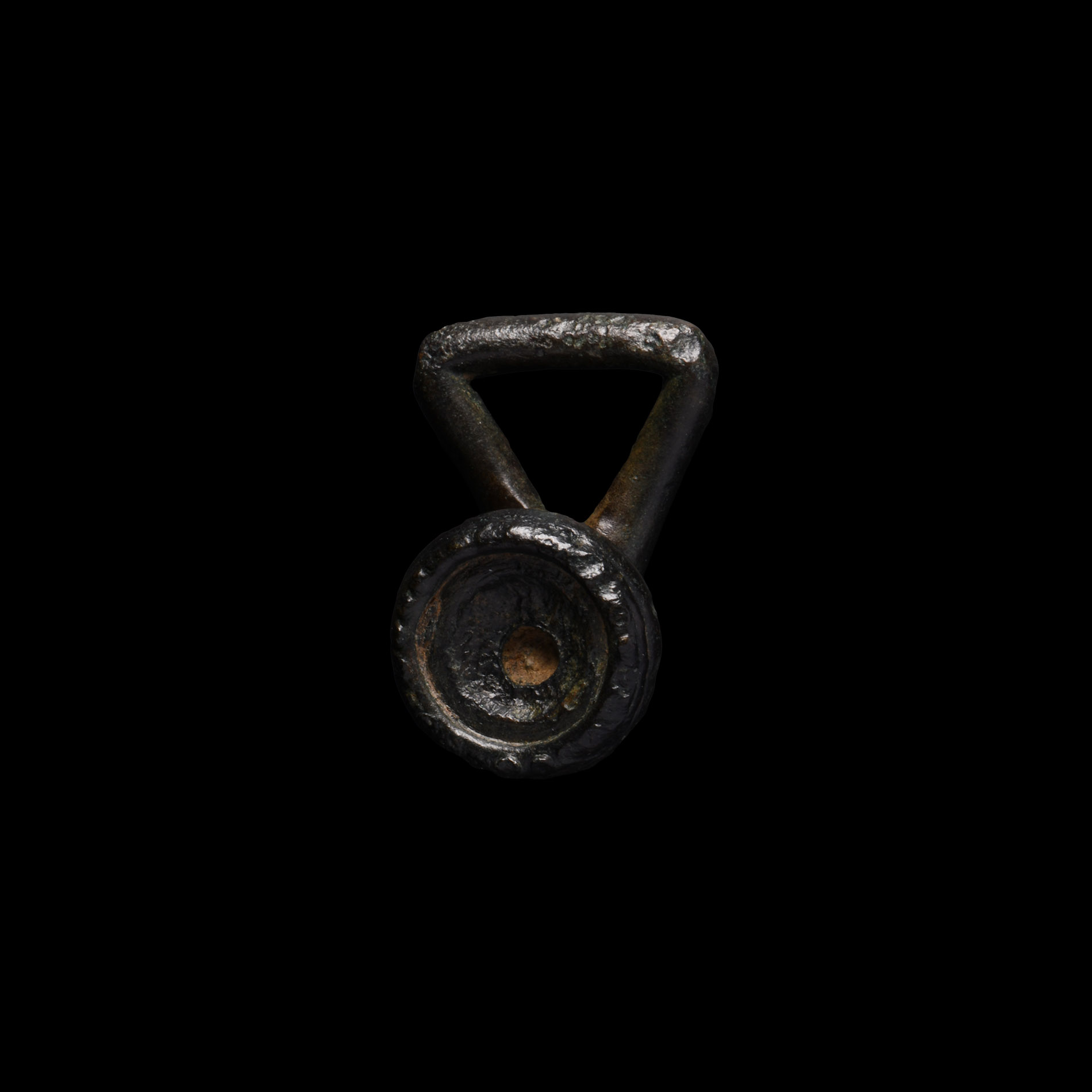
Iron Age Celtic Bronze Catuvellauni Clothes Fastener
1ST CENTURY B.C.-1ST CENTURY A.D.
1 in. (8.96 grams, 25 mm).
Composed of a boss-and-loop with straight edge to loop. [No Reserve]
ProvenanceFound Higham Ferrers, Northants, UK.
Ex Chris Rudd collection, Norfolk, UK; formed since the 1970s; collection number CE35.
Accompanied by a Chris Rudd information card.
Chris Rudd has collected ancient coins and antiquities since the 1940s. As an amateur archaeologist he found many himself at Badbury Rings, Dorset, 1952-53. He also dug at Hod Hill with Professor Sir Ian Richmond and at Wroxeter with Dame Kathleen Kenyon and Dr Graham Webster. Today he is best known as a Celtic coin dealer. His catalogues have been described as ‘an important research source’ by Professor Sir Barry Cunliffe and ‘treasure houses of delight’ by Dr Anne Ross. Coins and artefacts associated with Chris Rudd – as a collector, dealer and valuer – can be seen in The British Museum and other museums. This collection was formed since the 1970s.
CONDITIONTimeLine Auctions follows a vetting process to ensure the authenticity and legality of all items, reinforcing our commitment to integrity and responsible trading. Each antiquity, antique, and coin lot undergoes thorough examination by a vetting committee of at least ten external specialists, professional trade association members, scientists, and archaeologists: Our Vetting Process
AUCTIONS:
TimeLine is a leading auction house specialising in antiquities, ancient art, collectables, natural history, coins, medals, and books. Our auctions offer museums, collectors, historians, and enthusiasts the opportunity to acquire unique and historically significant pieces.
-
Iron Age Celtic Bronze Catuvellauni Clothes Fastener
1st century B.C.-1st century A.D.Sold for (Inc. bp): £59
Composed of a boss-and-loop with straight edge to loop. 8.96 grams, 25 mm
Found Higham Ferrers, Northants, UK. Ex Chris Rudd collection, Norfolk, UK; formed since the 1970s; collection number CE35. Accompanied by a Chris Rudd information card.
Chris Rudd has collected ancient coins and antiquities since the 1940s. As an amateur archaeologist he found many himself at Badbury Rings, Dorset, 1952-53. He also dug at Hod Hill with Professor Sir Ian Richmond and at Wroxeter with Dame Kathleen Kenyon and Dr Graham Webster. Today he is best known as a Celtic coin dealer. His catalogues have been described as ‘an important research source’ by Professor Sir Barry Cunliffe and ‘treasure houses of delight’ by Dr Anne Ross. Coins and artefacts associated with Chris Rudd – as a collector, dealer and valuer – can be seen in The British Museum and other museums. This collection was formed since the 1970s. -
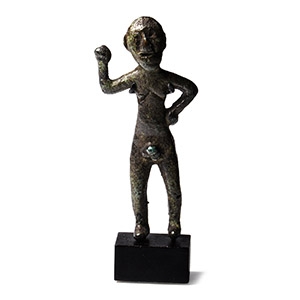
Iron Age Celtic Bronze Figure of a Man
Circa 1st century B.C.-5th century A.D.Sold for (Inc. bp): £1,170
Formed with right hand raised and left hand on the hip, standing nude, ovate face with impressed eyes and slit mouth; mounted on a custom-made stand. 22.5 grams, 60 mm high (45.6 grams total, 71 mm including stand)
with the Prehistoric Museum, Dingle, Country Kerry, Republic of Ireland, until November 2018. Ex K. Schmidt collection, Cologne, Germany. Accompanied by an Irish export licence, no. 6570. -
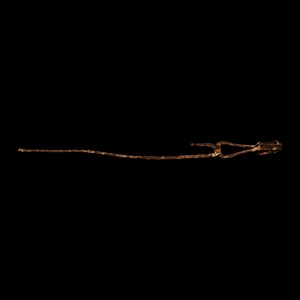
Iron Age Celtic Fire Tongs
Circa 1st century B.C.-1st century A.D. or laterSold for (Inc. bp): £13
The longer iron handle with twisted body, the tongue plates roughly rectangular with waisted sides. 822 grams, 98.5 cm
Acquired 1990s-early 2000s. East Anglian private collection.
