
Loading, please wait...
LOT 0318
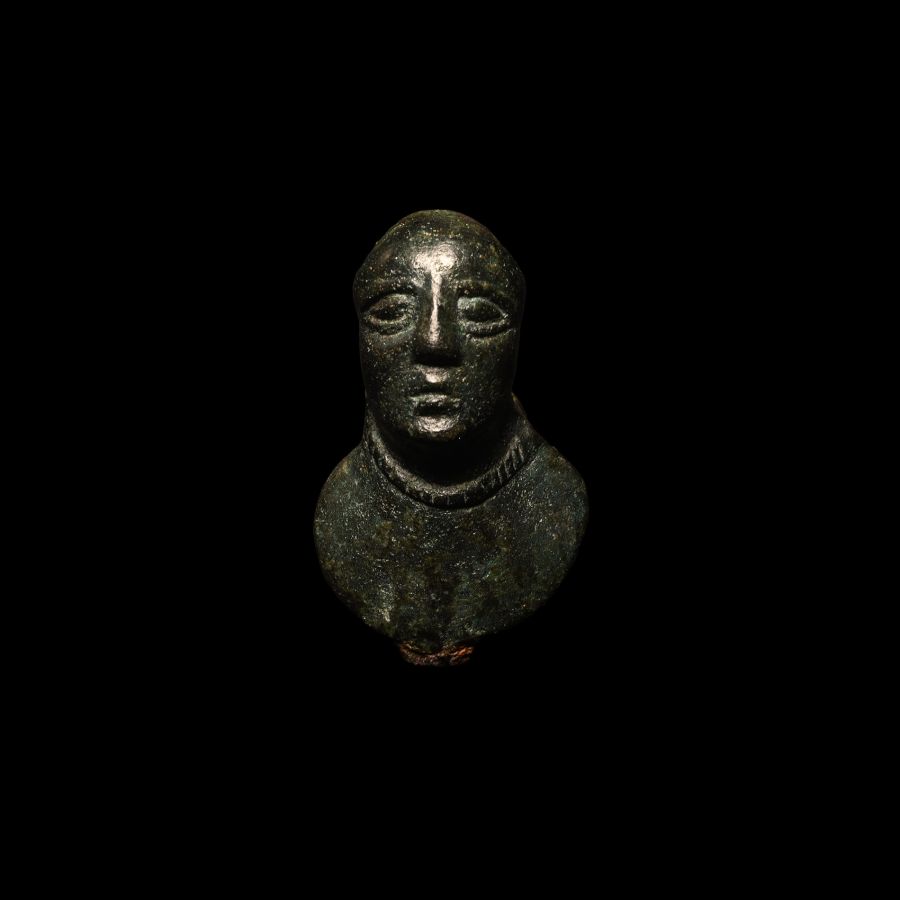
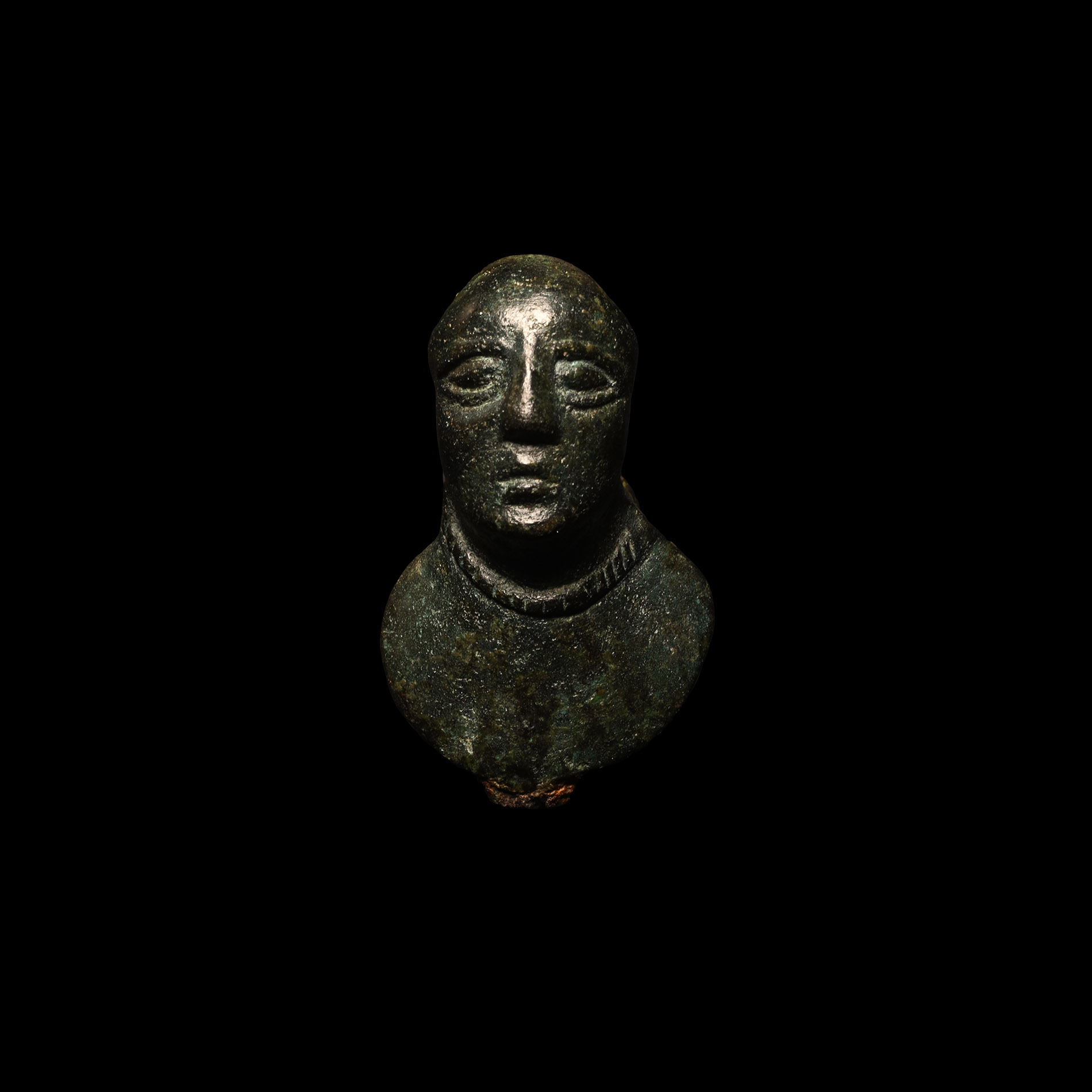
Iron Age Celtic Bronze Bust of a Bound Captive
CIRCA 1ST CENTURY A.D.
1 3/4 in. (54 grams, 45 mm high).
The facial features carefully moulded with oversized, almond-shaped eyes and a rope around the neck; hollow to the reverse with a central iron mounting peg, the void filled with lead.
ProvenanceFound East Anglia, UK.
LiteratureCf. the anthropomorphic mount from Ancaster, Lincolnshire, recorded with the PAS under reference DUR-8474E1 and similar but less well-defined bust from Oswestry, Shropshire, recorded under CPAT-3E2E53.
CONDITIONTimeLine Auctions follows a vetting process to ensure the authenticity and legality of all items, reinforcing our commitment to integrity and responsible trading. Each antiquity, antique, and coin lot undergoes thorough examination by a vetting committee of at least ten external specialists, professional trade association members, scientists, and archaeologists: Our Vetting Process
AUCTIONS:
TimeLine is a leading auction house specialising in antiquities, ancient art, collectables, natural history, coins, medals, and books. Our auctions offer museums, collectors, historians, and enthusiasts the opportunity to acquire unique and historically significant pieces.
-
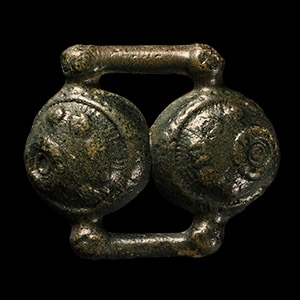
Iron Age British Catuvellauni Bronze Celtic Strap Junction
1st century B.C.-1st century A.D.Estimate: £200 - 300 (‡+bp*)
Opening Bid: £100
Decorated with two opposed crescent moons (found frequently on the early gold coins of the Catuvellauni, e.g. ABC 2442, 2445, 2508, 2511, 2514, 2550-74). 21 grams, 33 mm
Found Buckinghamshire, UK. Ex Chris Rudd collection, Norfolk, UK; formed since the 1970s. Collection number CE18. Accompanied by a Chris Rudd information card.
Chris Rudd has collected ancient coins and antiquities since the 1940s. As an amateur archaeologist he found many himself at Badbury Rings, Dorset, 1952-53. He also dug at Hod Hill with Professor Sir Ian Richmond and at Wroxeter with Dame Kathleen Kenyon and Dr Graham Webster. Today he is best known as a Celtic coin dealer. His catalogues have been described as ‘an important research source’ by Professor Sir Barry Cunliffe and ‘treasure houses of delight’ by Dr Anne Ross. Coins and artefacts associated with Chris Rudd – as a collector, dealer and valuer – can be seen in The British Museum and other museums. This collection was formed since the 1970s. -
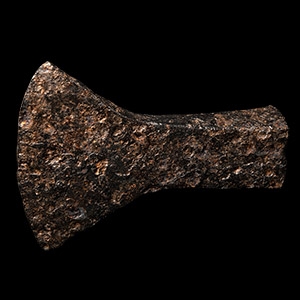
Iron Age Celtic La Tene Socketted Axe
Circa 4th century B.C.Sold for (Inc. bp): £65
Forged in iron with folded rectangular-section socket and flared crescent-edge blade. 303 grams, 11.5 cm
Formerly with Hermann Historica, Germany. Ex property of a UK gentleman. -
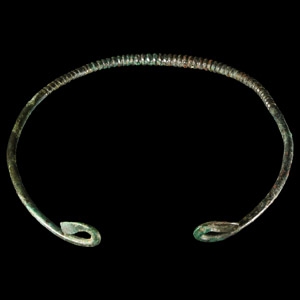
European Iron Age Celtic Bronze Torc
Circa 3rd-2nd century B.C.Sold for (Inc. bp): £416
The penannular body with recurved terminals and squat biconical ribs to the lower body. 56 grams, 13.5 cm
UK collection, early 1990s and before. Acquired on the UK art market since the early 2000s. From a private collection, Lancashire, UK.
