
Loading, please wait...
LOT 1565
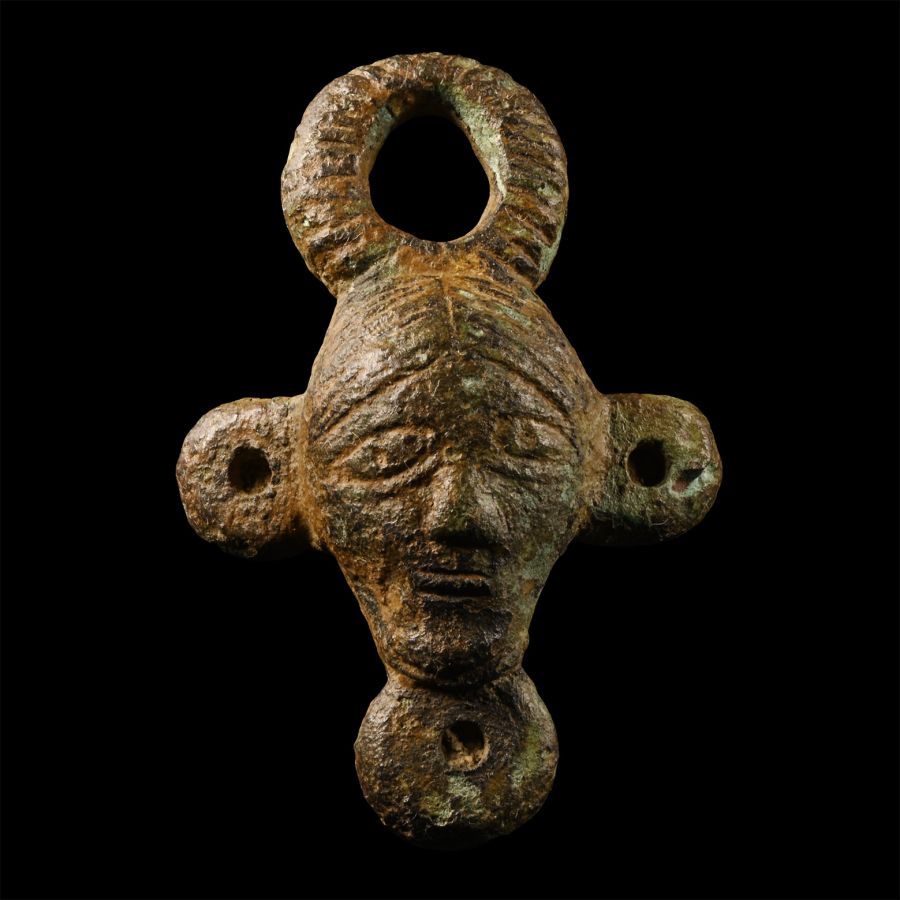
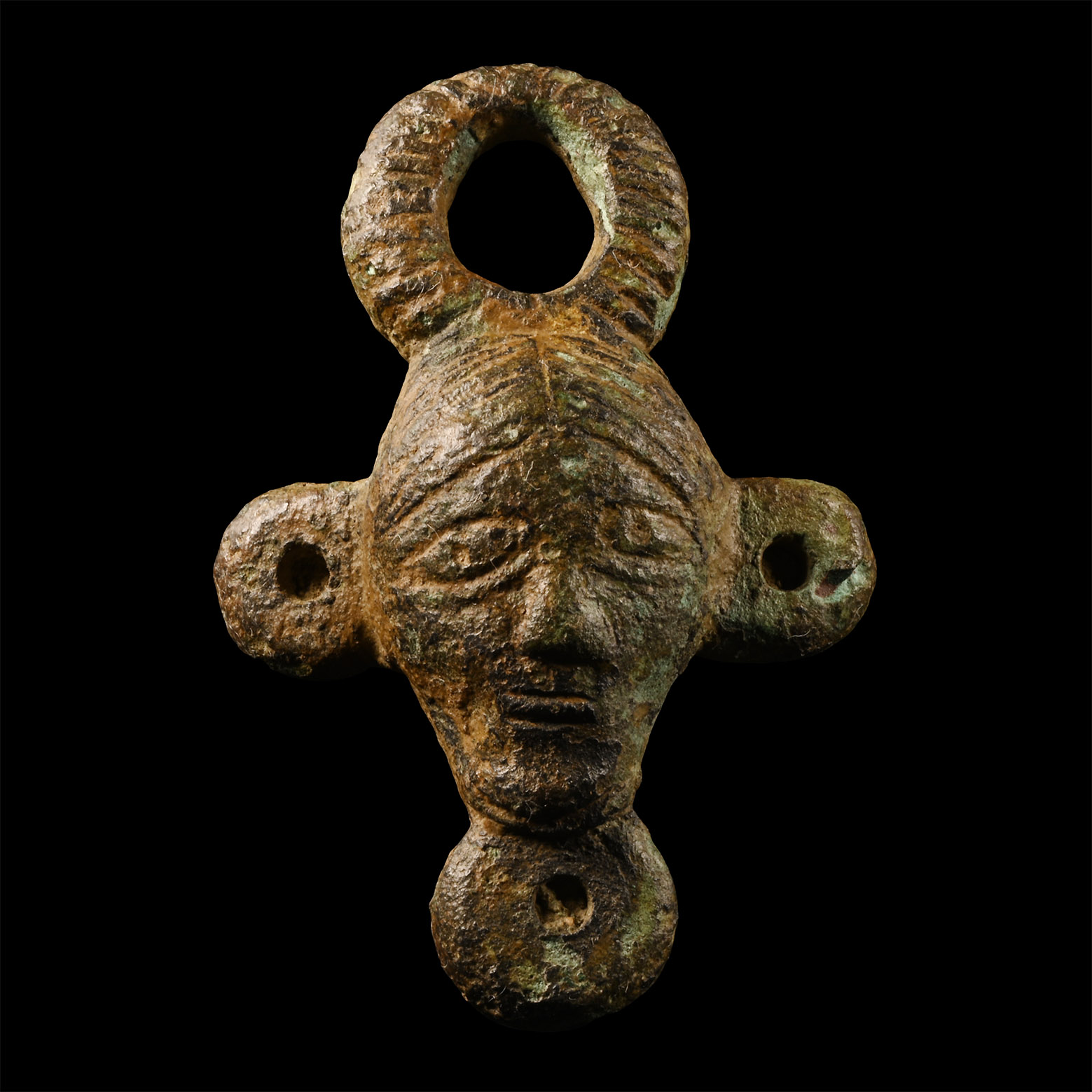
Iron Age Celtic Bronze Bowl Mount
CIRCA 1ST CENTURY B.C.-1ST CENTURY A.D.
2 1/4 in. (45.2 grams, 58 mm).
Piriform mask with centre-parted hair almond-shaped eyes, keystone-shaped nose and slit mouth; hollow to the reverse, three radiating pierced attachment lugs and loop above with hair texture. [No Reserve]
ProvenanceFrom a collection acquired on the UK art market from various auction houses and collections mostly before 2000.
From an important Cambridgeshire estate; thence by descent.
TimeLine Auctions follows a vetting process to ensure the authenticity and legality of all items, reinforcing our commitment to integrity and responsible trading. Each antiquity, antique, and coin lot undergoes thorough examination by a vetting committee of at least ten external specialists, professional trade association members, scientists, and archaeologists: Our Vetting Process
AUCTIONS:
TimeLine is a leading auction house specialising in antiquities, ancient art, collectables, natural history, coins, medals, and books. Our auctions offer museums, collectors, historians, and enthusiasts the opportunity to acquire unique and historically significant pieces.
-
Iron Age Celtic Bronze Mirror Handle
Circa 1st century B.C.-1st century A.D.Sold for (Inc. bp): £208
Two fragments from a decorative mirror handle comprising a portion of the shank formed as two loops joined by a transverse disc, and a bifacial finial with volute scroll enclosing three domed discs (reversed and three round sockets for enamelled studs (obverse). 132 grams total, 46-67 mm
From a collection acquired on the UK art market from various auction houses and collections mostly before 2000. From an important Cambridgeshire estate; thence by descent. -
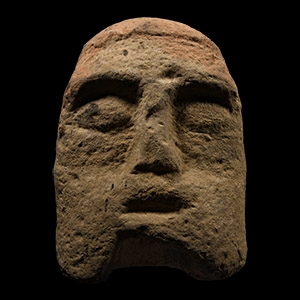
Iron Age Celtic Sandstone Head
2nd century B.C.-1st century A.D.Sold for (Inc. bp): £975
Irregular D-shaped head with reserved 'cap', almond-shaped eyes and slit mouth; pierced vertically from the D-shaped socket at the chin to the top of the head; possibly part of a furnace vent; mounted on a custom-made display stand. 10.65 kg total, 37 cm including stand
From a collection acquired on the UK art market from various auction houses and collections mostly before 2000. From an important Cambridgeshire estate; thence by descent.
The cult of the human head was prevalent in the Celtic world, being associated with warding-off evil spirits and bearing of good luck. -
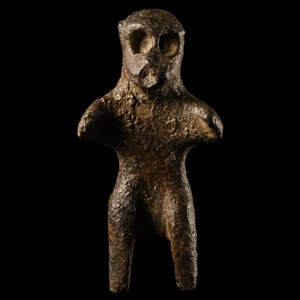
Iron Age Celtic Bronze Deity Votive Statuette
Circa 1st century B.C.-1st century A.D.Sold for (Inc. bp): £260
Modelled in the round with curved panels for arms, pierced eye sockets, pinched facial features. 32.1 grams, 50 mm
From a collection acquired on the UK art market from various auction houses and collections mostly before 2000. From an important Cambridgeshire estate; thence by descent.
