
Loading, please wait...
LOT 1548
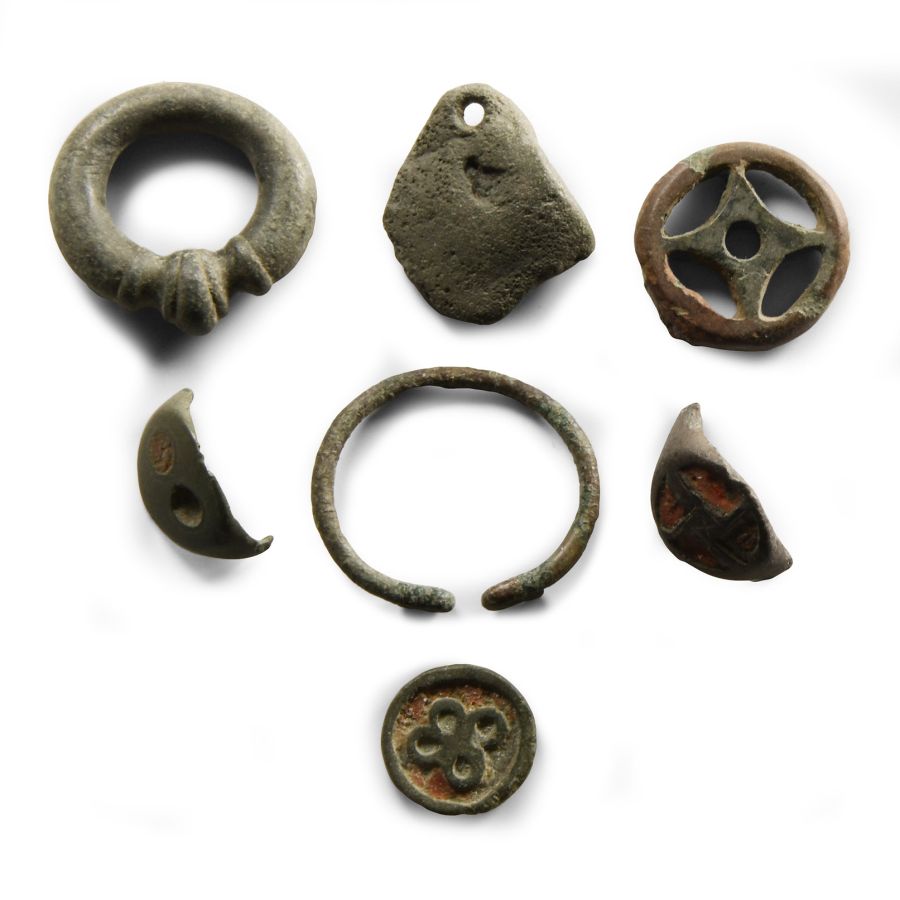
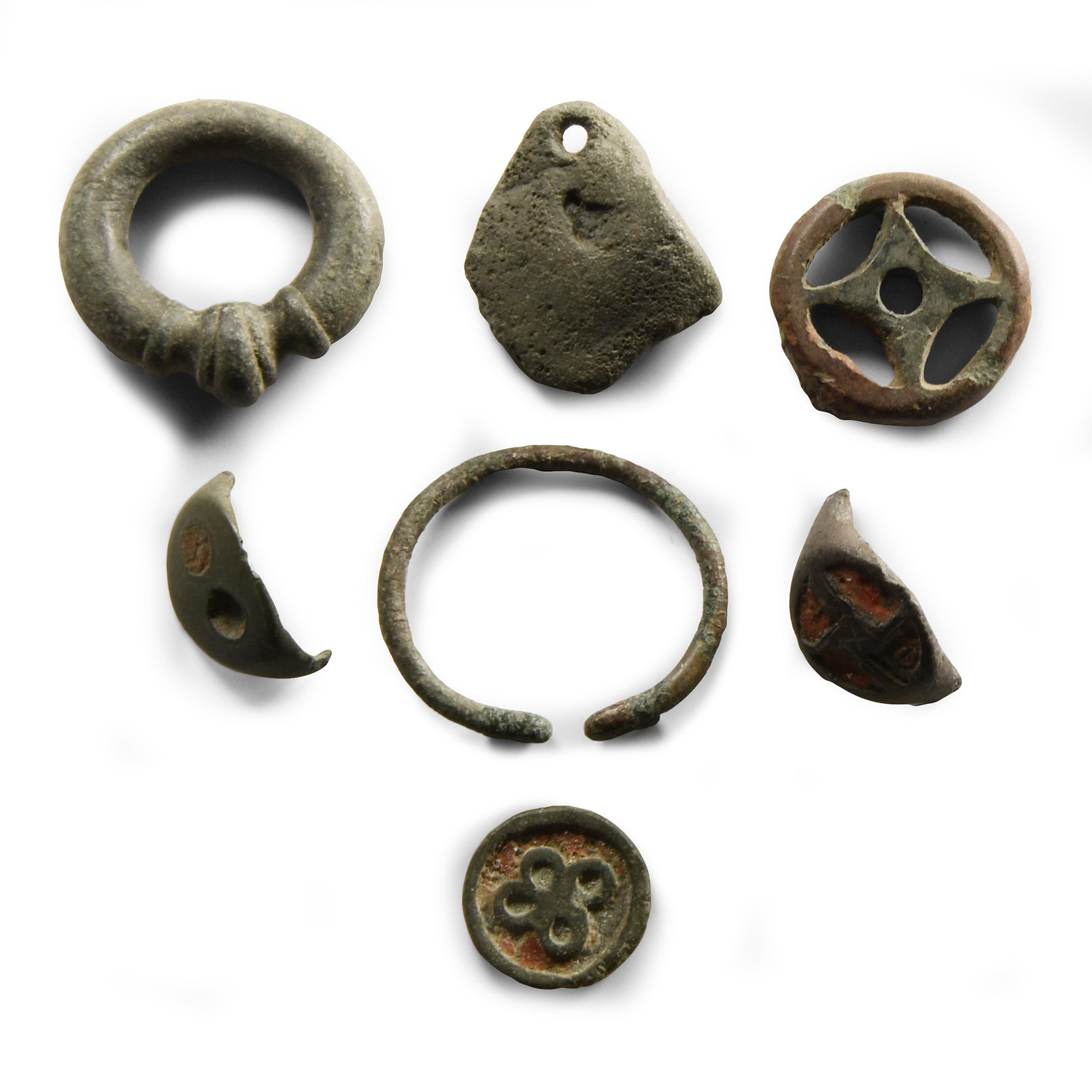
Iron Age Celtic Bronze Artefact Collection
1ST CENTURY B.C.-1ST CENTURY A.D.
1/2 - 1 in. (32.4 grams total, 14-27 mm).
Including a terret mount, penannular brooch. enamelled ring fragments, votive axehead and other items. [7, No Reserve]
ProvenanceFound Wiltshire, UK, before 1974.
CONDITIONTimeLine Auctions follows a vetting process to ensure the authenticity and legality of all items, reinforcing our commitment to integrity and responsible trading. Each antiquity, antique, and coin lot undergoes thorough examination by a vetting committee of at least ten external specialists, professional trade association members, scientists, and archaeologists: Our Vetting Process
AUCTIONS:
TimeLine is a leading auction house specialising in antiquities, ancient art, collectables, natural history, coins, medals, and books. Our auctions offer museums, collectors, historians, and enthusiasts the opportunity to acquire unique and historically significant pieces.
-
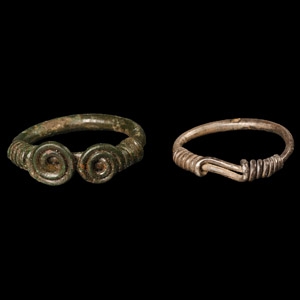
Iron Age Coiled Ring Pair
1st century B.C.-2nd century A.D.Sold for (Inc. bp): £124
Pair of rings comprising: a bronze ring with overlapping terminals tapering into coiled discoid plaques, coiled wire sleeves; a silver ring with overlapping terminals coiled around the hoop. 3.76 grams total, 18-21 mm
UK private collection before 2000. On the UK art market. Property of a London gentleman. -
.jpg)
Iron Age Celtic 'Dorset' Stone Head
Circa 2nd century B.C.-1st century A.D.Sold for (Inc. bp): £910
Carved stone male head with almond-shaped eyes, snub nose, prominent moustache; surface abraded due to prolonged immersion in a river; mounted on a custom-made display stand. 262 grams total, 10.7 cm including stand
Found Dorset, UK. From a collection acquired on the UK art market from various auction houses and collections mostly before 2000. From an important Cambridgeshire estate; thence by descent. -
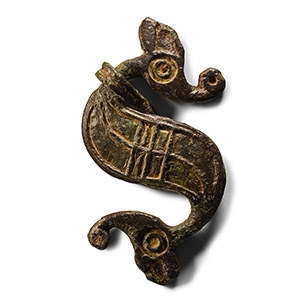
Large Iron Age Celtic Enamelled Dragonesque Brooch
75-175 A.D.Sold for (Inc. bp): £312
S-shaped dragonesque brooch with comma-shaped finials, each with a raised ring-and-dot 'eye', curved neck, body with high-relief cells to accept enamel fill; free-running pin coiled about the 'neck'. 15.7 grams, 54 mm
Found whilst searching with a metal detector in South Stainley with Cayton, near Harrogate, North Yorkshire, UK, in May 2014. Accompanied by a copy of a British Museum's Portable Antiquities Scheme (PAS) report no.SWYOR-279501. Accompanied by an original British Museum's Portable Antiquities Scheme (PAS) receipt copy no.002210 dated 14 July 2014.
