
Loading, please wait...
LOT 1547
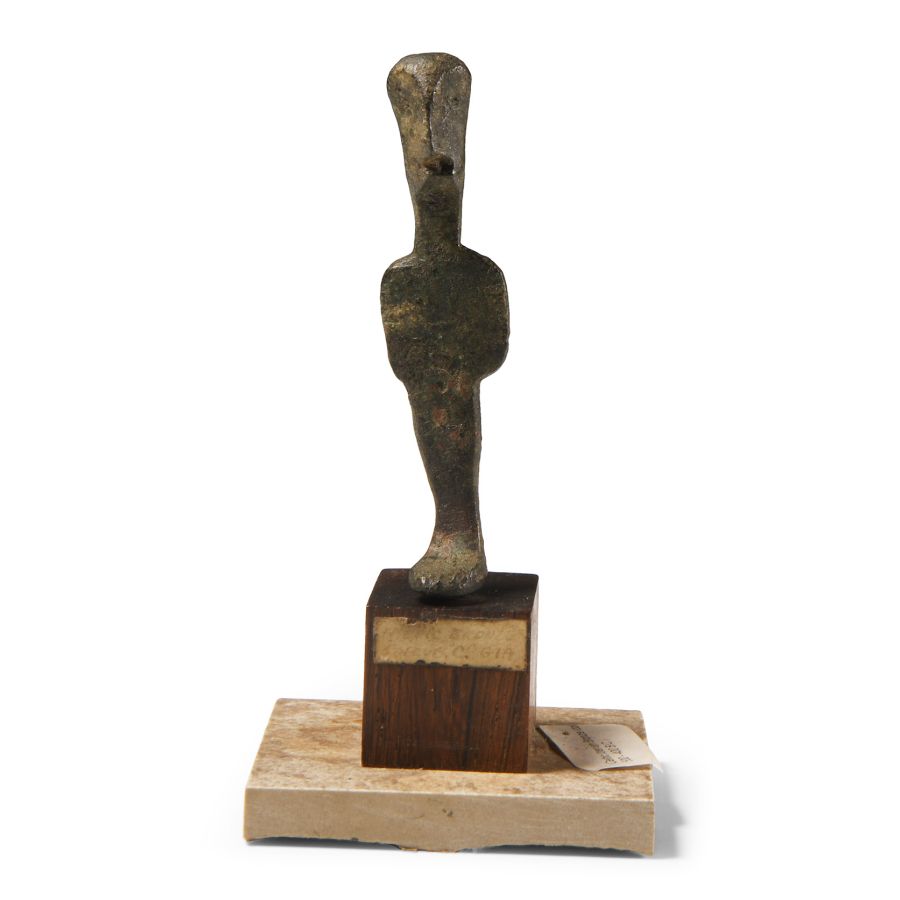
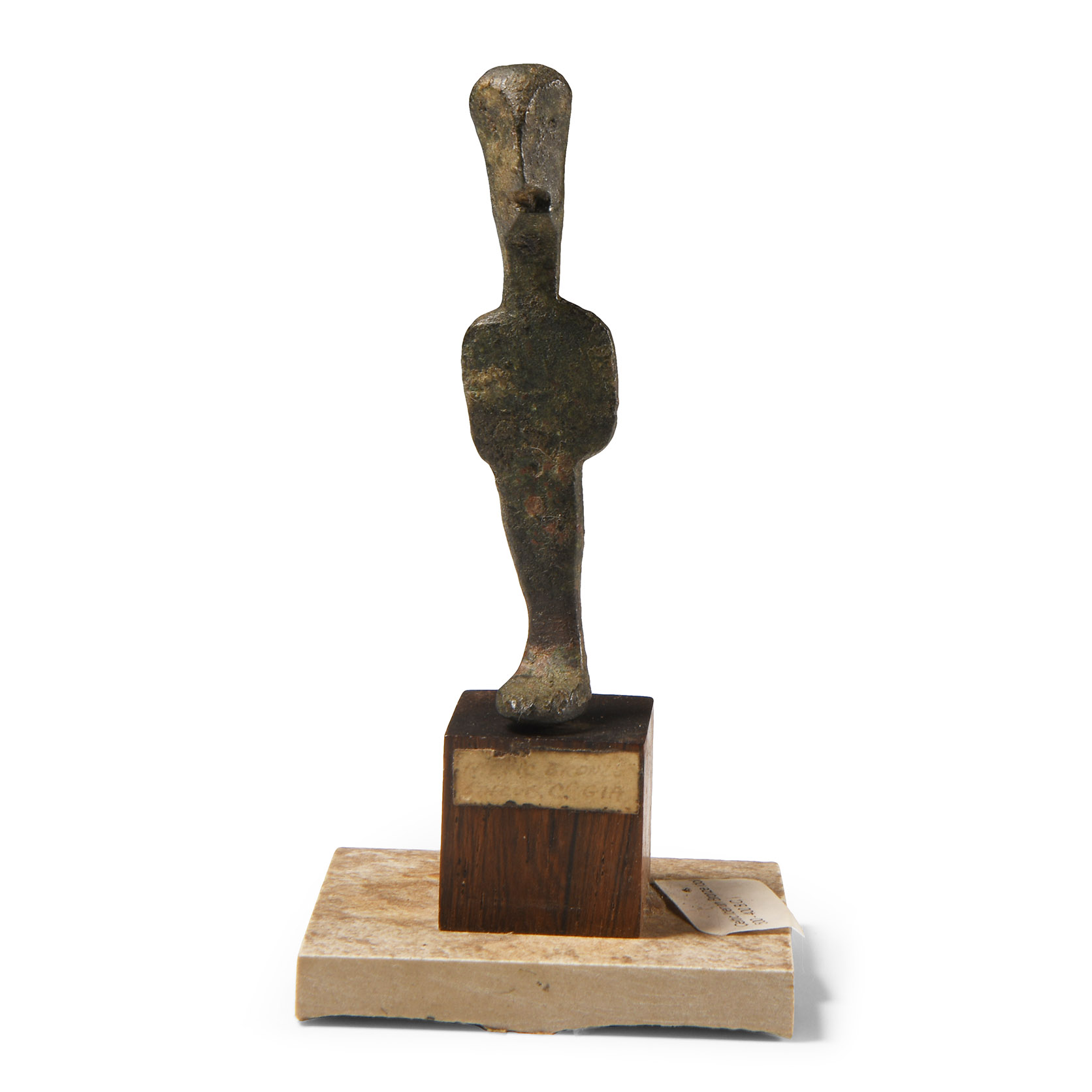
Iron Age Celtiberian Bronze Idol
CIRCA 4TH CENTURY B.C.
4 in. (84 grams total, 10 cm including stand).
Modelled with flat-section bdy, rounded head and feet, legs conjoined, impressed navel, carinated face; mounted on a custom-made stand with inscription 'Celtic Iberian Bronze idol / 500-400 B.C.'. [No Reserve]
ProvenanceFrom a collection acquired on the UK art market from various auction houses and collections mostly before 2000.
From an important Cambridgeshire estate; thence by descent.
TimeLine Auctions follows a vetting process to ensure the authenticity and legality of all items, reinforcing our commitment to integrity and responsible trading. Each antiquity, antique, and coin lot undergoes thorough examination by a vetting committee of at least ten external specialists, professional trade association members, scientists, and archaeologists: Our Vetting Process
AUCTIONS:
TimeLine is a leading auction house specialising in antiquities, ancient art, collectables, natural history, coins, medals, and books. Our auctions offer museums, collectors, historians, and enthusiasts the opportunity to acquire unique and historically significant pieces.
-
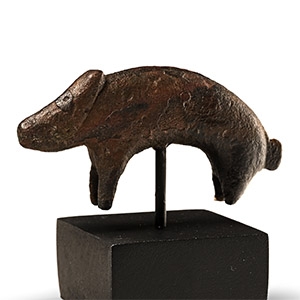
Iron Age Celtic Bronze Boar Statuette
Circa 2nd century B.C.-1st century A.D.Sold for (Inc. bp): £286
Modelled in the round with elegantly arched back, small tail and hindlegs, sturdy forelegs; the head with strong conical profile and raised dorsal ridge; mounted on a custom-made display stand. 49.18 grams total, 50 mm wide including stand
From a collection acquired on the UK art market from various auction houses and collections mostly before 2000. From an important Cambridgeshire estate; thence by descent. -
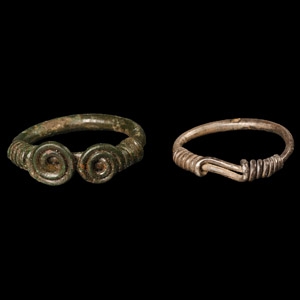
Iron Age Coiled Ring Pair
1st century B.C.-2nd century A.D.Sold for (Inc. bp): £124
Pair of rings comprising: a bronze ring with overlapping terminals tapering into coiled discoid plaques, coiled wire sleeves; a silver ring with overlapping terminals coiled around the hoop. 3.76 grams total, 18-21 mm
UK private collection before 2000. On the UK art market. Property of a London gentleman. -
.jpg)
Iron Age Celtic Lead 'Wheel Money' Group
Late 1st millennium B.C.Sold for (Inc. bp): £65
Three Eastern Celtic or Gaulish cast wheels; two with eight-knops and one four-spoked type. 16.6 grams total, 15-24 mm
Acquired on the UK art market. Ex the late Walter Steinberg collection, London, UK. Acquired on the UK art market in 2014. From the property of a Kent lady collector.
