
Loading, please wait...
LOT 1554
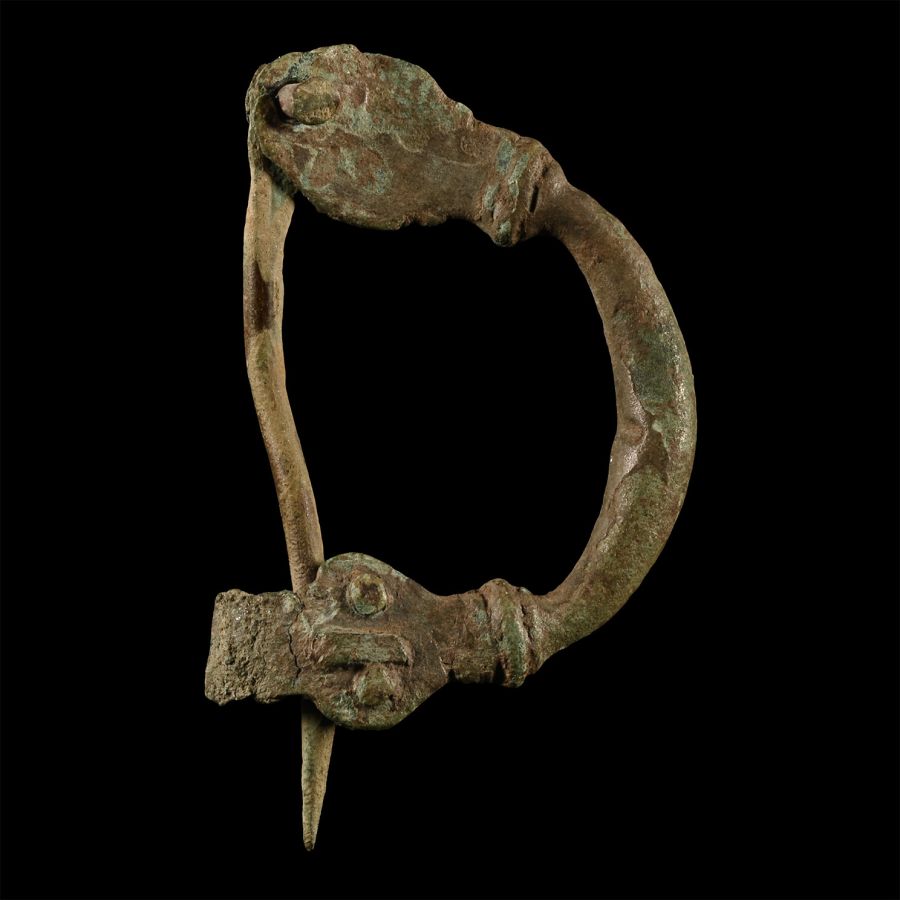
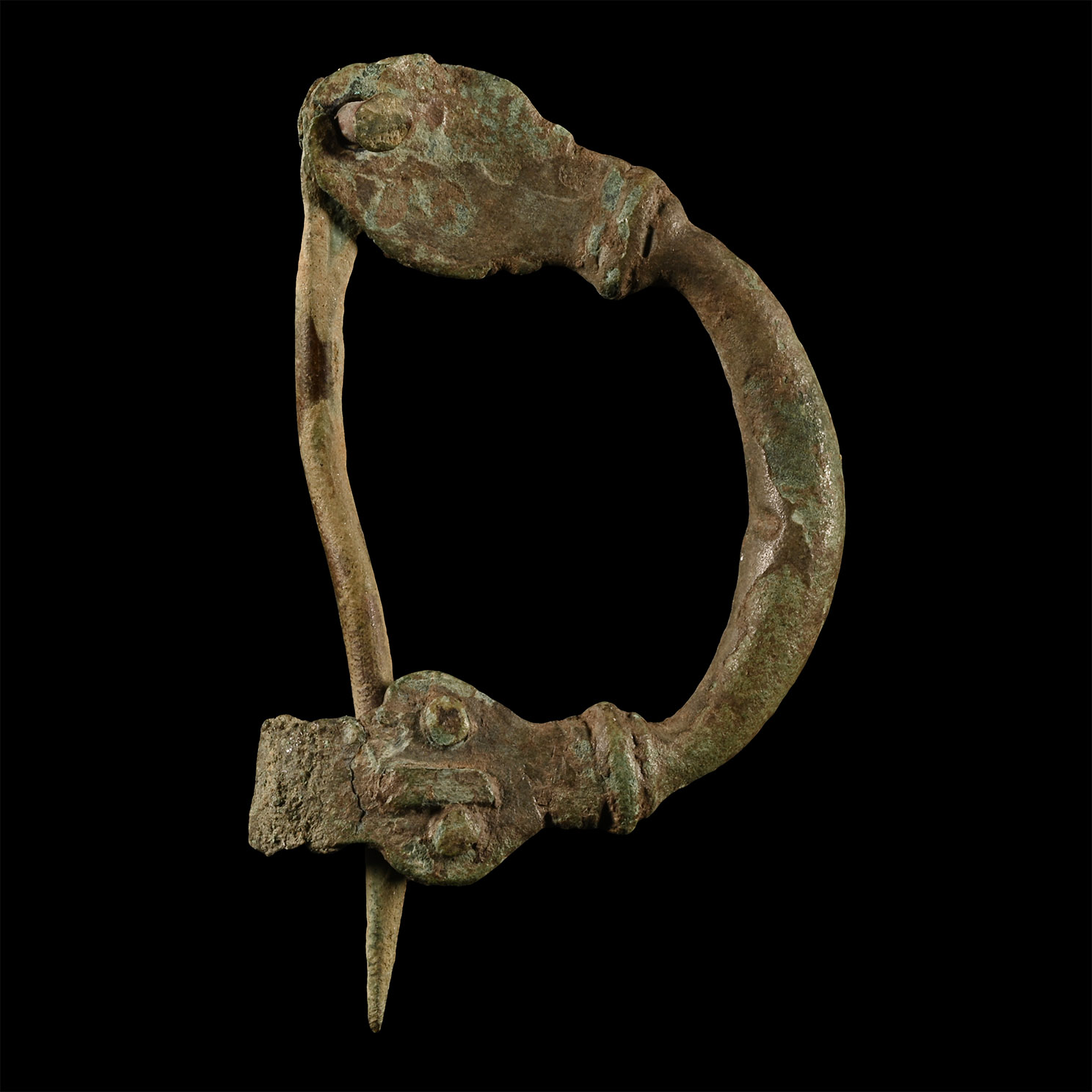
Iron Age Bronze Brooch
CIRCA 1ST CENTURY B.C.
2 in. (9.02 grams, 49 mm).
Arched bow-brooch tapering to each end, one with flat palmette panels holding a pivoting pin and the other a ribbed catch with two small posts supporting a sprung plate. [No Reserve]
ProvenanceAcquired on the London art market in the late 1980s-1990s.
From the family collection of an East London, UK, gentleman.
Cf. Hattatt, R., Brooches of Antiquity, Oxford, 1987, item 1371, where a Macedonian origin is proposed for the Phrygian-derived form.
CONDITIONTimeLine Auctions follows a vetting process to ensure the authenticity and legality of all items, reinforcing our commitment to integrity and responsible trading. Each antiquity, antique, and coin lot undergoes thorough examination by a vetting committee of at least ten external specialists, professional trade association members, scientists, and archaeologists: Our Vetting Process
AUCTIONS:
TimeLine is a leading auction house specialising in antiquities, ancient art, collectables, natural history, coins, medals, and books. Our auctions offer museums, collectors, historians, and enthusiasts the opportunity to acquire unique and historically significant pieces.
-
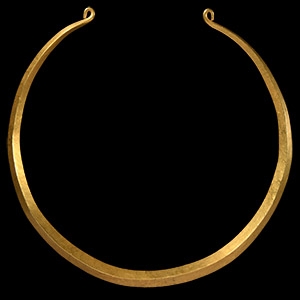
Celtiberian Gold Neck Torc
4th-2nd century B.C.Sold for (Inc. bp): £14,950
A heavy penannular neck torc with carinated body and tapering coiled terminals. 165 grams, 14.8 cm
Nefer Gallery, Zurich, 1980s. French private collection. with Christie's, Ancient Jewelry, New York, 7 December 2006, no.224 (US$ 20,000-$30,000). French private collection. Accompanied by copies of the relevant Christie's catalogue pages. -
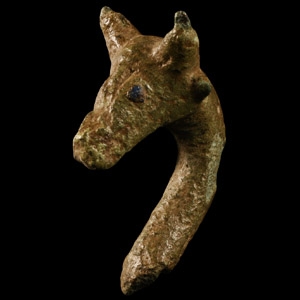
Iron Age Celtic Bronze Votive Horse's Head
Circa 1st century B.C.-1st century A.D.Sold for (Inc. bp): £111
With carinated arching neck, crescent 'horns' above the forehead, inset blue glass eyes. 12 grams, 34 mm
From a collection acquired on the UK art market from various auction houses and collections mostly before 2000. From an important Cambridgeshire estate; thence by descent. -
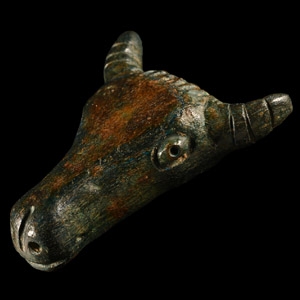
Iron Age Celtic Bronze Bull's Head Mount
Circa 1st century B.C.-1st century A.D.Sold for (Inc. bp): £130
Modelled in the half-round with hatched fur detailing to the forehead, tiers to the horns. 46 grams, 41 mm
From a collection acquired on the UK art market from various auction houses and collections mostly before 2000. From an important Cambridgeshire estate; thence by descent.
