
Loading, please wait...
LOT 1272
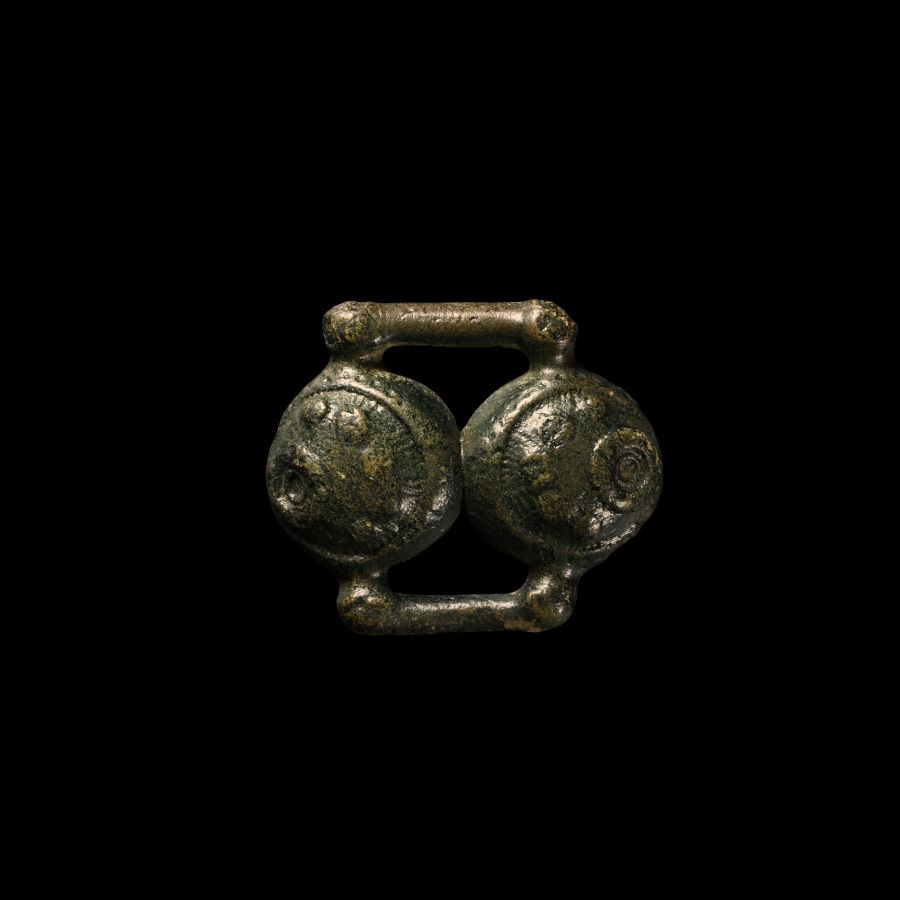
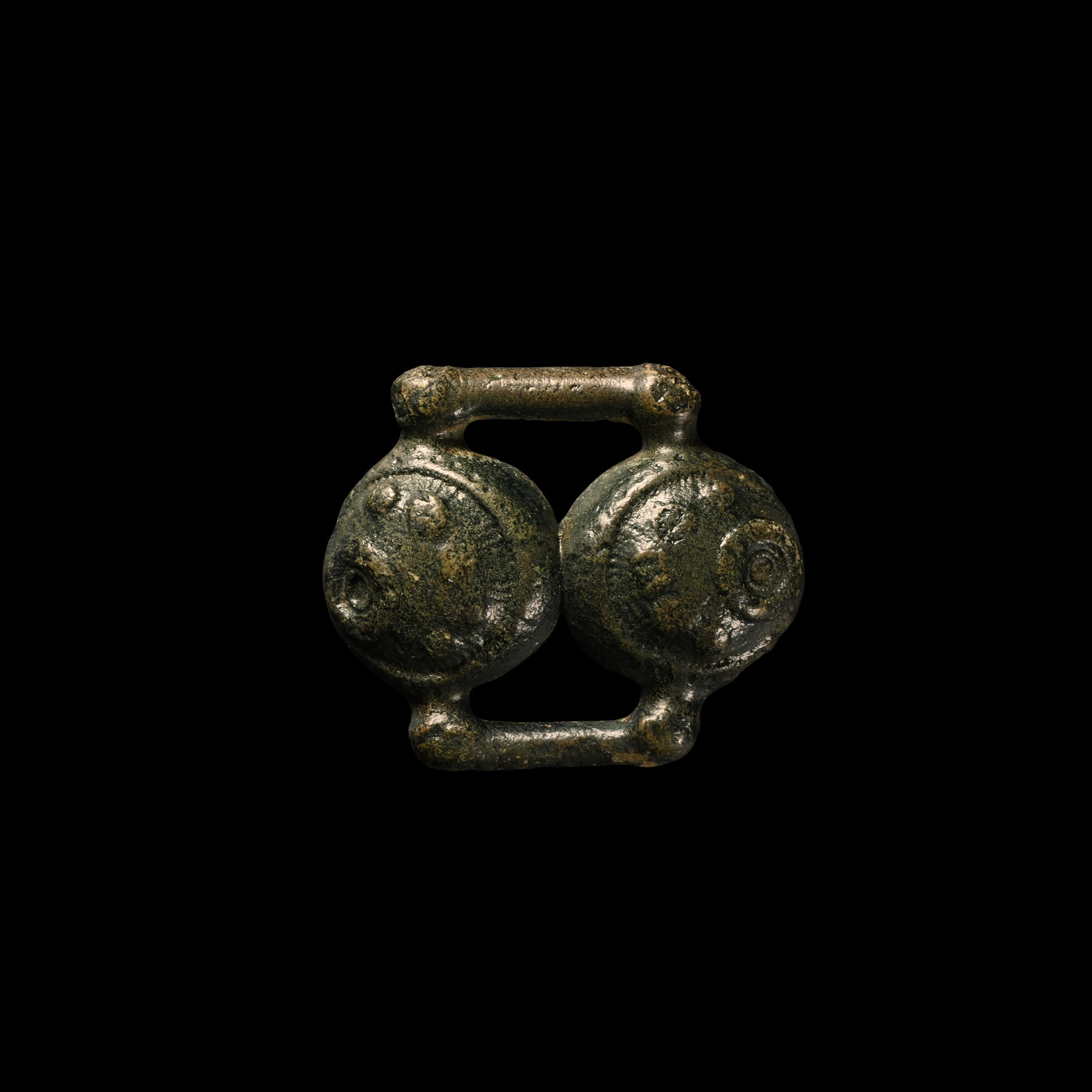
Iron Age British Catuvellauni Bronze Celtic Strap Junction
1ST CENTURY B.C.-1ST CENTURY A.D.
1 3/8 in. (21 grams, 33 mm).
Decorated with two opposed crescent moons (found frequently on the early gold coins of the Catuvellauni, e.g. ABC 2442, 2445, 2508, 2511, 2514, 2550-74). [No Reserve]
ProvenanceFound Buckinghamshire, UK.
Ex Chris Rudd collection, Norfolk, UK; formed since the 1970s.
Collection number CE18.
Accompanied by a Chris Rudd information card.
Chris Rudd has collected ancient coins and antiquities since the 1940s. As an amateur archaeologist he found many himself at Badbury Rings, Dorset, 1952-53. He also dug at Hod Hill with Professor Sir Ian Richmond and at Wroxeter with Dame Kathleen Kenyon and Dr Graham Webster. Today he is best known as a Celtic coin dealer. His catalogues have been described as ‘an important research source’ by Professor Sir Barry Cunliffe and ‘treasure houses of delight’ by Dr Anne Ross. Coins and artefacts associated with Chris Rudd – as a collector, dealer and valuer – can be seen in The British Museum and other museums. This collection was formed since the 1970s.
CONDITIONTimeLine Auctions follows a vetting process to ensure the authenticity and legality of all items, reinforcing our commitment to integrity and responsible trading. Each antiquity, antique, and coin lot undergoes thorough examination by a vetting committee of at least ten external specialists, professional trade association members, scientists, and archaeologists: Our Vetting Process
AUCTIONS:
TimeLine is a leading auction house specialising in antiquities, ancient art, collectables, natural history, coins, medals, and books. Our auctions offer museums, collectors, historians, and enthusiasts the opportunity to acquire unique and historically significant pieces.
LOT 1272
Iron Age British Catuvellauni Bronze Celtic Strap Junction
Estimate £200 - 300€230 - 350 (for guidance only)$270 - 410 (for guidance only)
-
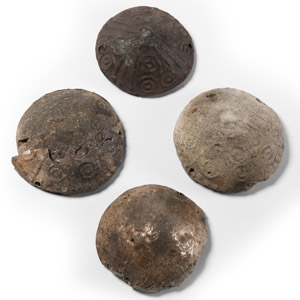
Iron Age Celtic Silver Clad Ceramic Boss Group
2nd century B.C. or laterSold for (Inc. bp): £26
Each conical in shape and pierced for attachment, three with near complete or fragmentary remains of sheet-silver cladding displaying repoussé crosses, linear bands and concentric roundels, together with a plain example; one ceramic boss without cladding displaying similar motifs in the clay. 55 grams total, 36-40 mm
Acquired on the German art market around 2000. From the collection of a Surrey, UK, gentleman. -
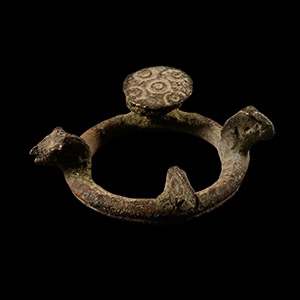
Iron Age Celtic Bronze Strap Junction with Animal Heads
1st century B.C.-1st century A.D.Sold for (Inc. bp): £85
Round-section hoop with three radiating animal-heads, discoid stud with quincunx of ring-and-dot motifs. 159 grams, 44 mm
Found near Great Chesterford, Cambridgeshire, UK, 2000s. -
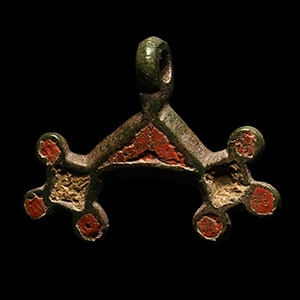
Iron Age Enamelled Bronze Horse Harness Pendant
Circa 2nd century A.D.Sold for (Inc. bp): £117
Comprising two discs with three radiating lobes, red and yellow enamel infill, connected by a red enamelled triangular plaque to a thick suspension loop. 5.94 grams, 35 mm
Ex private collection, UK; formed in the 1980s.
