
LOT 3452
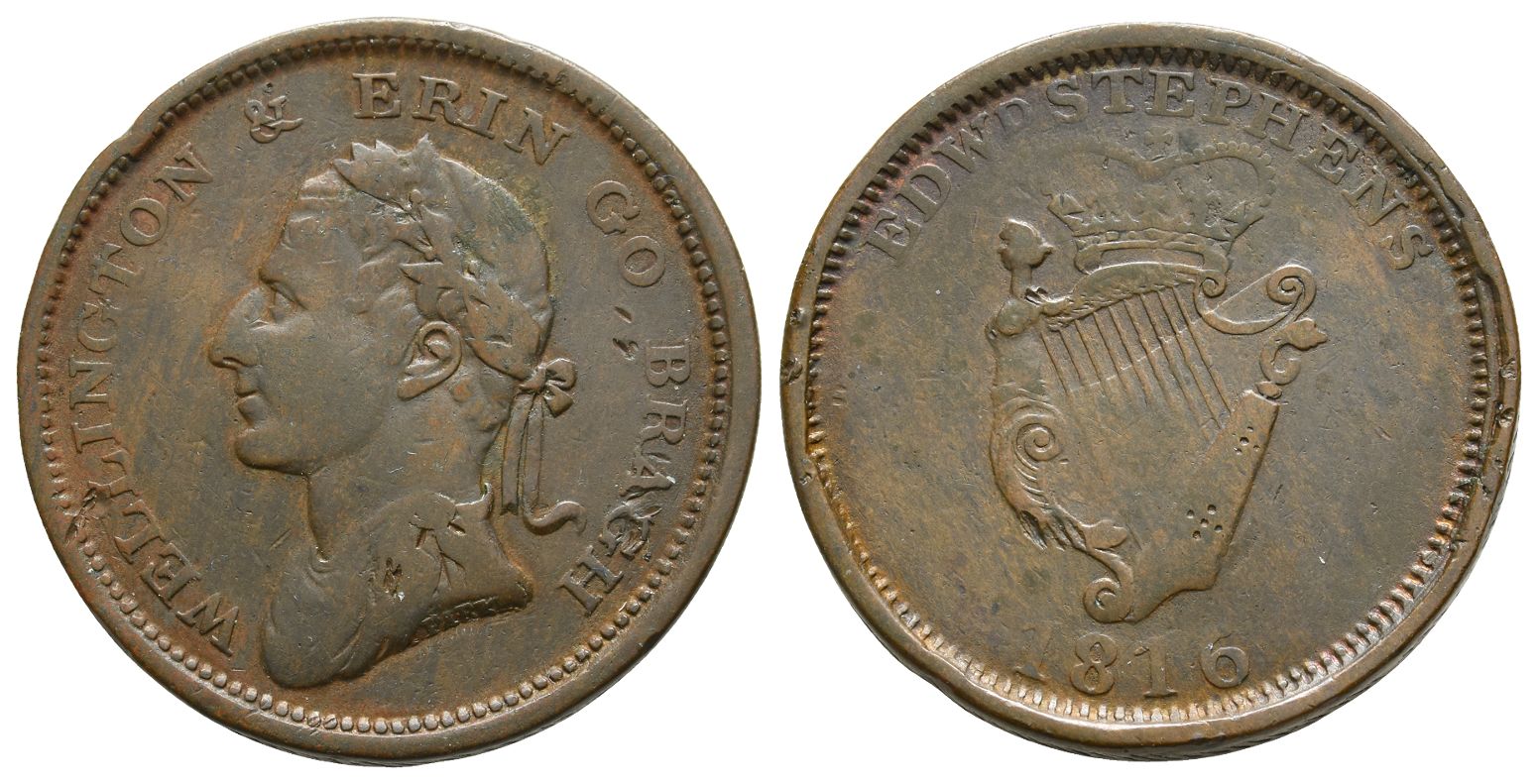
Ireland. Wellington and Erin Go Bragh CU Penny Token. 1816.
Designs by Isaac Parkes. WELLINGTON & ERIN GO BRAGH, laureate and draped bust to left; I PARKES in small lettering on truncation / EDWD STEPHENS 1816, crowned ornamental harp with nine strings. Davis 28. Fine.(15.66gr, 33mm, 7h.).
ProvenanceFrom the private collection of Kenneth Machin (1936-2020).
TimeLine Auctions follows a vetting process to ensure the authenticity and legality of all items, reinforcing our commitment to integrity and responsible trading. Each antiquity, antique, and coin lot undergoes thorough examination by a vetting committee of at least ten external specialists, professional trade association members, scientists, and archaeologists: Our Vetting Process
AUCTIONS:
TimeLine is a leading auction house specialising in antiquities, ancient art, collectables, natural history, coins, medals, and books. Our auctions offer museums, collectors, historians, and enthusiasts the opportunity to acquire unique and historically significant pieces.
-
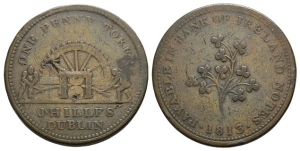
Ireland. James Hilles CU Penny Token. Dated 1813.
Sold for (Inc. bp): £26
ONE PENNY TOKEN, two men working at a rolling mill, in exergue, J. HILLES DUBLIN / PAYABLE IN BANK OF IRELAND NOTES 1813, sprig of shamrock. DH 1816. 17.88gr, 34mm, 12h.
Good Fine.
From the private collection of Kenneth Machin (1936-2020). -
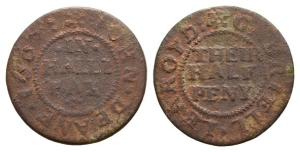
England. Yorkshire, Halifax, John Deane & Gabriell Learoyd AE Half Penny Token. Dated 1667.
Sold for (Inc. bp): £26
✿ • IOHN • DEANE • 1667 :, IN • HALLIFAX (ornament) in four lines / ✿ GABRIELL • LEAROYD :, THEIR HALF PENY in three lines. Dickenson 105. 2.10gr, 19mm, 9h.
Fine.
Found Huby, North Yorkshire, UK. From the private collection of Robin Sykes, Yorkshire, UK, formed since the late 1990s. Accompanied by an illustrated record page by Craig Barclay. -
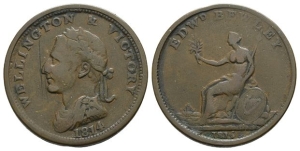
Ireland. Wellington, Edward Bewley CU Penny Token. 1816.
Sold for (Inc. bp): £13
Designs by I. Parkes. WELLINGTON & VICTORY, laureate bust to left; I PARKES in small lettering on truncation, date below / EDWD BEWLEY, Britannia seated to left on rock; holding spear in left hand, right arm raised holding olive branch; shield with Irish harp below to right, ship at sail in distance on left; on the ground I P F PARKES in small lettering; date in exergue. Withers 1810; Davis 10. 15.23gr, 33mm, 6h.
Fine.
From the private collection of Kenneth Machin (1936-2020).
