
Loading, please wait...
LOT 1036
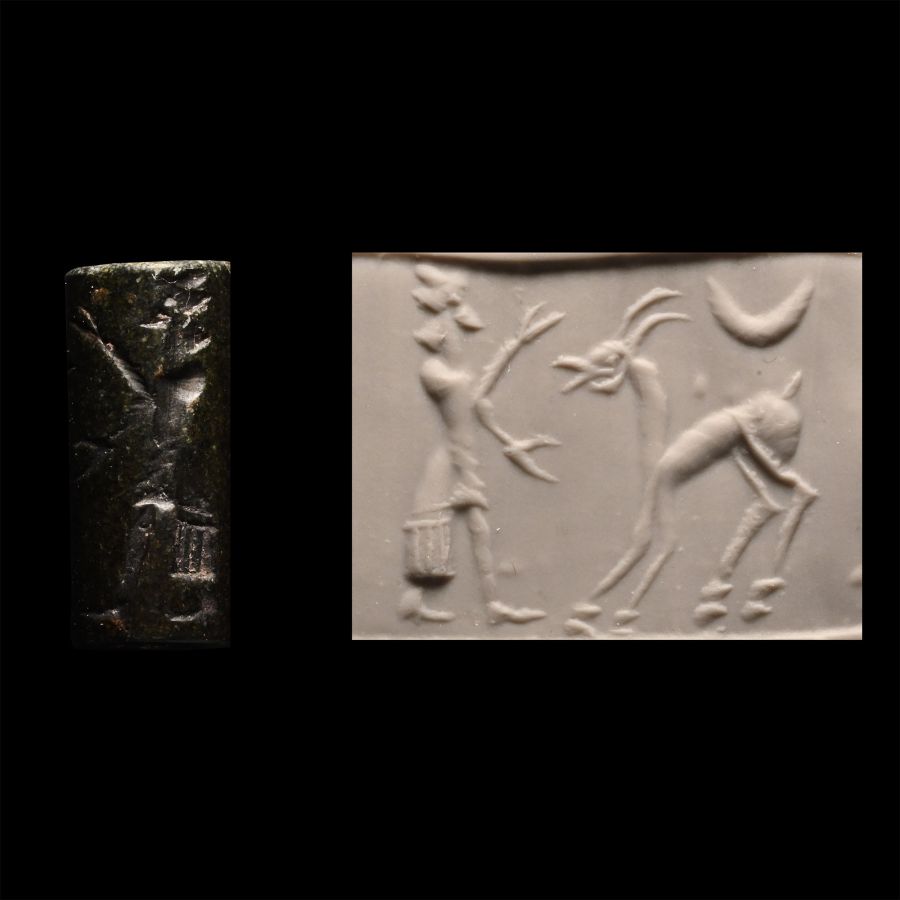
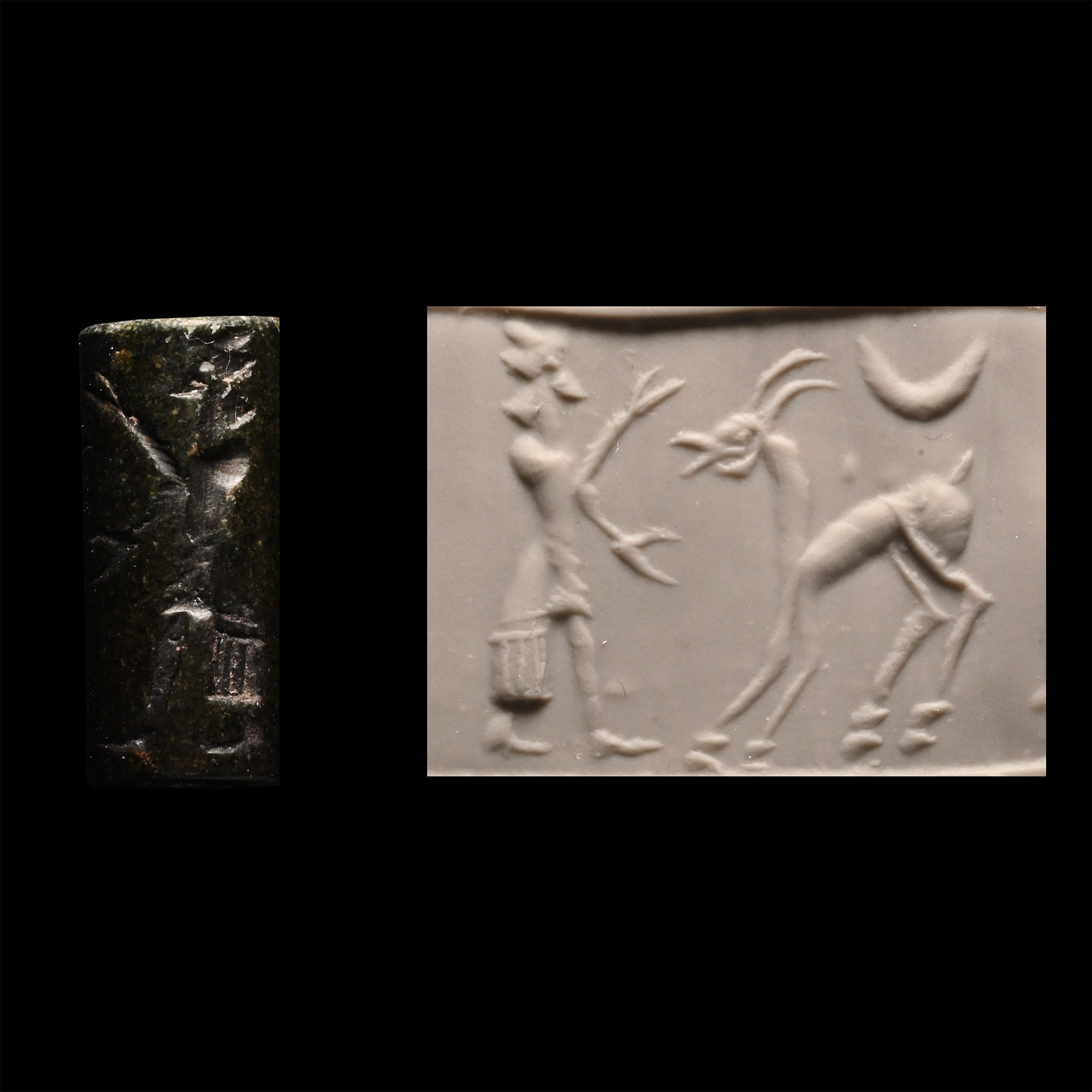
Iranian Black Stone Cylinder Seal with Figure Dressed in Robes
CIRCA 800-500 B.C.
1 in. (5.9 grams, 23 mm).
Cylinder with cord and bead handles; accompanied by a copy of an old scholarly note, typed and signed by W.G. Lambert, late Professor of Assyriology, University of Birmingham, 1970-1993, which states: 'Cylinder Seal of Black Stone, 23.5 x 10.5 mm. The design shows a standing figure dressed on a long robe open at the front from which one leg projects while holding out both hands, one up the other more down. Before him is a standing quadruped with horns, and in the sky is the lunar crescent. This is a rare Iranian seal type from South West Iran, dating c. 800-500 B.C. So far none have some from excavations, but they have been known on the market for some time. They all share the characteristic pose of the hands and a certain crudity of execution. This one is in fine condition.'; supplied with a museum-quality impression. [No Reserve]
ProvenanceUK private collection, acquired 1980-1983.
Accompanied by a copy of a scholarly note, typed and signed by Professor Wilfrid George Lambert in July 1991.
This lot has been cleared against the Art Loss Register database, and is accompanied by an illustrated lot declaration signed by the Head of the Antiquities Department, Dr Raffaele D'Amato.
TimeLine Auctions follows a vetting process to ensure the authenticity and legality of all items, reinforcing our commitment to integrity and responsible trading. Each antiquity, antique, and coin lot undergoes thorough examination by a vetting committee of at least ten external specialists, professional trade association members, scientists, and archaeologists: Our Vetting Process
AUCTIONS:
TimeLine is a leading auction house specialising in antiquities, ancient art, collectables, natural history, coins, medals, and books. Our auctions offer museums, collectors, historians, and enthusiasts the opportunity to acquire unique and historically significant pieces.
LOT 1036
Iranian Black Stone Cylinder Seal with Figure Dressed in Robes
Sold for (Inc. bp): £442
-
.jpg)
Assyrian Stone Bust of the Demon Pazuzu
8th-7th century B.C.Estimate: £2,000 - 3,000 (‡+bp*)
Opening Bid: £900
Carved in the round bust with heavily hatched brow and cheeks, D-shaped eyes, snubbed feline nose, ellipsoid mouth gaping with teeth exposed, segmented panel to chest. 47 grams, 37 mm
European art market, 1997. Acquired by the present owner from the above. This lot has been checked against the Interpol Database of stolen works of art and is accompanied by a search certificate no.12596-232196. This lot has been cleared against the Art Loss Register database, and is accompanied by an illustrated lot declaration signed by the Head of the Antiquities Department, Dr Raffaele D'Amato.
Pazuzu, in the old Mesopotamian mythology, is described as ‘the son of Hanbu and king of wind demons’. Amulets with images of his full body or, more often, just his head, were common in the early first millennium B.C. Pazuzu was most popular in the Neo-Assyrian and Neo-Babylonian periods, from about the late 8th century B.C. through the 6th century B.C. -
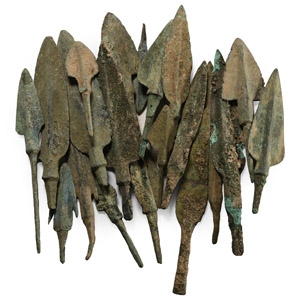
Luristan Bronze Arrowhead Collection
12th-10th century B.C.Estimate: £150 - 200 (+bp*)
Opening Bid: £75
Including triangular, barbed-and-tanged, leaf-shaped, and other types. 266 grams total, 49-108 mm
Ex London art market, 1980-1990s. This lot has been cleared against the Art Loss Register database, and is accompanied by an illustrated lot declaration signed by the Head of the Antiquities Department, Dr Raffaele D'Amato.
Some of these arrowheads seem to belong to the type V, subcategory types A, C and D according to the classification of Khorasani and Negahban. In the four categories of triangular bronze arrowheads from Luristan, Marlik and Northern Iran individuated by Negahban, subtypes C and D of type V are larger arrow or javelin heads, C with barbed shoulders and D with round shoulders. Subtype A is substantially similar to C, but smaller. -
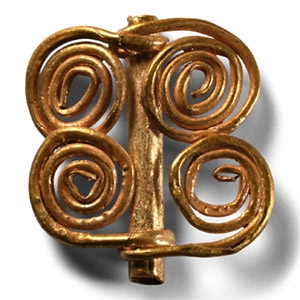
Mesopotamian Multi Spiral Gold Pendant Bead
2nd-1st millennium B.C.Sold for (Inc. bp): £208
Comprising a tubular body with a pair of applied wire spirals to each side. 0.31 grams, 11 mm
Ex property of a late Japanese collector, 1970-2000s. This lot has been cleared against the Art Loss Register database, and is accompanied by an illustrated lot declaration signed by the Head of the Antiquities Department, Dr Raffaele D'Amato.
