
LOT 2711
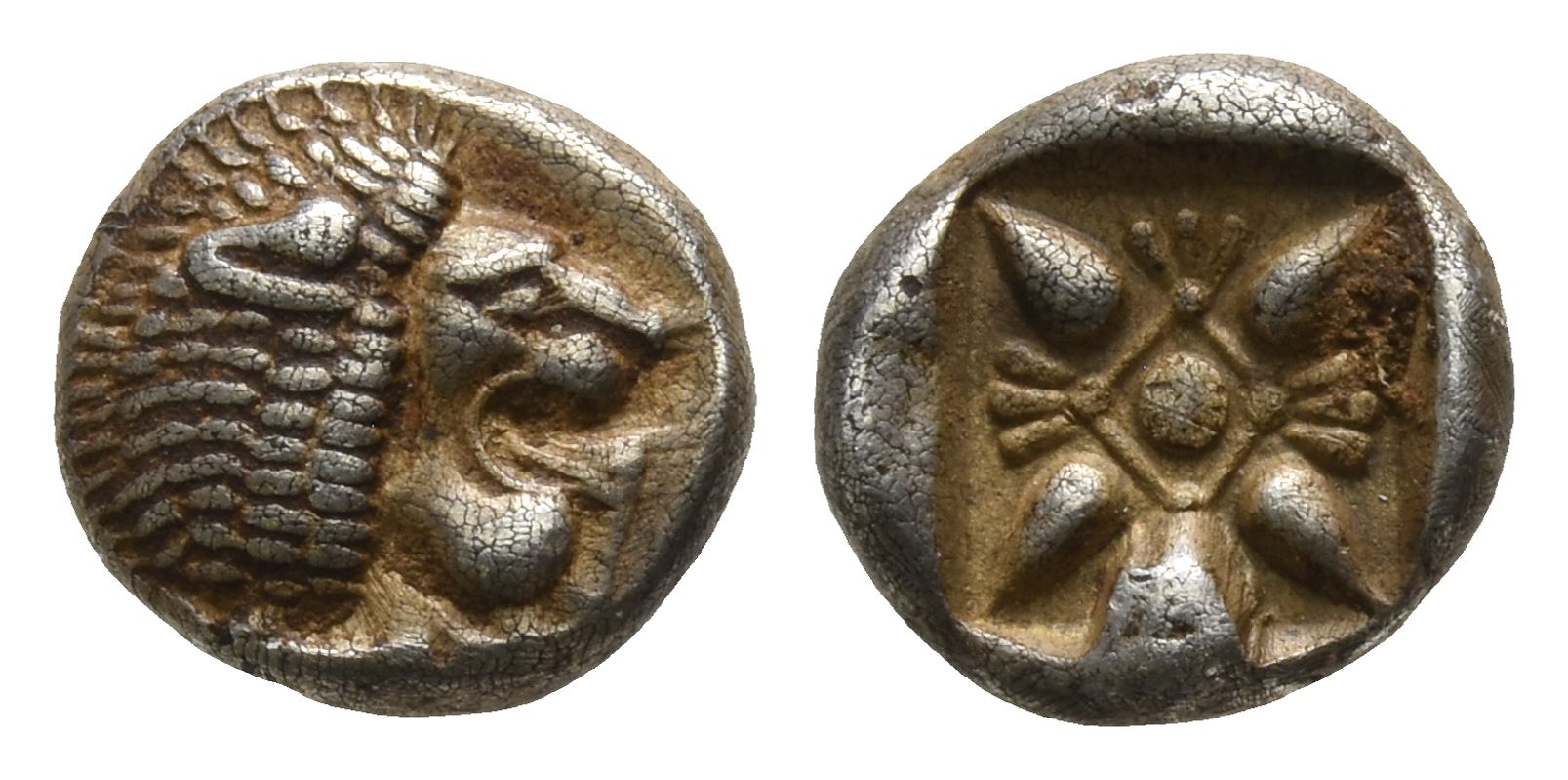
Ionia, Miletos AR Diobol. Late 6th-early 5th century BC.
Forepart of lion to left, head reverted / Stellate design within incuse square. SNG Kayhan 462-7. Near Extremely Fine.(1.17gr, 9mm.).
ProvenanceSwiss private collection, acquired in 2012.
TimeLine Auctions follows a vetting process to ensure the authenticity and legality of all items, reinforcing our commitment to integrity and responsible trading. Each antiquity, antique, and coin lot undergoes thorough examination by a vetting committee of at least ten external specialists, professional trade association members, scientists, and archaeologists: Our Vetting Process
AUCTIONS:
TimeLine is a leading auction house specialising in antiquities, ancient art, collectables, natural history, coins, medals, and books. Our auctions offer museums, collectors, historians, and enthusiasts the opportunity to acquire unique and historically significant pieces.
-
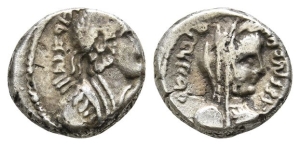
Nabataea, Rabbel II, with Shaqilat AR Sela'-Drachm. AD 70-106.
Sold for (Inc. bp): £33
Petra mint. Dated RY 3 (AD 72/3). Laureate and draped bust of Rabbel II to right; 'Rabbel, king of the Nabataeans. Year 3' in Aramaic around / Veiled and draped bust of Shaqilat to right; 'Shaqilat, his mother, queen of the Nabataeans' in Aramaic around. CN 218; Meshorer, Nabataea, 144. 3.34gr, 13mm, 12h.
Very Fine. Obverse struck off-centre.
From the collection of a gentleman, acquired on the London art market in the 1990s. -
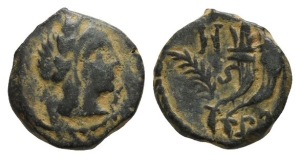
Nabataea, Aretas IV, with Phasael AE 14mm. Circa 9/8 BC-AD 40.
Sold for (Inc. bp): £26
Petra mint; struck circa 5/4 BC. Laureate head to right / Double cornucopiae to right; palm frond to left, ḥēth in Aramaic above; 'Phaṣa' in Aramaic to lower right. CN 116a; Meshorer, Nabataea 61A. 2.14gr, 14mm, 12h.
Very Fine.
From the collection of a gentleman, acquired on the London art market in the 1990s. -
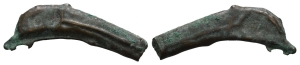
Skythia, Olbia Cast AE Dolphin. Circa 500-450/25 BC.
Sold for (Inc. bp): £26
Dolphin / Dolphin. SNG Stancomb 334-337; SNG BM Black Sea 359-367. 2.43gr, 31mm x 11mm.
Very Fine.
Acquired Munich, Germany, in the early 1990s. From a private German collection. Property of a Kent, UK, lady collector since 2015.
The method of casting this unique type of coin was adopted by the Gallic Celts who originally came from this region. Dolphins were generally struck in the form of a tree attached to the tail, although some examples appear to have been cast individually.
