
Loading, please wait...

LOT 2298
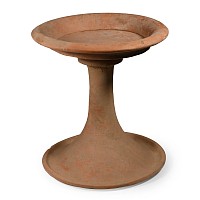
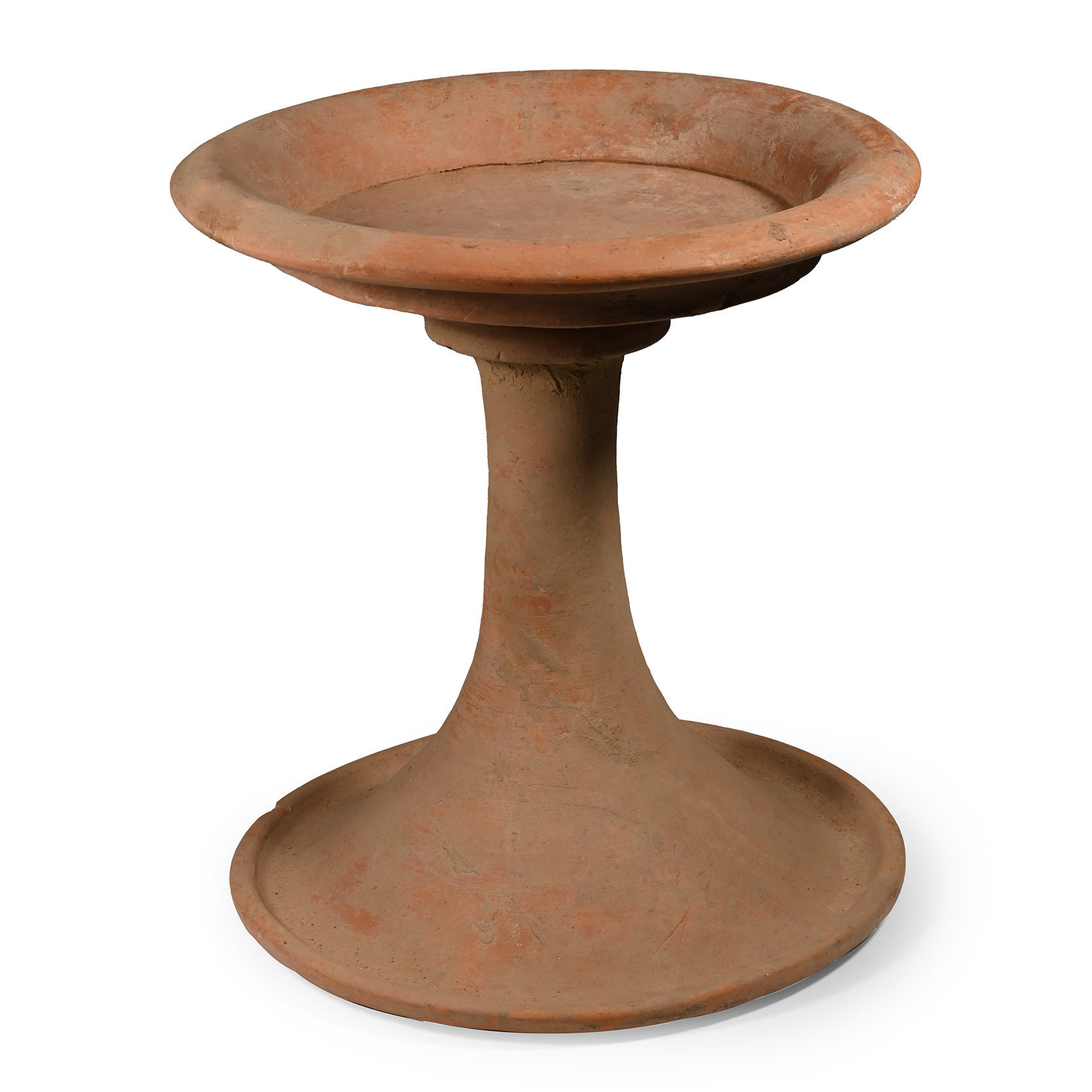
Indus Valley Terracotta Offering Stand
3RD-2ND MILLENNIUM B.C.
14 in. (4.8 kg, 35.5 cm).
With convex rim to the flared base, collar and stepped plate.
ProvenanceAcquired 1980-2015.
Ex Abelita family collection.
This lot is accompanied by an illustrated lot declaration signed by the Head of the Antiquities Department, Dr Raffaele D’Amato.
This lot is accompanied by an illustrated lot declaration signed by the Head of the Antiquities Department, Dr Raffaele D'Amato.
TimeLine Auctions follows a vetting process to ensure the authenticity and legality of all items, reinforcing our commitment to integrity and responsible trading. Each antiquity, antique, and coin lot undergoes thorough examination by a vetting committee of at least ten external specialists, professional trade association members, scientists, and archaeologists: Our Vetting Process
AUCTIONS:
TimeLine is a leading auction house specialising in antiquities, ancient art, collectables, natural history, coins, medals, and books. Our auctions offer museums, collectors, historians, and enthusiasts the opportunity to acquire unique and historically significant pieces.
LOT 2298
Indus Valley Terracotta Offering Stand
Estimate £100 - 140€120 - 160 (for guidance only)$140 - 190 (for guidance only)
-
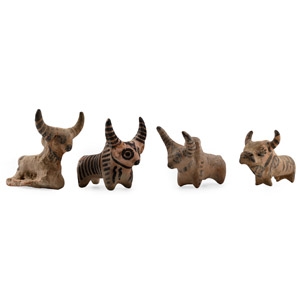
Indus Valley Style Terracotta Bull Figure Group
20th century A.D. or earlierSold for (Inc. bp): £85
Group of four model Zebu bulls each with painted detail. 380 grams, 8-9 cm
From the private collection of John Meredith, acquired since the 1990s; thence by descent. -
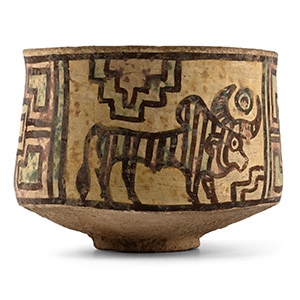
Indus Valley Mehrgarh Terracotta Cup with Animals
3rd-2nd millennium B.C.Sold for (Inc. bp): £169
With polychrome painted frieze of geometric panels, a lion and a zebu. 120 grams, 84 mm
Fine condition, chip to rim.
From an important London collection of Bronze Age pottery; formed 1970s-1980. From the private collection of John Meredith, acquired since the 1990s; thence by descent. -
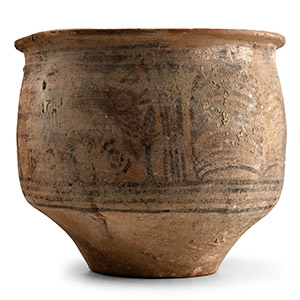
Large Indus Valley Mehrgarh Terracotta Storage Vessel
4th-3rd millennium B.C.Sold for (Inc. bp): £85
With bulbous body and everted rim, painted bichrome frieze of bulls and trees to the shoulder. 1.7 kg, 20.5 cm
Fine condition, repaired.
From the property of a London gentleman; previously in the private collection of the late David Gold, formed 1970s. From the private collection of John Meredith, acquired since the 1990s; thence by descent.
