
Loading, please wait...
LOT 2089
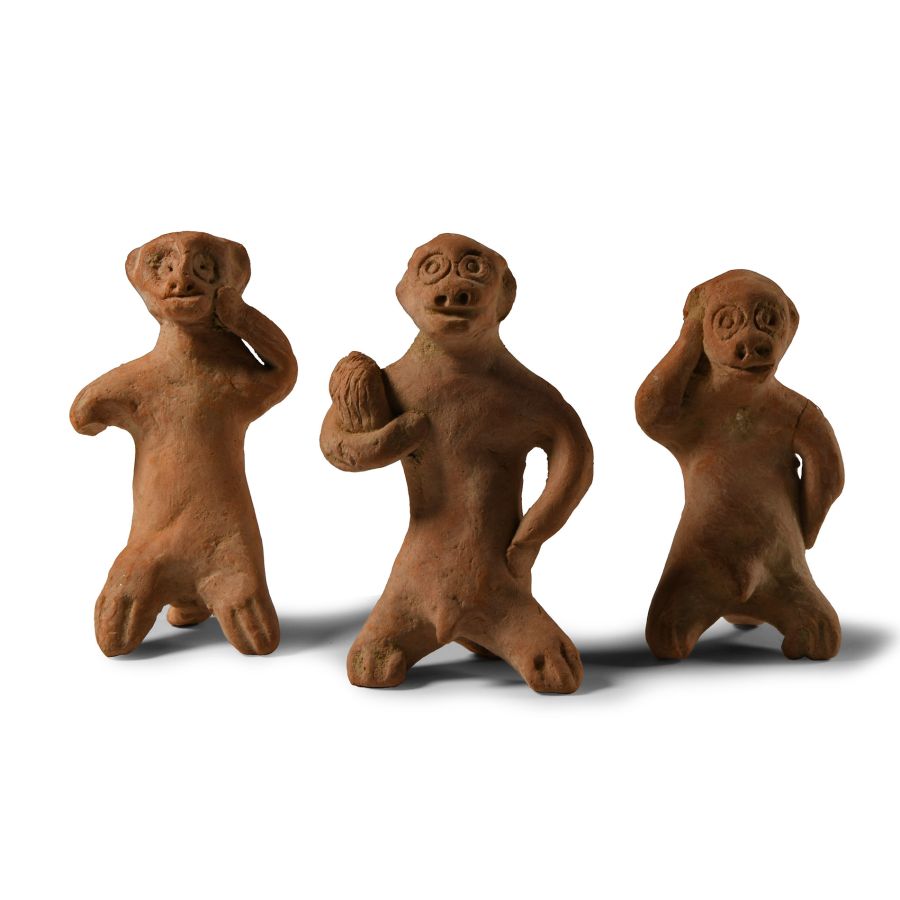
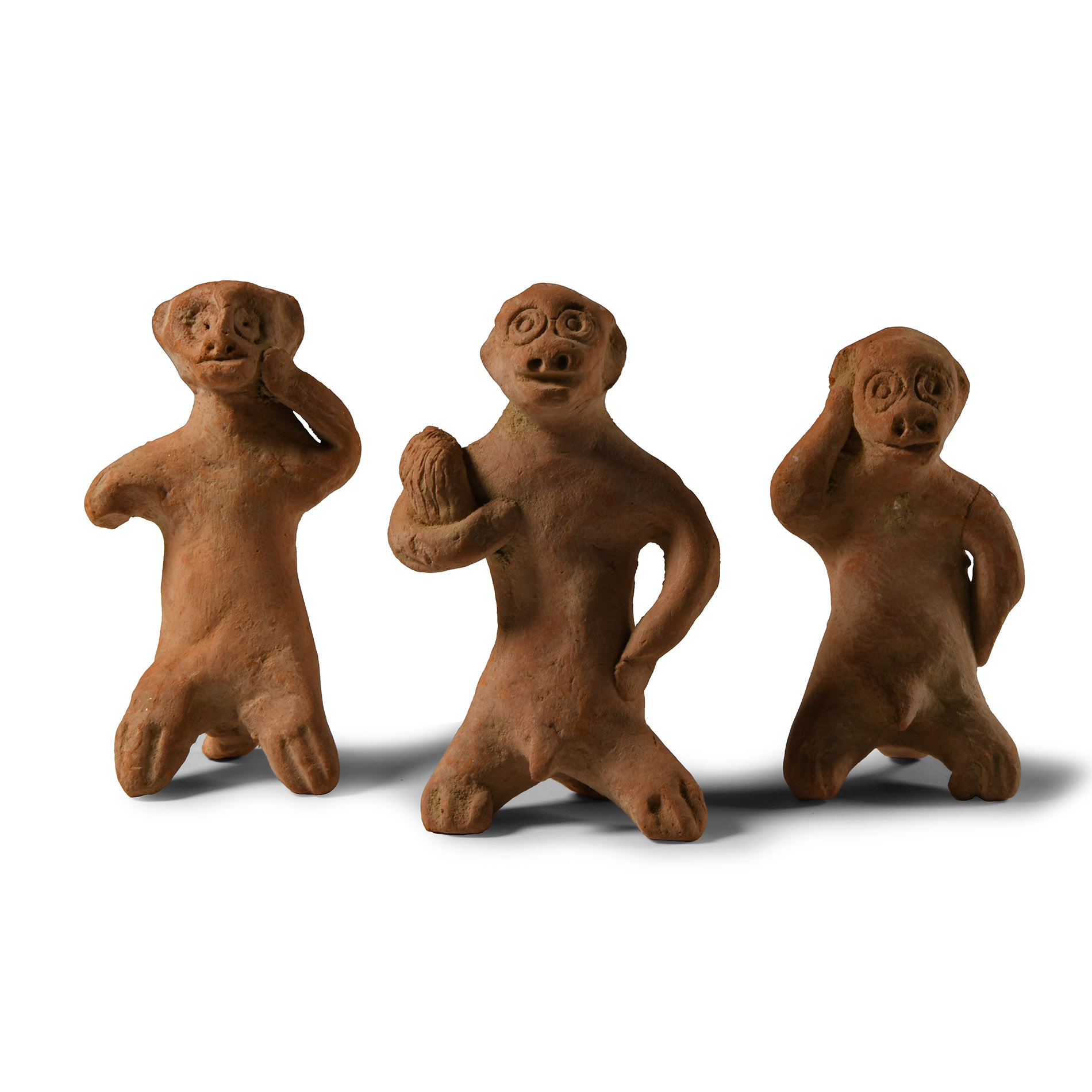
Indus Valley Terracotta Monkey Statuette Group
2ND MILLENNIUM B.C. OR LATER
3 3/8 - 3 3/4 in. (231 grams total, 86-97 mm).
In various poses with legs and tail forming a tripod base. [3, No Reserve]
ProvenanceFrom a collection acquired on the UK art market from various auction houses and collections mostly before 2000.
From an important Cambridgeshire estate; thence by descent.
TimeLine Auctions follows a vetting process to ensure the authenticity and legality of all items, reinforcing our commitment to integrity and responsible trading. Each antiquity, antique, and coin lot undergoes thorough examination by a vetting committee of at least ten external specialists, professional trade association members, scientists, and archaeologists: Our Vetting Process
AUCTIONS:
TimeLine is a leading auction house specialising in antiquities, ancient art, collectables, natural history, coins, medals, and books. Our auctions offer museums, collectors, historians, and enthusiasts the opportunity to acquire unique and historically significant pieces.
-
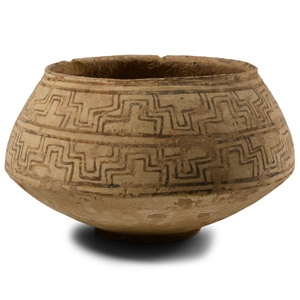
Large Indus Valley Terracotta Jar with Meander Pattern
3rd-2nd millennium B.C.Sold for (Inc. bp): £247
Biconvex in profile with slightly stepped rim, basal ring; to the shoulder, a dense pattern of interlocking steps or meander in two rows. 532 grams, 19 cm wide
Acquired from Alexander Gotz, London, UK. Ex M Scyoyen collection, Norway, collection no.20. -
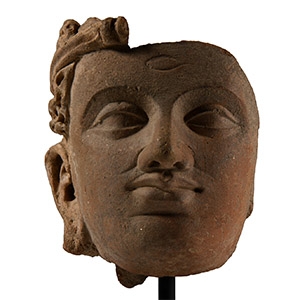
Gandharan Terracotta Head
2nd-4th century A.D.Sold for (Inc. bp): £910
Male head with finely modelled facial features, urna to the brow, horizontal band to secure the hair, long earlobe with stud; mounted on a custom-made stand. 1.23 kg total, 15 cm high including stand
Ex London, UK, gallery, 1971-early 2000s.
The partial delamination of the head shows quite strikingly the method of construction: at the centre is a rough, irregular ball to which the outer layer of clay has been added carrying the finer modelling; the brow-band appears to have been modelled at this time from the same material as formed the hair. -
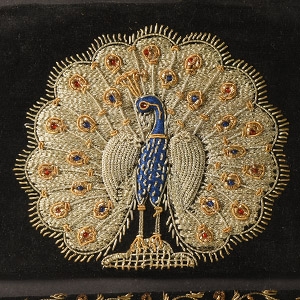
Indian Textile Embroidery of a Peacock
19th -20th century A.D.Sold for (Inc. bp): £234
Velvet panel with embroidered figure of a peacock in stem stitch, couching, satin stitch and other techniques; second fabric panel with fronds in stem and other stitches; the threads with metallic content, threaded beads. 740 grams total, 29.5 x 24.5 cm
Property of a London, UK gentleman.
