
Loading, please wait...
LOT 2082
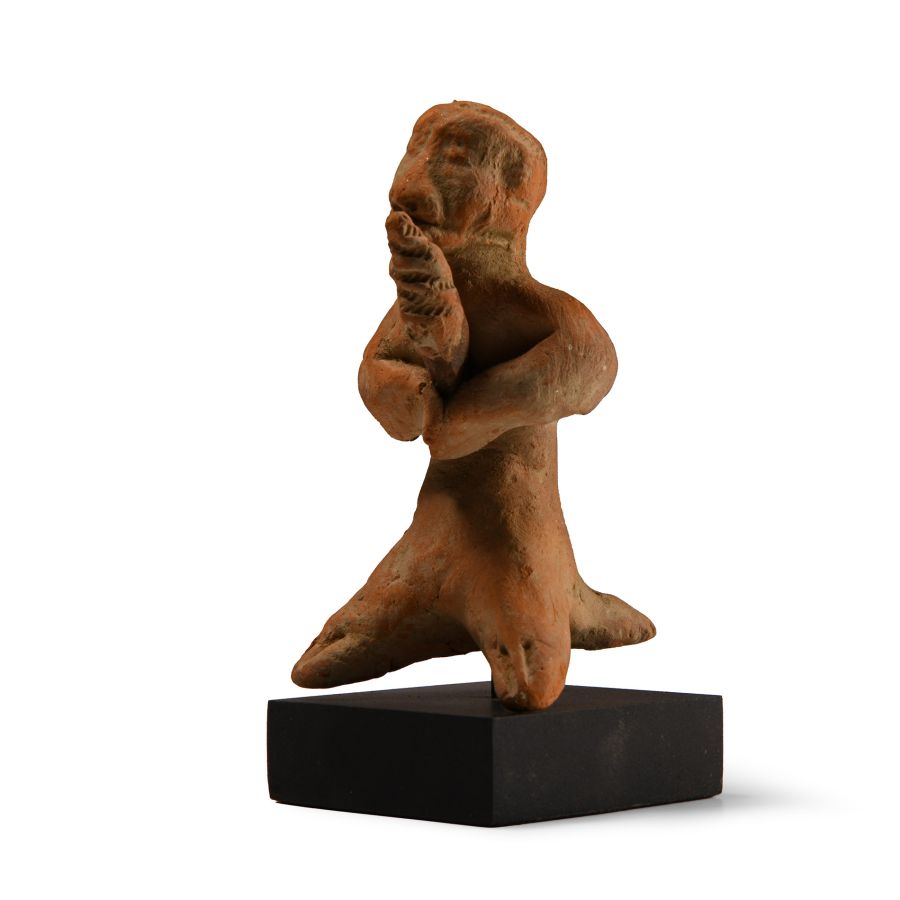
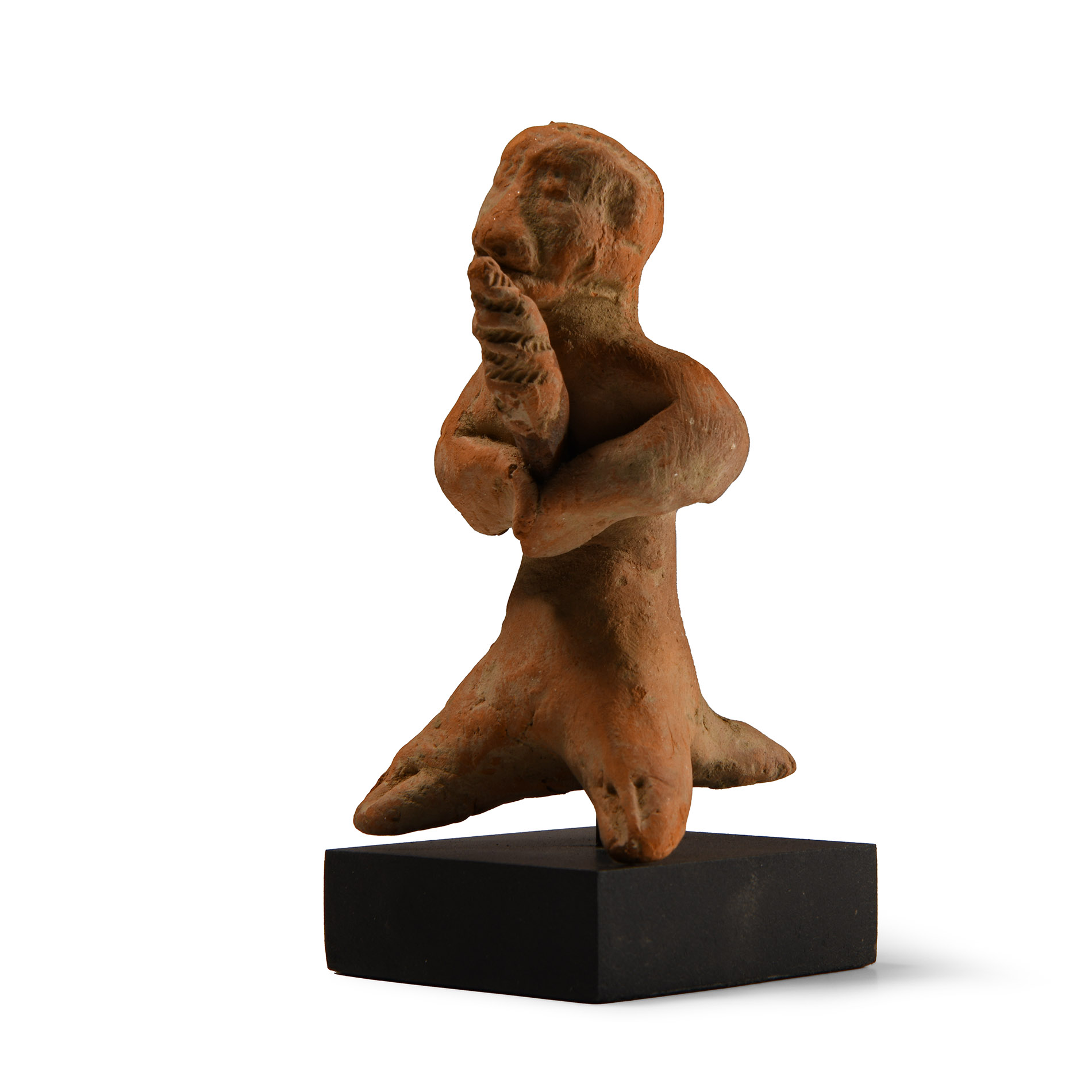
Indus Valley Terracotta Figure
2ND MILLENNIUM B.C.
4 1/4 in. (132 grams total, 10.7 cm including stand).
Modelled as a monkey standing and holding a conch shell; textured fur and shell, stub tail; mounted on a custom-made display stand. [No Reserve]
ProvenanceFrom a collection acquired on the UK art market from various auction houses and collections mostly before 2000.
From an important Cambridgeshire estate; thence by descent.
TimeLine Auctions follows a vetting process to ensure the authenticity and legality of all items, reinforcing our commitment to integrity and responsible trading. Each antiquity, antique, and coin lot undergoes thorough examination by a vetting committee of at least ten external specialists, professional trade association members, scientists, and archaeologists: Our Vetting Process
AUCTIONS:
TimeLine is a leading auction house specialising in antiquities, ancient art, collectables, natural history, coins, medals, and books. Our auctions offer museums, collectors, historians, and enthusiasts the opportunity to acquire unique and historically significant pieces.
-
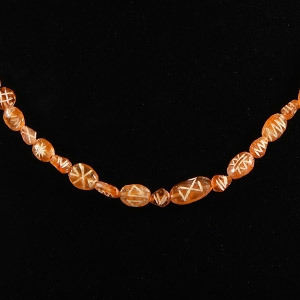
Indus Valley Etched Orange Carnelian Bead Necklace String
Circa 2nd millennium B.C. and laterSold for (Inc. bp): £312
Composed of restrung graduated and polished beads, each etched with a white geometric design on both faces. 12.1 grams, 50 cm long
UK gallery, early 2000s.
Etched carnelian beads are characteristic of the Indus Valley culture and have been produced since the third millennium B.C. They are a typical product of the Harappa culture, but they are also attested in later millennia and produced elsewhere in Southeast Asia. The oldest specimens come from the Indus Valley and from Mesopotamia. A few specimens were found in the so-called royal cemetery of Ur, where they were identified in the excavation publication as coming from India. -
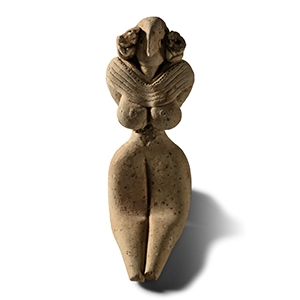
Indus Valley Seated Terracotta Fertility Figure
Circa 3000 B.C.Sold for (Inc. bp): £390
Seated goddess with legs extended in front of the body, pinched head and face, wearing an applied headdress and broad tiered collar; detailing to the collar applied with a point. 19.1 grams, 77 mm
Acquired from Alexander Gotz, London, UK. Ex Martin Schoyen collection, London, UK. -
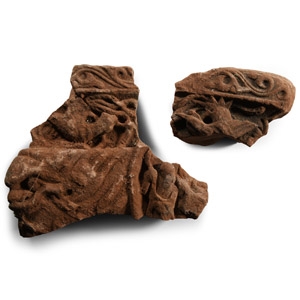
Indian Red Sandstone Carved Freize Fragment Group
11th-12th century A.D.Sold for (Inc. bp): £20
With high-relief tendril, leaf, human figure and other ornament. 2.44 kg total, 12.6-21 cm
From a collection acquired on the UK art market from various auction houses and collections mostly before 2000. From an important Cambridgeshire estate; thence by descent.
