
Loading, please wait...
LOT 2108
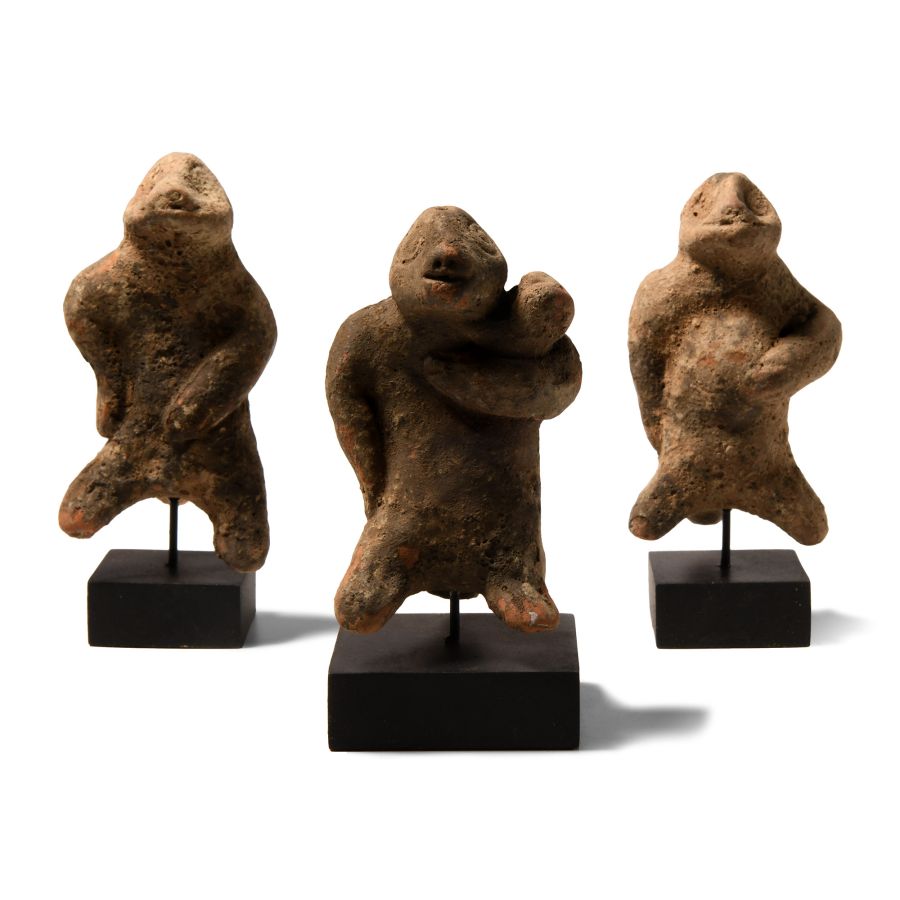
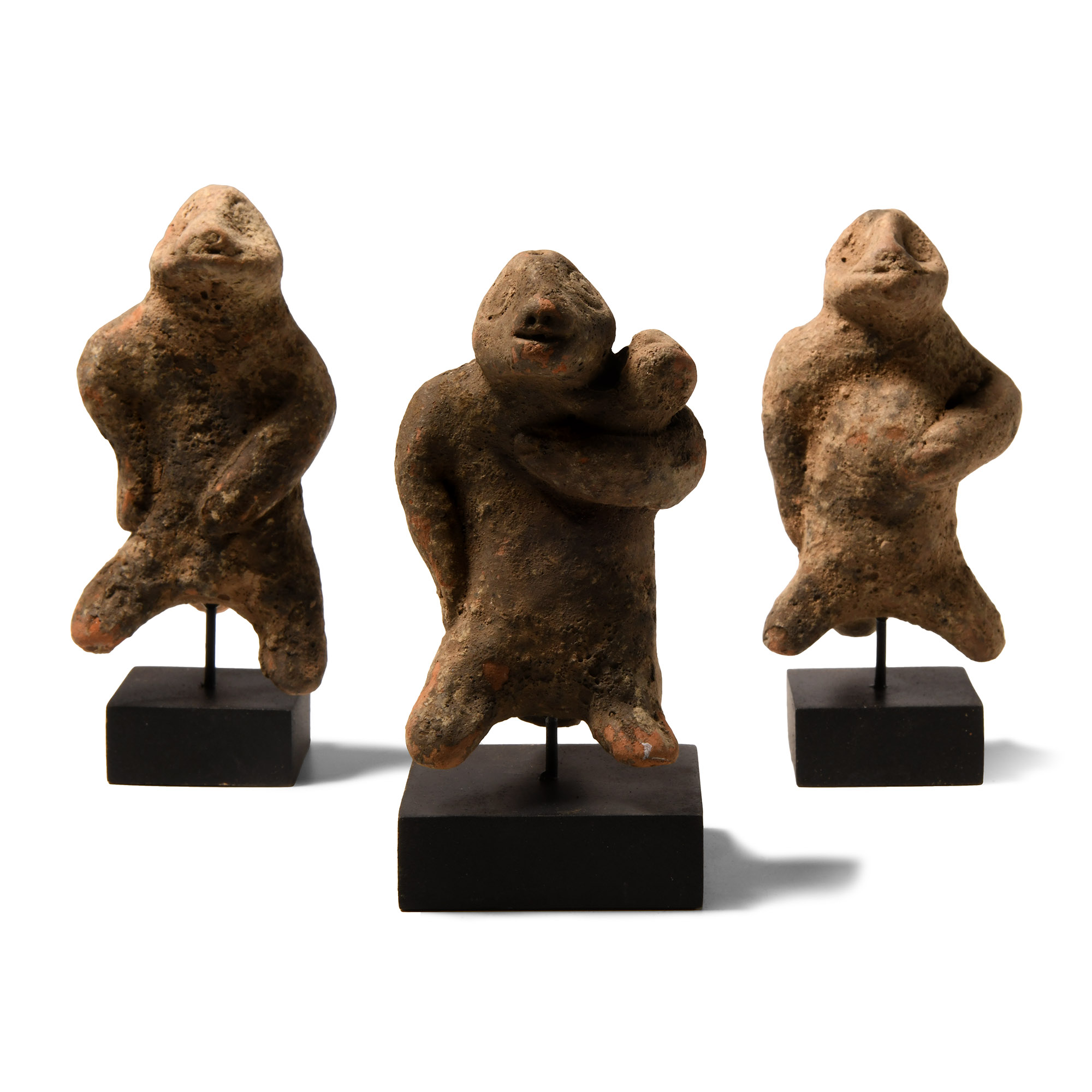
Indus Valley Terracotta Figure Group
2ND MILLENNIUM B.C.
4 - 4 1/4 in. (350 grams total, 10.4-11 cm including stand).
Comprising three simians, one holding her young and the others with hands on hips, each with a stub tail; each mounted on a custom-made display stand. [3, No Reserve]
ProvenanceFrom a collection acquired on the UK art market from various auction houses and collections mostly before 2000.
From an important Cambridgeshire estate; thence by descent.
TimeLine Auctions follows a vetting process to ensure the authenticity and legality of all items, reinforcing our commitment to integrity and responsible trading. Each antiquity, antique, and coin lot undergoes thorough examination by a vetting committee of at least ten external specialists, professional trade association members, scientists, and archaeologists: Our Vetting Process
AUCTIONS:
TimeLine is a leading auction house specialising in antiquities, ancient art, collectables, natural history, coins, medals, and books. Our auctions offer museums, collectors, historians, and enthusiasts the opportunity to acquire unique and historically significant pieces.
-
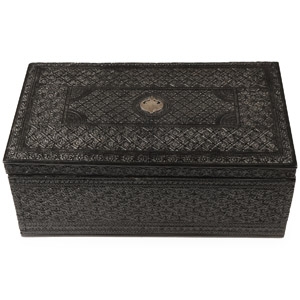
Northern Indian Nagina Ebony Writing Box with 'M H' Initials
Circa 1840 A.D.Sold for (Inc. bp): £195
Finely carved with repeating foliate and geometric designs on top and sides; the hinged lid set with a silver mount engraved with initials 'M H'; repaired. 2.3 kg, 35 x 20.5 x 14.3 cm
Acquired from the UK art market. Private Scottish collection. -
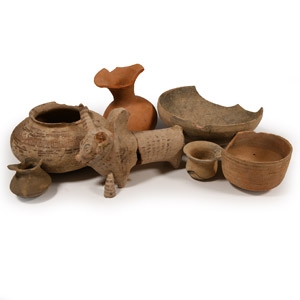
Indus Valley and Other Pottery Group
3rd millennium B.C. and laterSold for (Inc. bp): £91
Including a biconvex jar with painted detailing, and other items. 2.1 kg total, 6.2-18.5 cm
Ex London, UK, gallery, in the 1990s. -
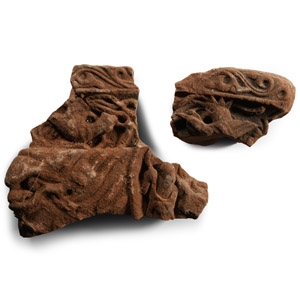
Indian Red Sandstone Carved Freize Fragment Group
11th-12th century A.D.Sold for (Inc. bp): £20
With high-relief tendril, leaf, human figure and other ornament. 2.44 kg total, 12.6-21 cm
From a collection acquired on the UK art market from various auction houses and collections mostly before 2000. From an important Cambridgeshire estate; thence by descent.
