
Loading, please wait...
LOT 2386
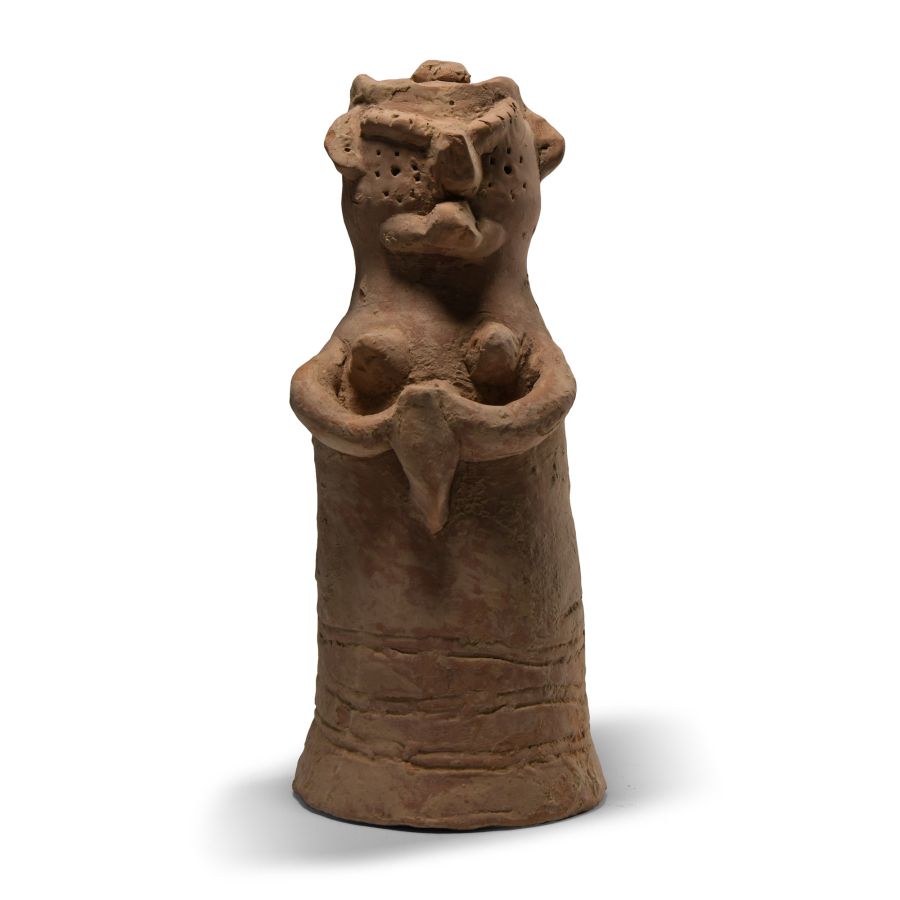
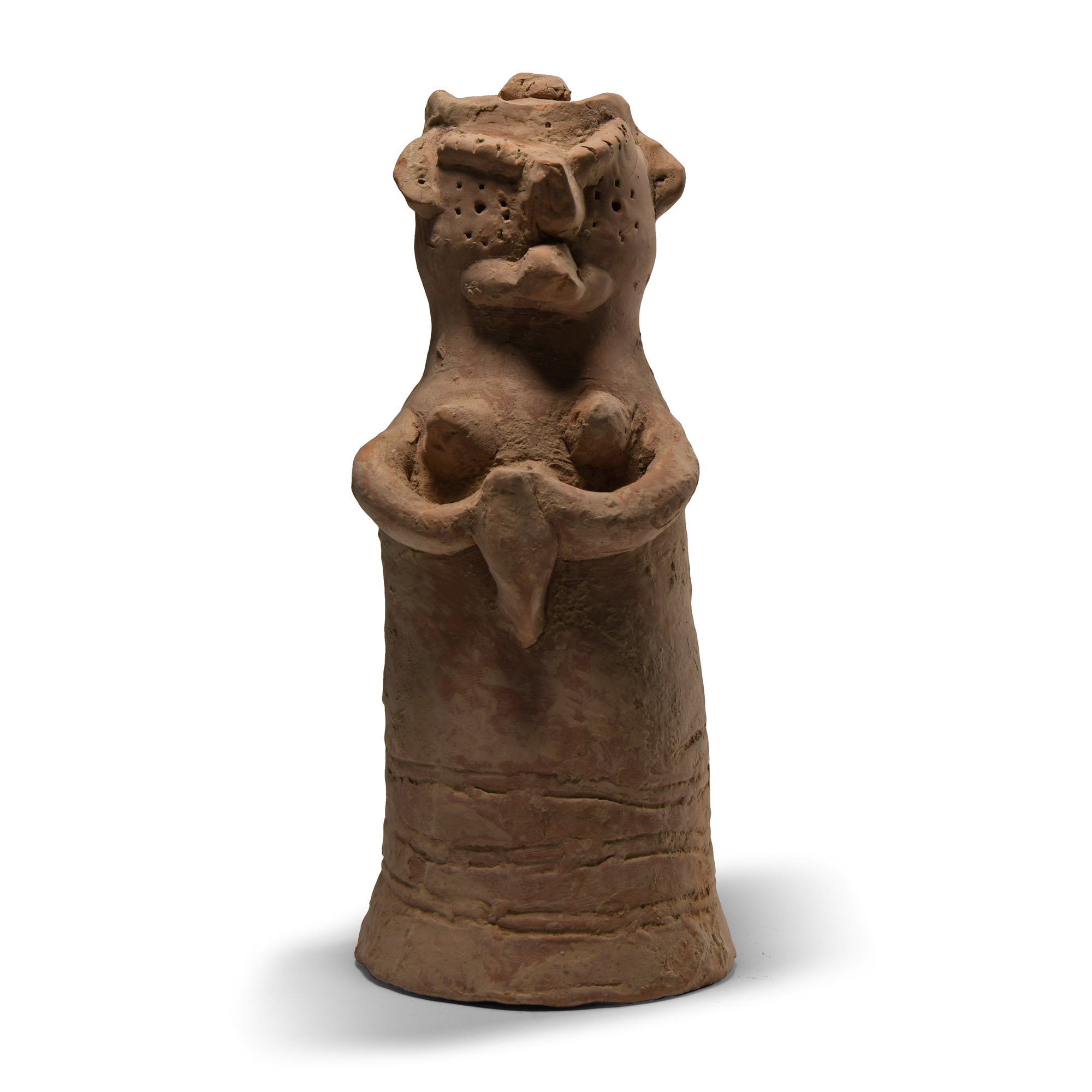
Indus Valley Terracotta Fertility Idol
3RD-2ND MILLENNIUM B.C.
8 1/8 in. (692 grams, 20.8 cm).
With bell-shaped ribbed body and squat head; applied brow-ridge, eyes and beaked nose; pointillé detailing to the eyes; arms bowed, hands holding an amphora to the chest. [No Reserve]
ProvenanceFrom a collection acquired on the UK art market from various auction houses and collections mostly before 2000.
From an important Cambridgeshire estate; thence by descent.
TimeLine Auctions follows a vetting process to ensure the authenticity and legality of all items, reinforcing our commitment to integrity and responsible trading. Each antiquity, antique, and coin lot undergoes thorough examination by a vetting committee of at least ten external specialists, professional trade association members, scientists, and archaeologists: Our Vetting Process
AUCTIONS:
TimeLine is a leading auction house specialising in antiquities, ancient art, collectables, natural history, coins, medals, and books. Our auctions offer museums, collectors, historians, and enthusiasts the opportunity to acquire unique and historically significant pieces.
-
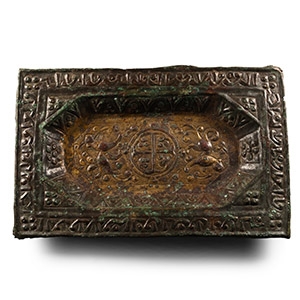
Central Asian Gilt Copper Tray for a Nestorian Christian
Circa 1200-1250 A.D.Estimate: £2,000 - 3,000 (+bp*)
Opening Bid: £444
Rectangular in plan with recessed octagonal socket, repoussé pellet and leaf ornament to the flanged edge, socket with arcading and pellets, bottom panel with central cross-in-circle and two advancing lions; all on a pounced field; old collector's label to the reverse '7481'; rim cracked. 345 grams, 28 cm
Ex Parker collection, London, UK. UK trade, London, 2000. From a private Suffolk, UK, collection. This lot has been checked against the Interpol Database of stolen works of art and is accompanied by a search certificate number no.12308-221692. -
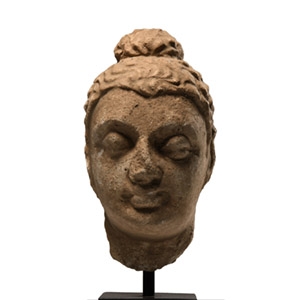
Gandharan Terracotta Head
2nd-4th century A.D.Estimate: £400 - 600 (+bp*)
Opening Bid: £180
Modelled in the round with the hair pulled around the ushnisha top-knot, slender arching eyebrows, almond-shaped eyes with prominent eyelids, pursed lips; mounted on a custom-made display stand. 661 grams total, 20 cm high including stand
Acquired on the London art market. Private collection, 1970s. -
.jpg)
Large Indus Valley Terracotta Vessel with Animal Motifs
Circa 2200 B.C.Estimate: £6,000 - 8,000 (‡+bp*)
Opening Bid: £3,000
Pale cream fabric, funicular lower body and broad rounded shoulder, band of painted ornament including ibises, a tiger and hatched panels. 2.28 kg, 29 cm wide
Acquired in the mid 1980s-1990s. Private collection, Switzerland, thence by descent. Private collection, since the late 1990s. Accompanied by an academic report by Dr Raffaele D’Amato. This lot has been checked against the Interpol Database of stolen works of art and is accompanied by search certificate number no.12187-222202.
