
Loading, please wait...
LOT 2094
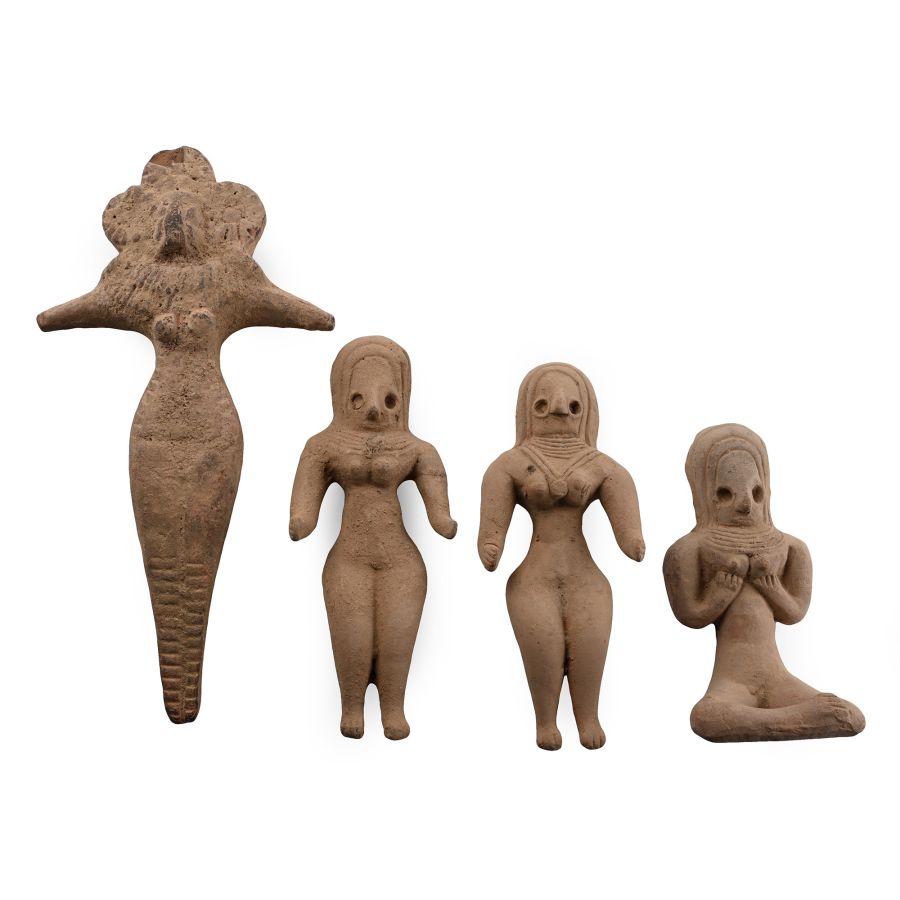
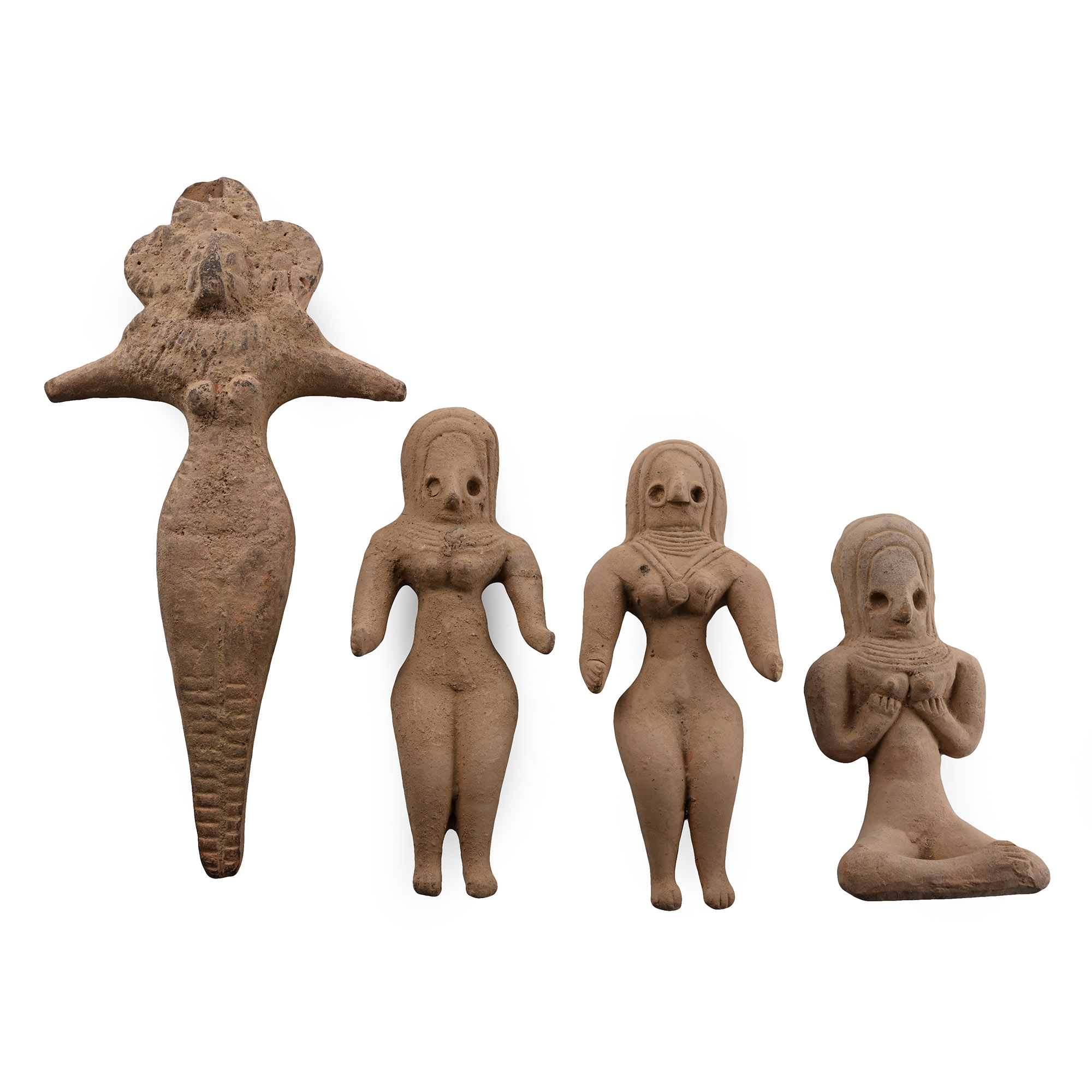
Indus Valley Style Terracotta Idol Group
20TH CENTURY A.D.
3 3/8 - 6 3/8 in. (314 grams, 8.6-16.2 cm).
Mixed group of figures with anatomical details. [4, No Reserve]
ProvenanceFrom the private collection of John Meredith, acquired since the 1990s; thence by descent.
CONDITIONTimeLine Auctions follows a vetting process to ensure the authenticity and legality of all items, reinforcing our commitment to integrity and responsible trading. Each antiquity, antique, and coin lot undergoes thorough examination by a vetting committee of at least ten external specialists, professional trade association members, scientists, and archaeologists: Our Vetting Process
AUCTIONS:
TimeLine is a leading auction house specialising in antiquities, ancient art, collectables, natural history, coins, medals, and books. Our auctions offer museums, collectors, historians, and enthusiasts the opportunity to acquire unique and historically significant pieces.
-
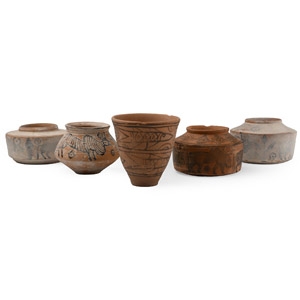
Indus Valley Style Terracotta Vessel Group
20th century A.D.Sold for (Inc. bp): £39
Mixed group of jars and a cup with painted details. 990 grams, 10-10.5 cm wide
Very fine condition.
From the private collection of John Meredith, acquired since the 1990s; thence by descent. -
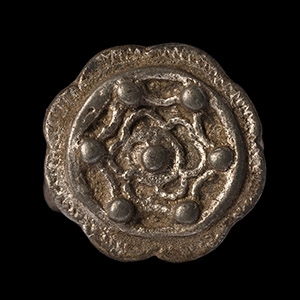
Georgian Period Silver Ring with Floral Design
Circa 18th century A.D.Estimate: £100 - 140 (+bp*)
Opening Bid: £50
With lateral spurs and stepped shoulders, the bezel an octofoil with raised hexafoil motif and pellets. 11.08 grams, 25.60 mm overall, 19.72 mm internal diameter (approximate size British Q, USA 8, Europe 17.49, Japan 16)
Acquired on the London art market in the late 1980s-1990s. From the family collection of an East London, UK, gentleman. -
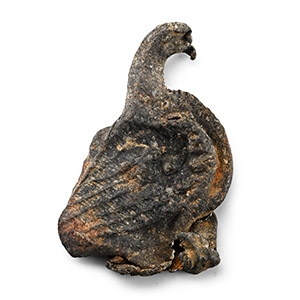
Tudor Lead Figure of a Bird
16th-17th century A.D.Sold for (Inc. bp): £13
Hollow-formed sheet-metal bird with detailed plumage. 12.6 grams, 48.5 mm
From the collection of a Buckinghamshire, UK, collector established from the earlier 1960s.
