
Loading, please wait...
LOT 1943
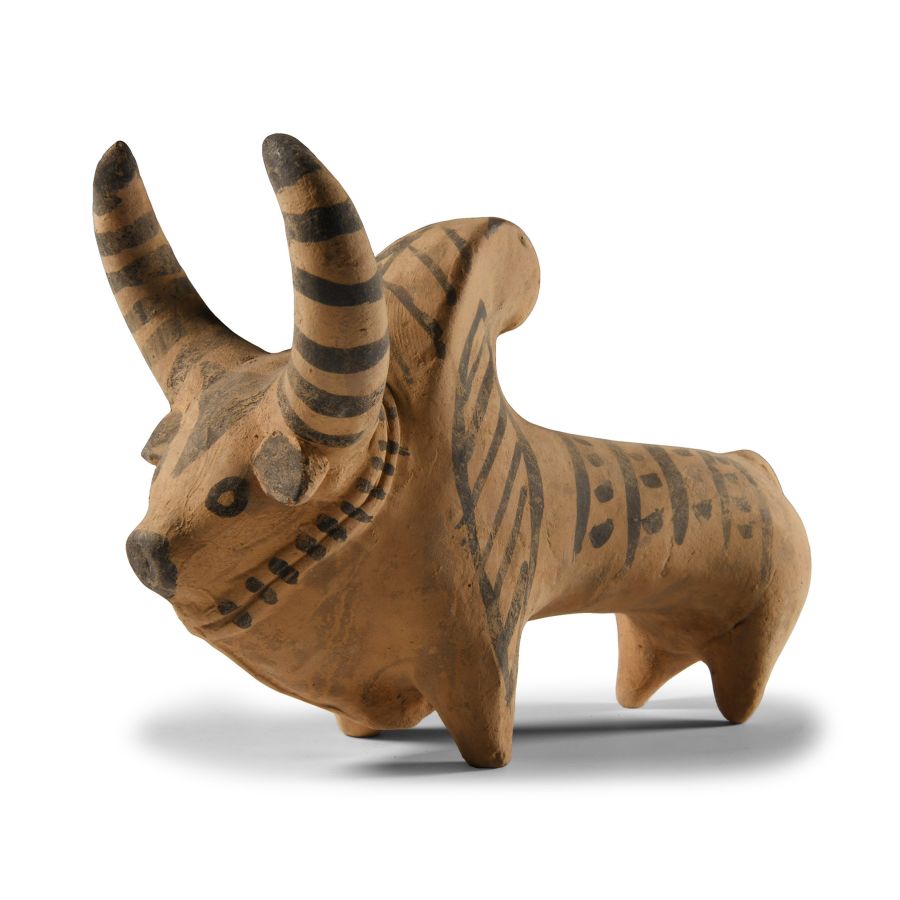
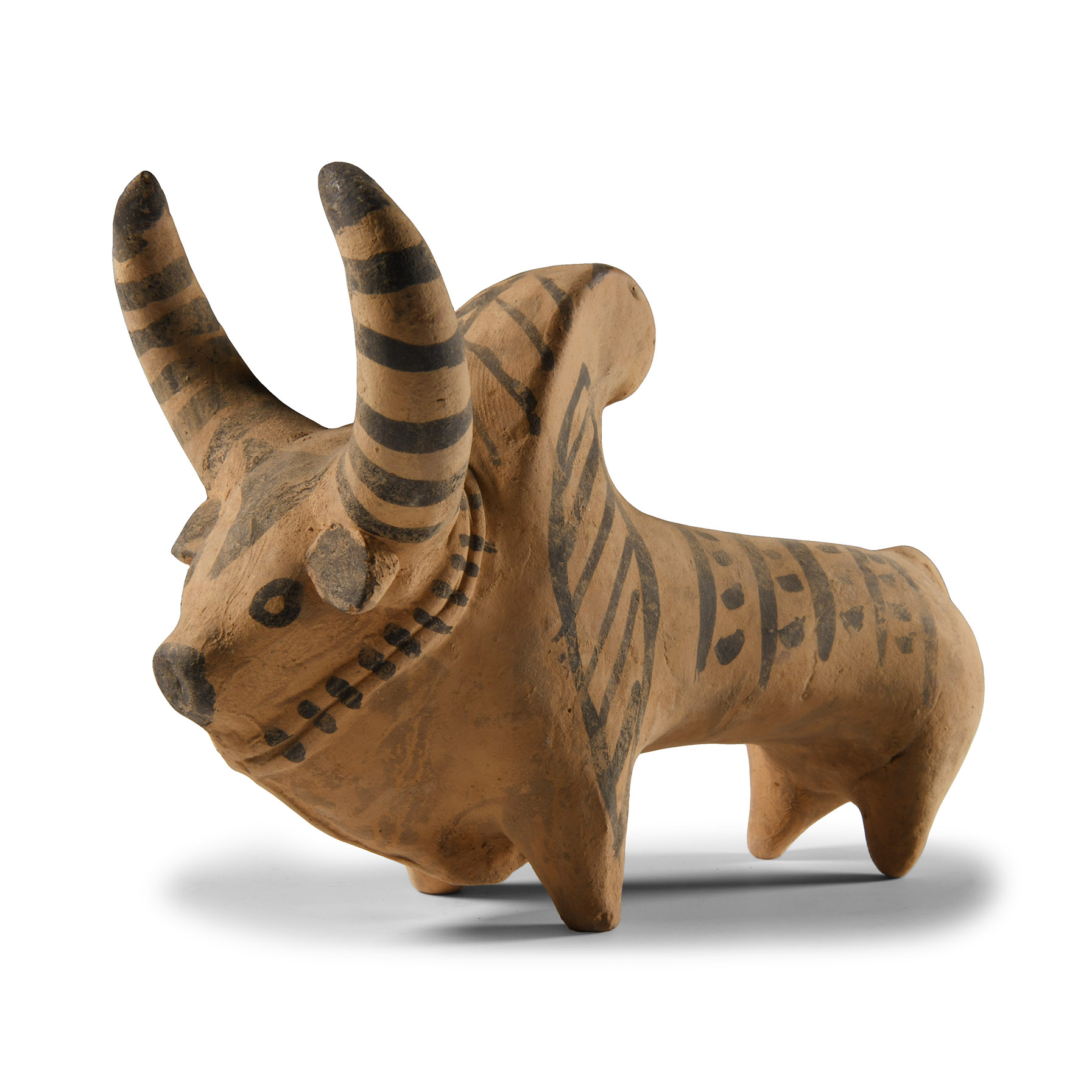
Indus Valley Style Terracotta Bull Figure
20TH CENTURY A.D.
6 1/4 in. (350 grams, 16 cm).
Model zebu with applied black linear ornament. [No Reserve]
ProvenanceFrom the property of the late Mr SM, London, UK, 1969-1999.
CONDITIONTimeLine Auctions follows a vetting process to ensure the authenticity and legality of all items, reinforcing our commitment to integrity and responsible trading. Each antiquity, antique, and coin lot undergoes thorough examination by a vetting committee of at least ten external specialists, professional trade association members, scientists, and archaeologists: Our Vetting Process
AUCTIONS:
TimeLine is a leading auction house specialising in antiquities, ancient art, collectables, natural history, coins, medals, and books. Our auctions offer museums, collectors, historians, and enthusiasts the opportunity to acquire unique and historically significant pieces.
-
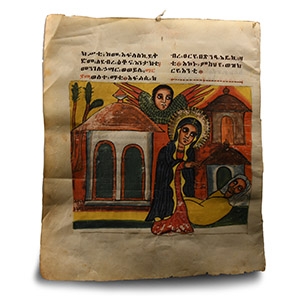
Ethiopian Manuscript Page for Miracle of the Virgin Mary
Circa 1680 A.D.Sold for (Inc. bp): £845
Vellum leaf with pricked guidelines for placement of two columns of red-ink and black-ink text in Ge'ez script with red detailing; recto with two columns of text above a polychrome painted miniature showing a nimbate Mary beside a recumbent bearded figure among buildings with a winged angel above; verso with twenty-two lines of text in two columns. 89 grams, 35.5 x 30 cm
Previously in the David Buxton collection (1910-2003), until the late 1990s.
The scene should represent the miracle of the Virgin Mary to Damianus the scribe: Damianus wrote the name of the Virgin Mary with gold and silver instead of with common black ink. The Virgin Mary appeared to Damianus on his death bed and promises to write his name upon a pillar of gold in the Kingdom of Heaven. -
.jpg)
Framed Watercolour Painting
Persia, late 19th-early 20th century A.D.Sold for (Inc. bp): £20
With a mother and child seated on grass amongst flowers, wispy tree growing behind, gilt flecks to the woman's clothes, jewellery, the tree and flowers, gilt border; set in a reveal within a glazed wooden frame. 838 grams, 37 x 29 cm
Fine condition.
Acquired on the UK art market, 1980s-1990s. The Woodbridge collection of Indo-Persian art. -
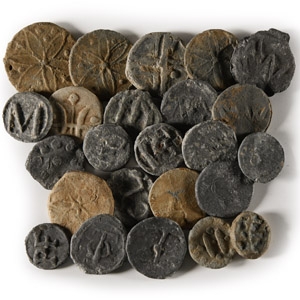
Post Medieval Lead Token Collection
Circa 16th-19th century A.D.Sold for (Inc. bp): £26
Mixed group of discoid tokens with various designs. 152 grams total, 16-29 mm
Acquired since the 1970s. From the private collection of a Surrey, UK, gentleman.
