
Loading, please wait...
LOT 1957
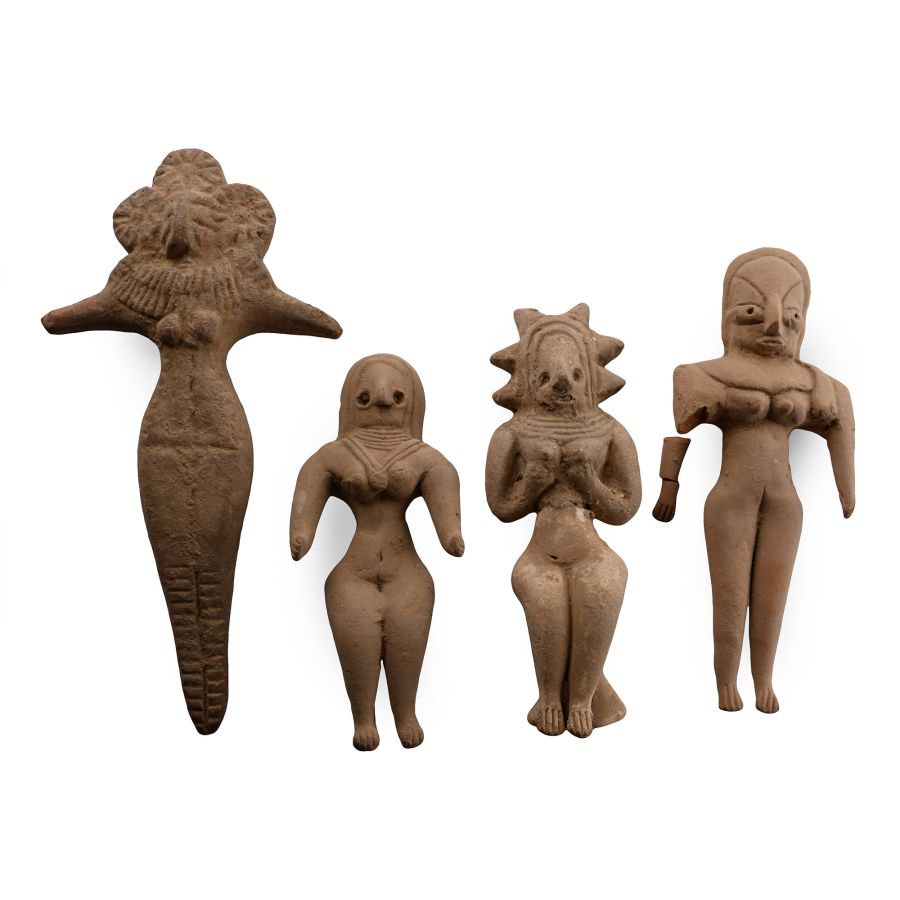
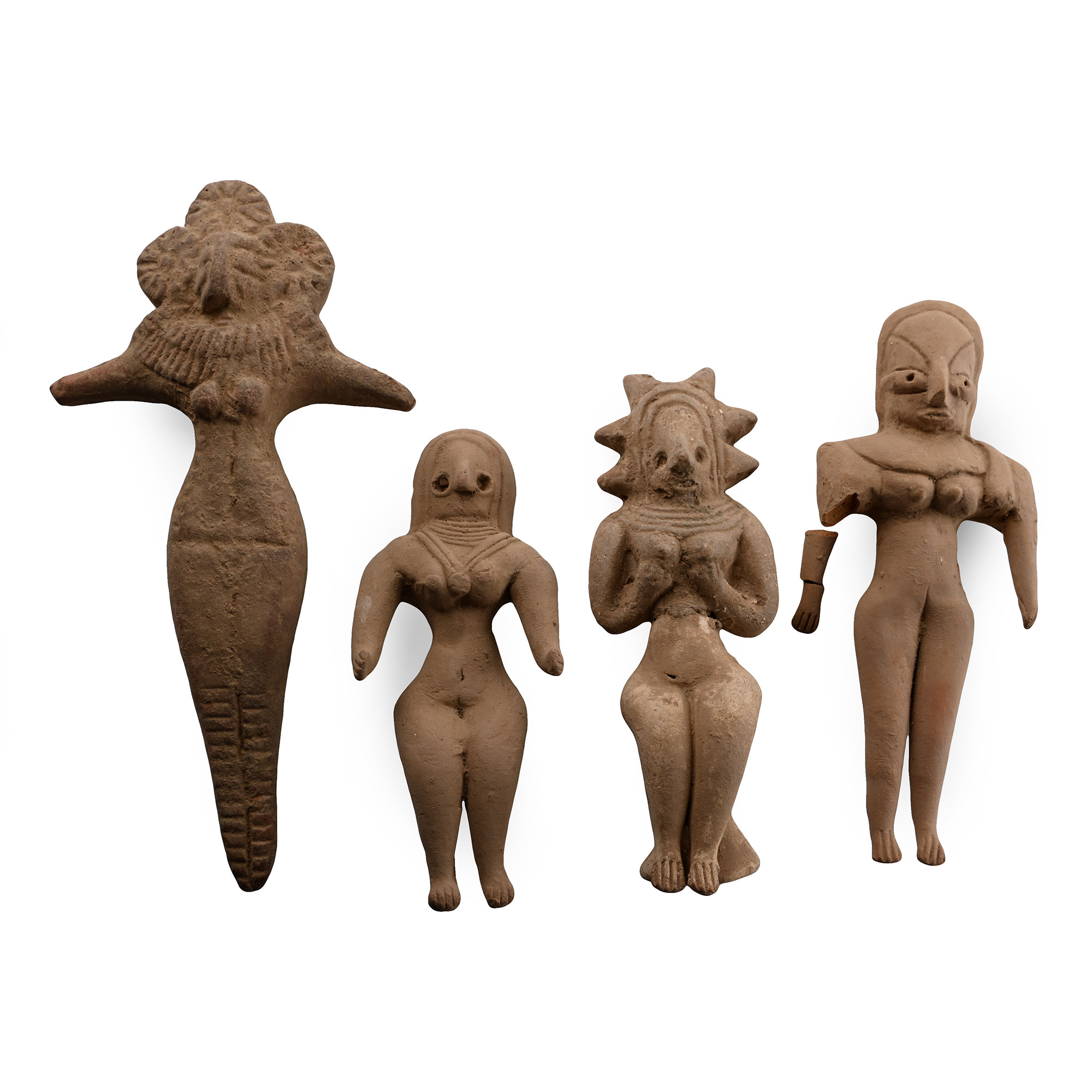
Indus Valley Style 'Mohenjo-Daro' Terracotta Idol Group
20TH CENTURY A.D. OR EARLIER
2 1/2 - 6 1/2 in. (327 grams total, 6-16cm).
A mixed group of four terracotta female idols comprising: one supine, nude with applied hair and facial features; one similar, legs bent; one with radiating spike to the headdress seated on a stool; one T-shaped, supine with rosettes to the headdress. [4, No Reserve]
ProvenanceProperty of a London gentleman; acquired before 2000.
From the private collection of John Meredith, acquired since the 1990s; thence by descent.
TimeLine Auctions follows a vetting process to ensure the authenticity and legality of all items, reinforcing our commitment to integrity and responsible trading. Each antiquity, antique, and coin lot undergoes thorough examination by a vetting committee of at least ten external specialists, professional trade association members, scientists, and archaeologists: Our Vetting Process
AUCTIONS:
TimeLine is a leading auction house specialising in antiquities, ancient art, collectables, natural history, coins, medals, and books. Our auctions offer museums, collectors, historians, and enthusiasts the opportunity to acquire unique and historically significant pieces.
-
Mixed Style Statuette and Head Group
20th century A.D.Sold for (Inc. bp): £98
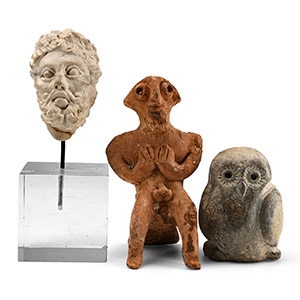
Comprising a carved stone owl, seated nude male terracotta figure and bearded male(?) marble bust with display stand. 645 grams total, 6.8-11.2 cm
Acquired on the UK art market. Private collection, London, UK. -
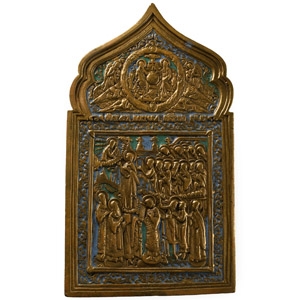
Russian Orthodox Enamelled Bronze Travel Icon with Trinity and the Protection of the Mother of God
19th century A.D.Sold for (Inc. bp): £260
Representing the Protection of the Mother of God; the icon within inside a crested kokoshnik (bochka) with triple border; the crest depicting the Trinity, with God the Father and the Son sitting and facing each other across an orb and crucifix; a dove, symbolising the Holy Spirit, hovering above the crucifix; the Trinity inscribed inside a crown of flying angels, sitting at his feet the four living creatures, the Cherubins symbolising the Evangelists: the Lion, the Angel, the Eagle and the Ox; inscription in Old Slavonic beneath the crest, the Mother of God standing slightly left, looking toward God the Son in the upper corner; clouds at her feet and around the upper left corner; thirteen Saints and four Angels above them standing around her. 281 grams, 17.1 cm
Acquired from Chris Martin-Zakheim, Iconastas, 5 Piccadilly Arcade, London SW1. From the private collection of a West London, UK, gentleman, formed since the early 2000s.
The Icon of the Protection of the Mother of God, or Pokrov (in Old Slavonic), celebrates the Virgin Mary, depicting the Mother of God in prayer, wrapped in her mantle, surrounded by angels and saints. The image is a powerful symbol of protection and a reminder of Marian intercessory prayer, centered on protecting the Christian people from adversity and danger. -
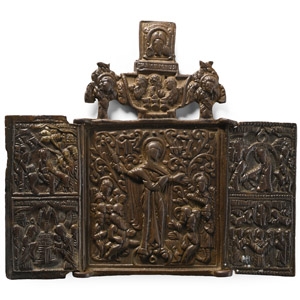
Eastern European Bronze Folding Triptych Icon of the Mother of God 'Joy of All Who Sorrow'
Circa 1850's A.D.Sold for (Inc. bp): £156
Representing the subject of the advocation of Virgin Mary, depicted as a haloed robed woman, standing with her arms extended outwards, figures kneeling at her side, Greek inscription 'ΜΡ ϴΥ’ (Mother of God) above; the other panels with the entrance of Christ in Jerusalem (top left); the Presentation to the Temple (bottom left); the Resurrection (top right) and the Ascension (bottom right); Cyrillic inscriptions over each of the scenes; on the crest and finial, the Trinity (three angels with cups) flanked by Cherubins, the Mandylion above. 85 grams, 90 mm
Acquired from Chris Martin-Zakheim, Iconastas, 5 Piccadilly Arcade, London SW1. From the private collection of a West London, UK, gentleman, formed since the early 2000s.
The icon represents the Intercession of Mary, 'Joy of all who sorrow'. It formed the central part of a triptych with the Mother of God at the centre, surmounted by iconography of veneration. The other parts of the triptych are embossed with scenes of the lives of Christ.
