Loading, please wait...

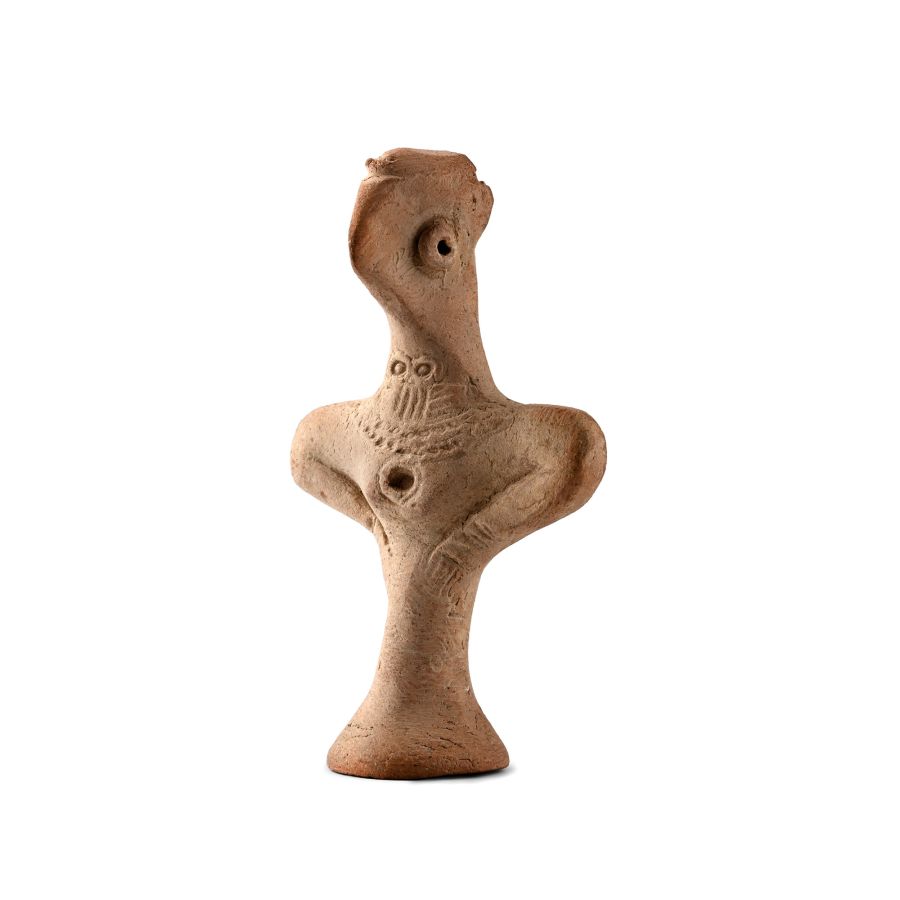
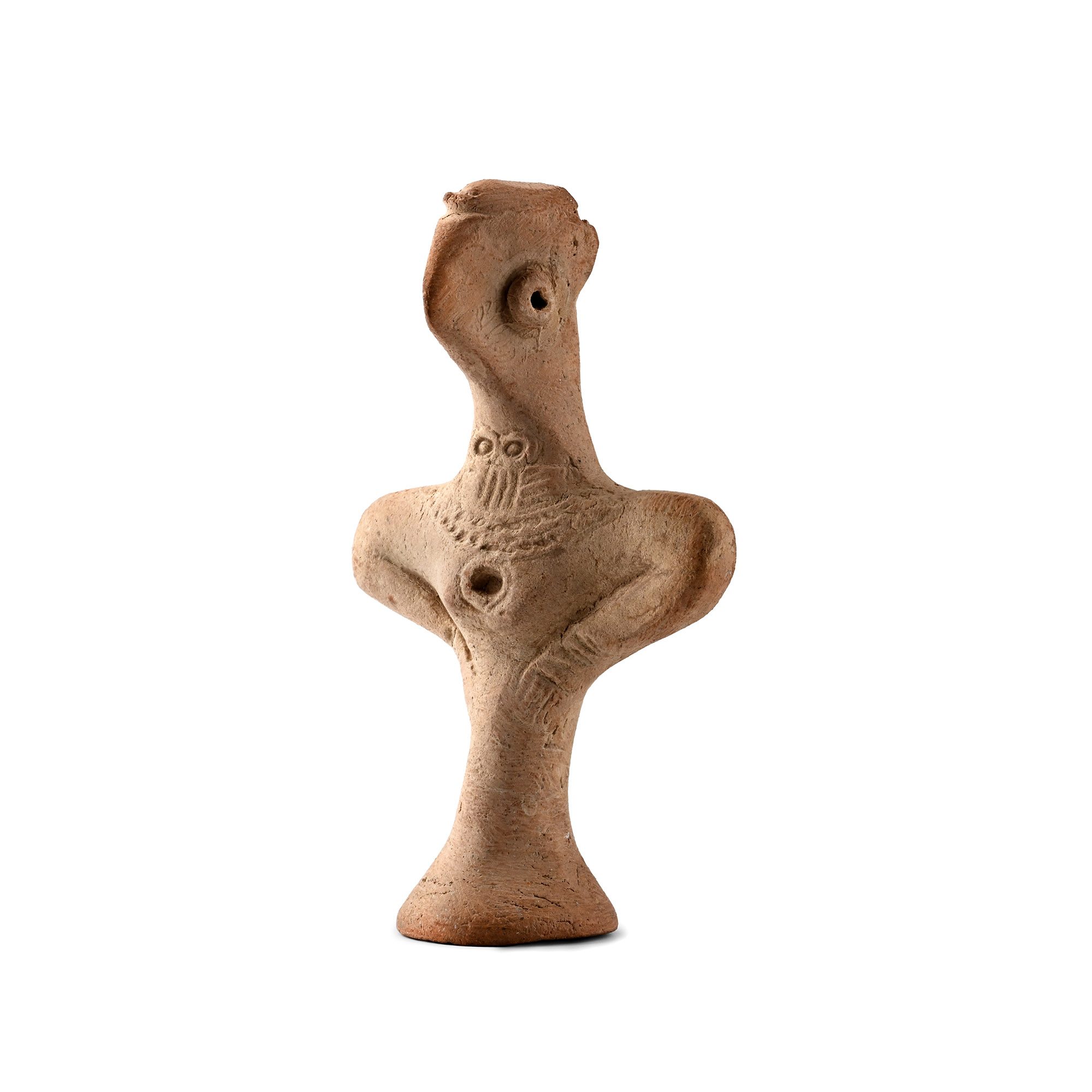
Indus Valley Style Fertility Idol Indus Valley Style Fertility Idol Indus Valley Style Fertility Idol
Use mousewheel to zoom in and out, click to enlarge
Details

LOT 2113

Indus Valley Style Fertility Idol

20TH CENTURY A.D. OR EARLIER

3 3/4 in. (53 grams, 96 mm).

With flat discoid base, arms bent with hands on hips, body decorated with incised necklace; face with prominent pinched nose, applied discoid eyes. [No Reserve]

Provenance

Ex Swiss collection; acquired 1980s.
From the private collection of John Meredith, acquired since the 1990s; thence by descent.

CONDITION
VETTING:

TimeLine Auctions follows a vetting process to ensure the authenticity and legality of all items, reinforcing our commitment to integrity and responsible trading. Each antiquity, antique, and coin lot undergoes thorough examination by a vetting committee of at least ten external specialists, professional trade association members, scientists, and archaeologists: Our Vetting Process


AUCTIONS:

TimeLine is a leading auction house specialising in antiquities, ancient art, collectables, natural history, coins, medals, and books. Our auctions offer museums, collectors, historians, and enthusiasts the opportunity to acquire unique and historically significant pieces.

LOT 2113

Indus Valley Style Fertility Idol

Sold for (Inc. bp): £20

Print page

RELATED LOTS
  • Eastern European Orthodox Bronze Cross Pendant
    Eastern European Orthodox Bronze Cross Pendant
    17th-18th century A.D.

    Sold for (Inc. bp): £52

    Cross pommy type with low-relief cloisonné ornament. 3.06 grams, 41 mm


    Acquired from Chris Martin-Zakheim, Iconastas, 5 Piccadilly Arcade, London SW1. From the private collection of a West London, UK, gentleman, formed since the early 2000s.

    Lot Details

  • Large Painted Wooden Icon of Mother of God of Tikhvin
    Large Painted Wooden Icon of Mother of God of Tikhvin
    Russia, 16th century A.D.

    Estimate: £5,000 - 7,000 (+bp*)

    Opening Bid: £2,500

    Oil and tempera, depicting the Virgin Mary and the infant Jesus on a plain gold field; Mary wearing a red maphorion mantle over a blue robe, with golden brocade to the hem, in the style of Hodegetria (She who shows the way); the Virgin pointing at Jesus with her right hand, while looking towards the spectator; the infant facing left, resting on Mary's left arm, dressed in white tunic, wrapped in a red-orange shawl, right hand blessing the mother, left hand extended holding a scroll of the Holy Scriptures, while crossing his legs to reveal the naked sole of one of his feet; very effaced Greek inscriptions in red lettering 'ΜΡ ΘΥ (Μήτηρ (τοῦ) Θεοῦ = Mother of God)' flanking Mary's head; inscription in Greek 'ΙϹ ΧϹ' (ΙΗϹΟΥϹ ΧΡΙϹΤΟϹ = Jesus Christ) above the infant; rectangular wooden board with mounting bars to reverse and old collector's label 'Vierge Hodigitria, type Tikhvin, Icone russe du 16eme siècle, achetée á Constantinople…chez Monsieur Captain…peinture transmise sur nouvelle planche [Virgin Hodigitria, Tikhvin type, Russian icon from the 16th century, purchased in Constantinople...from Monsieur Captain...painting moved on a new board]'; border with pointillé lozenges and other detailing. 4.7 kg, 70.3 x 52.5 cm


    Acquired on the UK art market. Private collection, London, UK. Accompanied by an academic report by Dr Raffaele D’Amato. This lot has been checked against the Interpol Database of stolen works of art and is accompanied by search certificate number no. 19929-246334.

    According to the legend, this particular icon of the Mother of God appeared in Rus' in 1383 near Veliky Novgorod over Lake Ladoga, and travelled through the air to the Tikhvin River, stopping at several points along the way and performing miracles. On Tikhvin, where the icon came to rest, a stone Dormition Cathedral was built by order of Grand Prince of Moscow Vasil III in 1515, and in 1560, Ivan the Terrible founded the Tikhvin Dormition Monastery near this cathedral. In 1613, the Dormition Monastery withstood the Swedish invasion, and in 1617, the Treaty of Stolbovo was concluded with Sweden. These events were associated with the miraculous intercession of the icon. Until 1936, the icon was kept in the Dormition Cathedral. In 1936, services in the cathedral were discontinued, and the icon was housed in various churches in Tikhvin. In November 1941, Tikhvin was occupied by German troops. The icon was taken abroad and remained in Chicago since the 1950s. In 2004, the icon was again ceremoniously transferred to the Dormition Cathedral of the Tikhvin Monastery.

    Lot Details

  • Renaissance Silver Mirror with Mythological Scene
    Renaissance Silver Mirror with Mythological Scene
    16th-17th century A.D.

    Sold for (Inc. bp): £338

    Slightly dished face with hatched rim, running vinescroll to border, scallop supporting a low-relief scene with bearded figure holding a spear supported on his throne by two robed females, small hoplite above and long-haired figure with labrys to left; legends in pseudo-archaic Greek script; handle absent, old professional repair to verso. 138 grams, 13.2 cm


    From the property of a late Lincolnshire, UK, gentleman.

    Lot Details

Stay up-to-date with the latest from TimeLine Auctions by joining our mailing list