
Loading, please wait...
LOT 2075
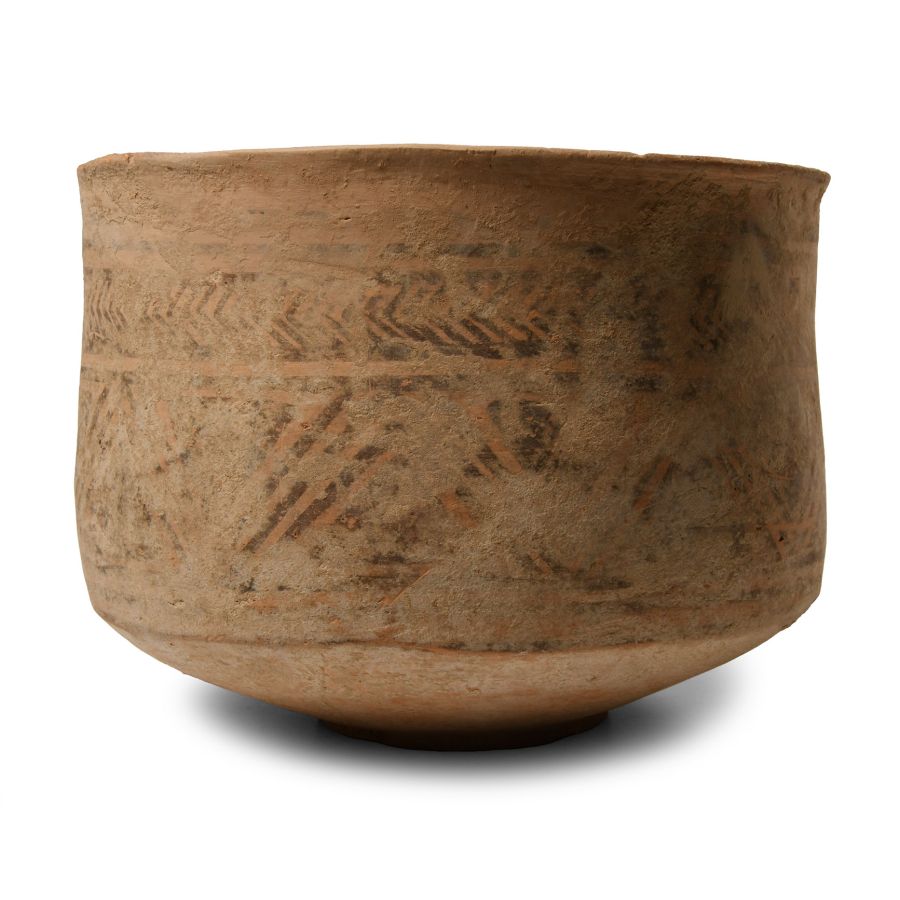
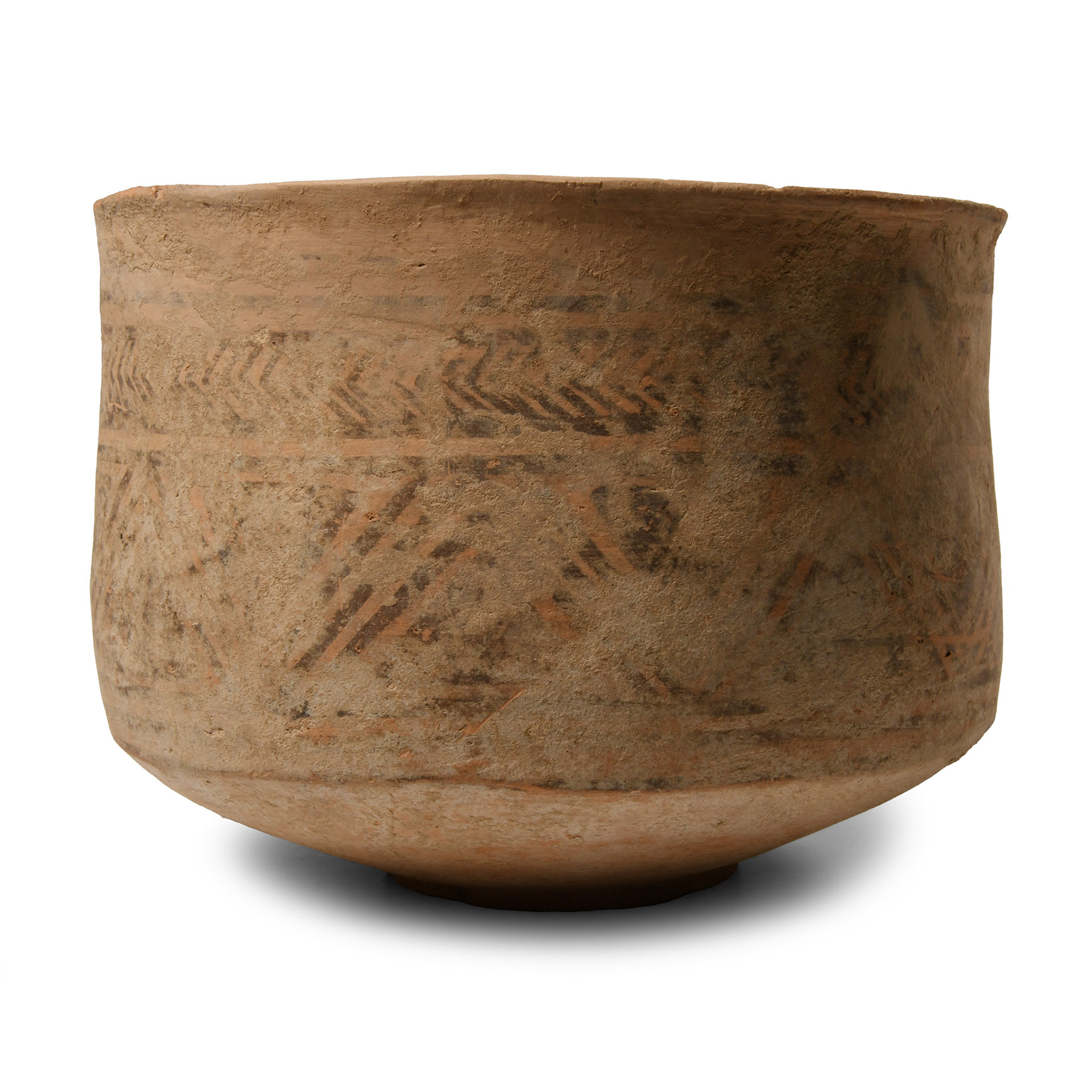
Indus Valley Painted Terracotta Jar
3RD-2ND MILLENNIUM B.C.
5 3/4 in. (425 grams, 14.5 cm wide).
With slightly sloping sidewall and everted rim, narrow foot; painted geometric bands. [No Reserve]
ProvenanceAcquired 1990s-2000s.
From the late David Gold (d.2015) collection of pottery.
David Gold and his brother were famous for setting up the first clothes shop in Carnaby Street and dressed the famous in the swinging 1960s, making Carnaby Street famous.
CONDITIONTimeLine Auctions follows a vetting process to ensure the authenticity and legality of all items, reinforcing our commitment to integrity and responsible trading. Each antiquity, antique, and coin lot undergoes thorough examination by a vetting committee of at least ten external specialists, professional trade association members, scientists, and archaeologists: Our Vetting Process
AUCTIONS:
TimeLine is a leading auction house specialising in antiquities, ancient art, collectables, natural history, coins, medals, and books. Our auctions offer museums, collectors, historians, and enthusiasts the opportunity to acquire unique and historically significant pieces.
-
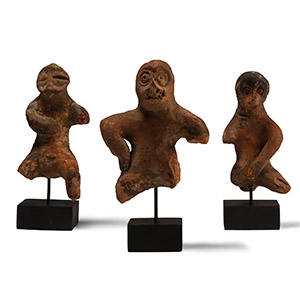
Indus Valley Terracotta Figure Group
2nd millennium B.C.Sold for (Inc. bp): £169
Group of three simians with exaggerated facial features, each with a stub tail; each mounted on a custom-made display stand. 247 grams total, 9.9-10.4 cm including stand
From a collection acquired on the UK art market from various auction houses and collections mostly before 2000. From an important Cambridgeshire estate; thence by descent. -
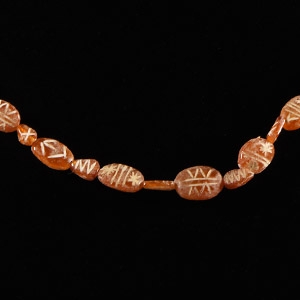
Indus Valley Etched Orange Carnelian Bead Necklace String
Circa 2nd century B.C. and laterSold for (Inc. bp): £338
Comprising polished carnelian beads etched with geometric motifs to both faces; restrung. 14.9 grams, 44 cm long
UK gallery, early 2000s.
Etched carnelian beads are characteristic of the Indus Valley culture and have been produced since the third millennium B.C. They are a typical product of the Harappa culture, but they are also attested in later millennia and produced elsewhere in Southeast Asia. The oldest specimens come from the Indus Valley and from Mesopotamia. A few specimens were found in the so-called royal cemetery of Ur, where they were identified in the excavation publication as coming from India. -
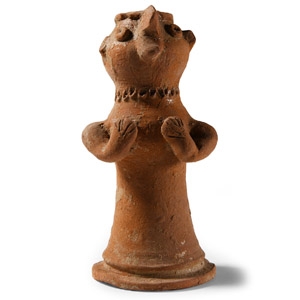
Indus Valley Clay Fertility Figurine
33rd-13th century B.C.Sold for (Inc. bp): £156
Tubular figurine depicting a stylised female wearing a necklace and headdress, hands holding the breasts, raised linear hem to the bell-shaped skirt, pinched facial features. 468 grams, 17.5 cm high
From a collection acquired on the UK art market from various auction houses and collections mostly before 2000. From an important Cambridgeshire estate; thence by descent.
