
Loading, please wait...
LOT 2093
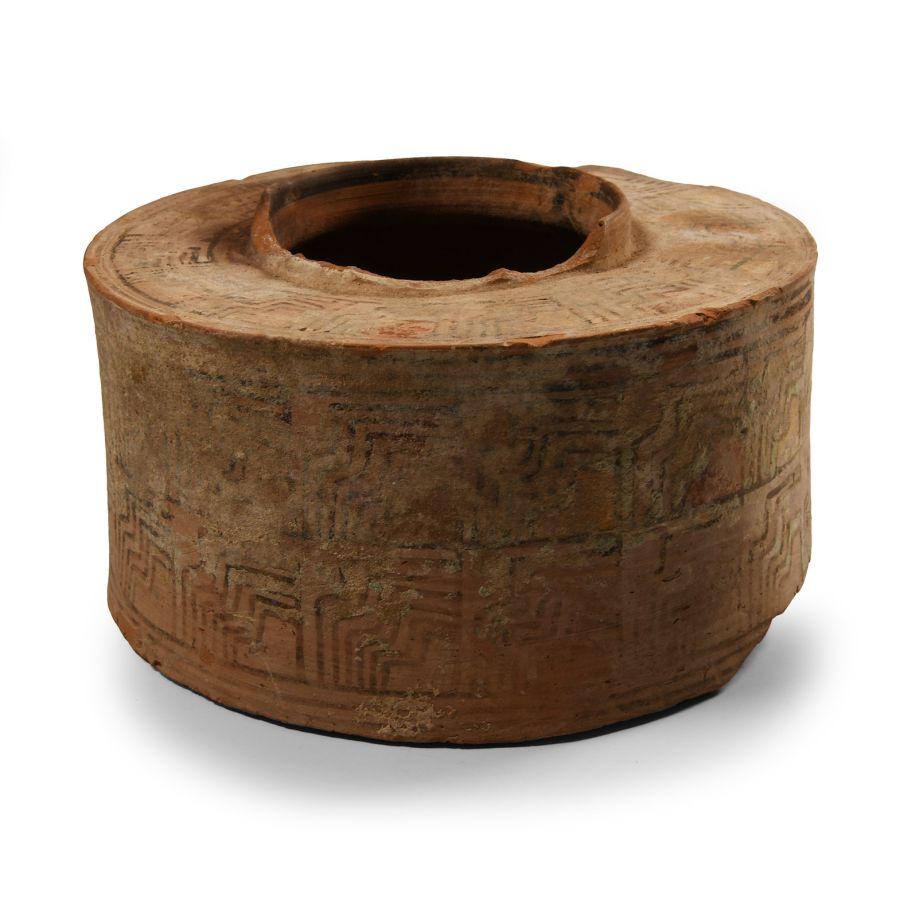
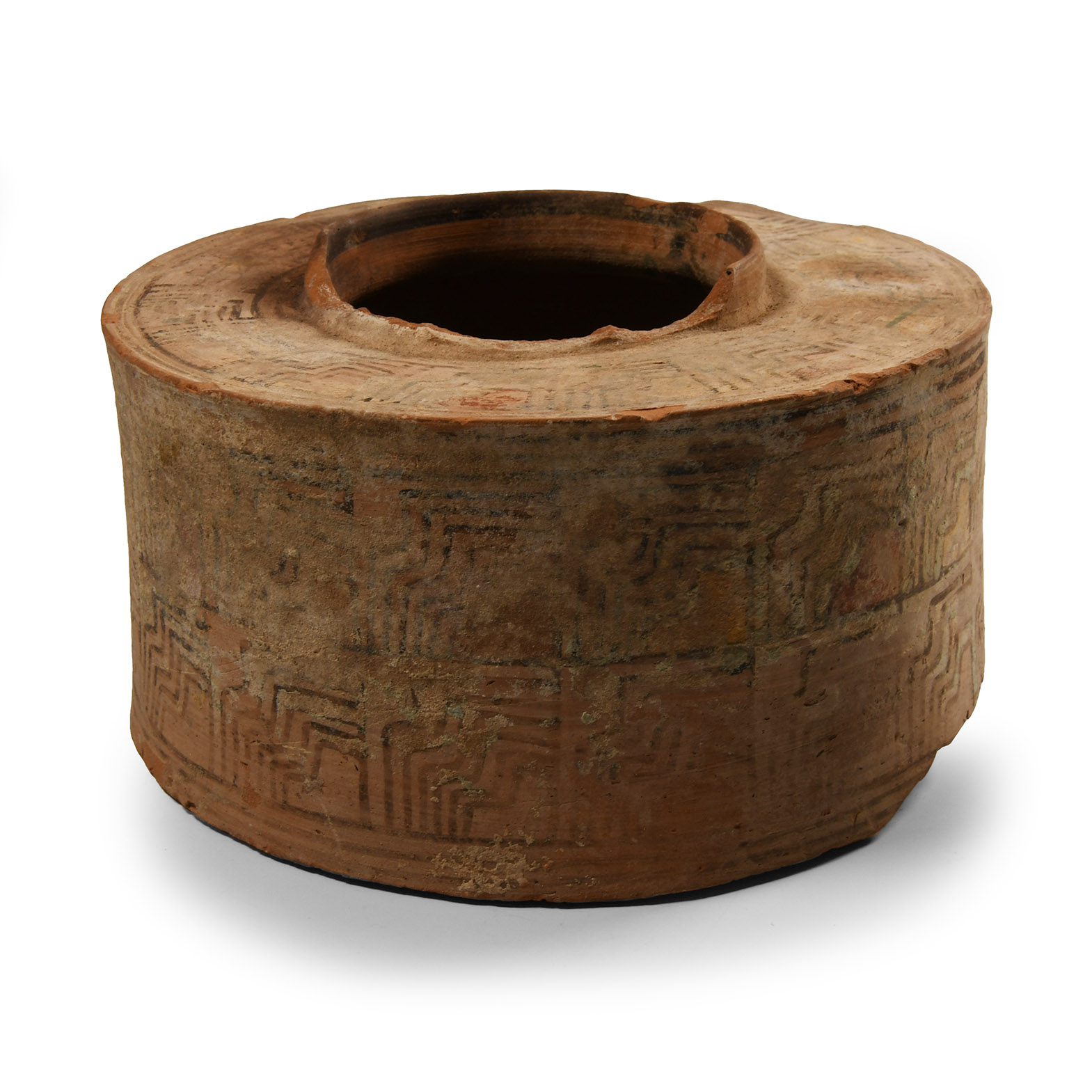
Indus Valley Painted Terracotta Jar
3RD-2ND MILLENNIUM B.C.
6 1/4 in. (600 grams, 16 cm wide).
With slightly sloping sidewall, flat shoulder and everted rim to the broad mouth; painted geometric bands to side and shoulder; chipped. [No Reserve]
ProvenanceAcquired 1990s-2000s.
From the late David Gold (d.2015) collection of pottery.
David Gold and his brother were famous for setting up the first clothes shop in Carnaby Street and dressed the famous in the swinging 1960s, making Carnaby Street famous.
CONDITIONTimeLine Auctions follows a vetting process to ensure the authenticity and legality of all items, reinforcing our commitment to integrity and responsible trading. Each antiquity, antique, and coin lot undergoes thorough examination by a vetting committee of at least ten external specialists, professional trade association members, scientists, and archaeologists: Our Vetting Process
AUCTIONS:
TimeLine is a leading auction house specialising in antiquities, ancient art, collectables, natural history, coins, medals, and books. Our auctions offer museums, collectors, historians, and enthusiasts the opportunity to acquire unique and historically significant pieces.
-
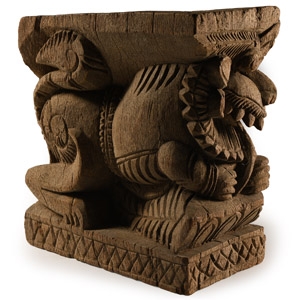
Tamil Carved Architectural Wooden Yali Lion
Sri Lanka, circa 19th century A.D.Sold for (Inc. bp): £33
Architectural feature carved from a rectangular block with texture detailing to the mane and facial features; rear face degraded. 1.69 kg, 18.2 cm
From a collection acquired on the UK art market from various auction houses and collections mostly before 2000. From an important Cambridgeshire estate; thence by descent. -
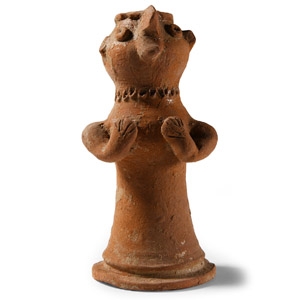
Indus Valley Clay Fertility Figurine
33rd-13th century B.C.Sold for (Inc. bp): £156
Tubular figurine depicting a stylised female wearing a necklace and headdress, hands holding the breasts, raised linear hem to the bell-shaped skirt, pinched facial features. 468 grams, 17.5 cm high
From a collection acquired on the UK art market from various auction houses and collections mostly before 2000. From an important Cambridgeshire estate; thence by descent. -
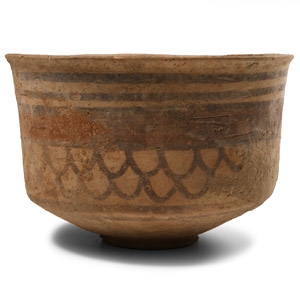
Indus Valley Painted Terracotta Bowl
3rd-2nd millennium B.C.Sold for (Inc. bp): £78
Bell-shaped in profile with painted horizontal bands, scale pattern below. 290 grams, 12 cm
Acquired 1990s-2000s. From the late David Gold (d.2015) collection of pottery.
David Gold and his brother were famous for setting up the first clothes shop in Carnaby Street and dressed the famous in the swinging 1960s, making Carnaby Street famous.
