
Loading, please wait...
LOT 2108
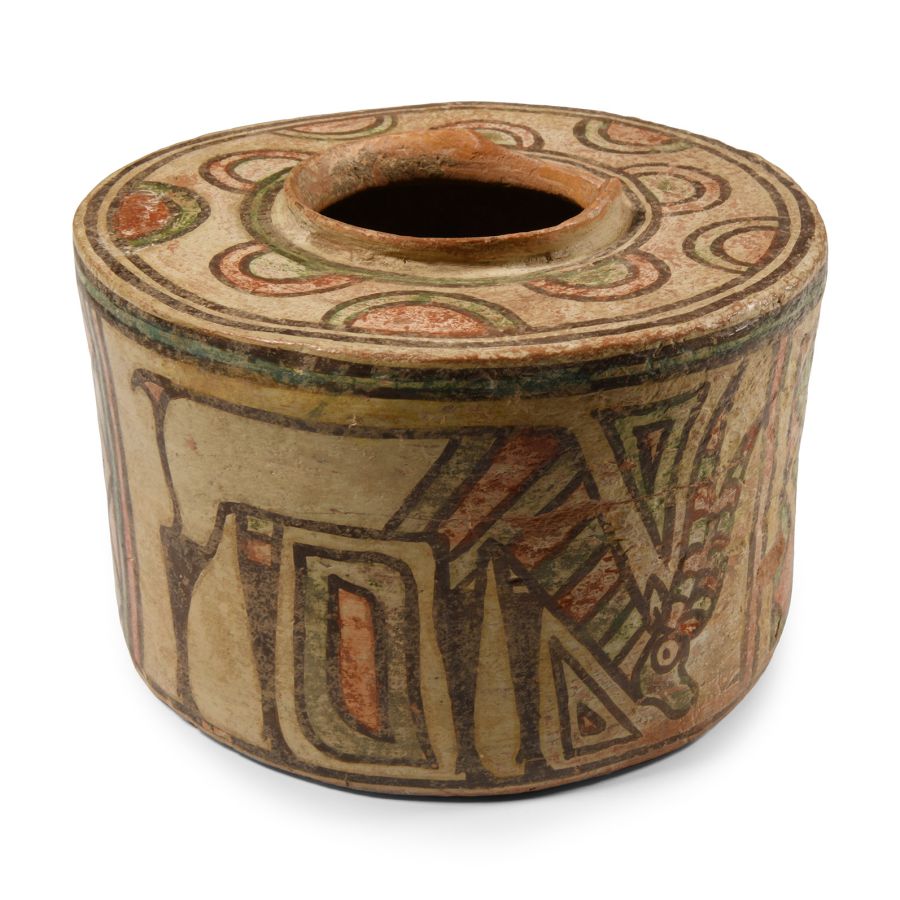
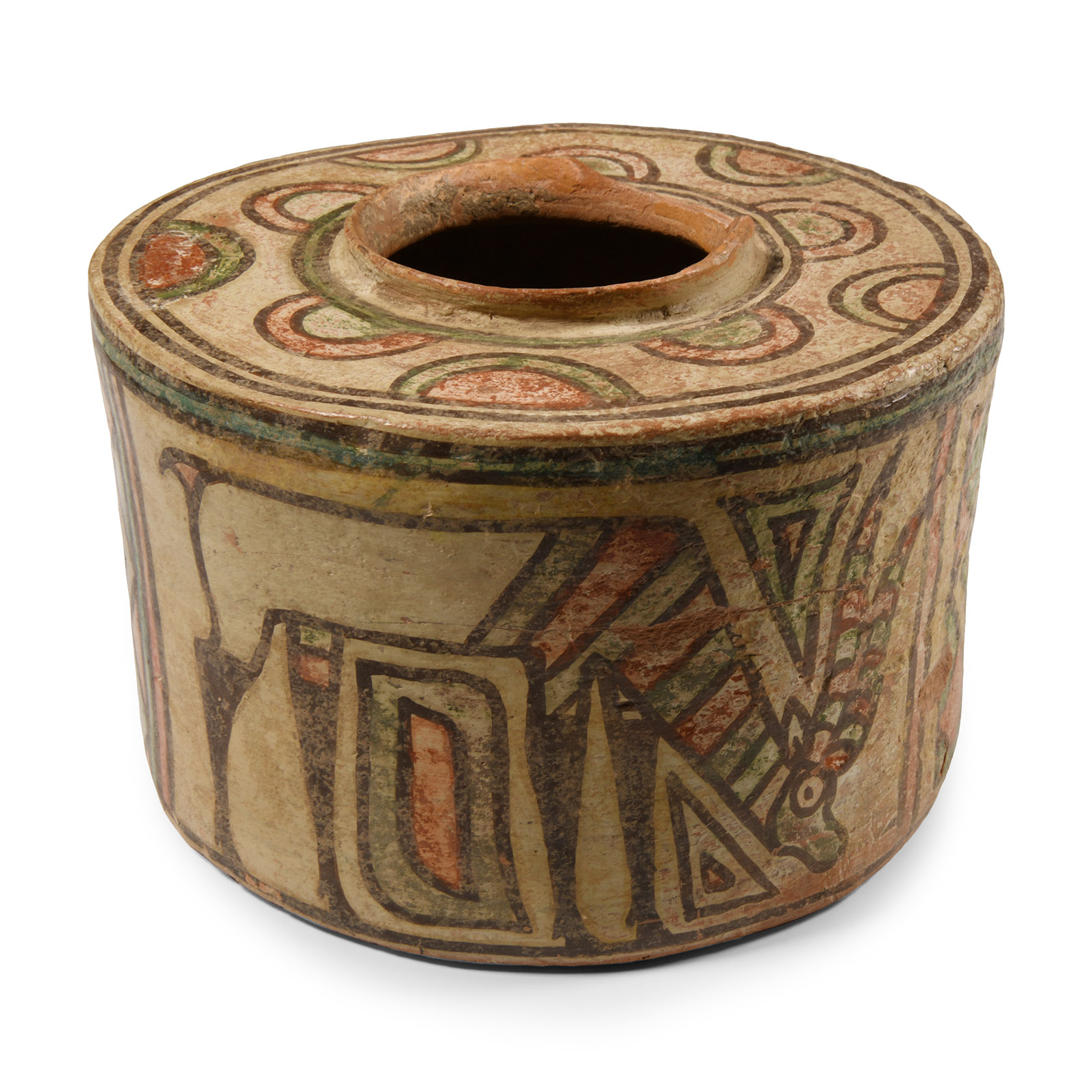
Indus Valley Mehrgarh Terracotta Storage Jar with Lion and Antelope
3RD-2ND MILLENNIUM B.C.
6 1/4 in. (946 grams, 16 cm).
With polychrome panels of geometric ornament, profile antelope and lion, crescents to the shoulder; some repainting. [No Reserve]
ProvenanceFrom a collection acquired on the UK art market from various auction houses and collections mostly before 2000.
From an important Cambridgeshire estate; thence by descent.
See Satyawadi, S., Proto-Historic Pottery of Indus Valley Civilisation: Study of Painted Motifs, Perspectives in Indian Art and Archaeology, vol.2, New Delhi, 1994.
CONDITIONTimeLine Auctions follows a vetting process to ensure the authenticity and legality of all items, reinforcing our commitment to integrity and responsible trading. Each antiquity, antique, and coin lot undergoes thorough examination by a vetting committee of at least ten external specialists, professional trade association members, scientists, and archaeologists: Our Vetting Process
AUCTIONS:
TimeLine is a leading auction house specialising in antiquities, ancient art, collectables, natural history, coins, medals, and books. Our auctions offer museums, collectors, historians, and enthusiasts the opportunity to acquire unique and historically significant pieces.
LOT 2108
Indus Valley Mehrgarh Terracotta Storage Jar with Lion and Antelope
Sold for (Inc. bp): £286
-
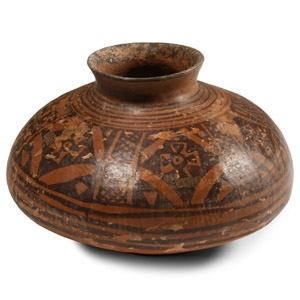
Indus Valley Mehrgarh Terracotta Jar with Geometric Design
3rd-2nd millennium B.C.Sold for (Inc. bp): £143
Squat in profile with flared mouth and low foot; painted horizontal rings to the equator and neck, geometric panels to the shoulder. 369 grams total, 14 cm
From a collection acquired on the UK art market from various auction houses and collections mostly before 2000. From an important Cambridgeshire estate; thence by descent. -
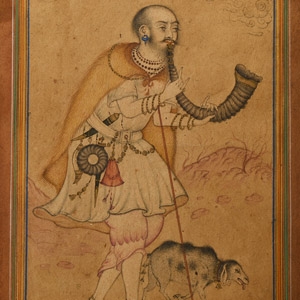
Northern Indian Water Colour Painting of a Pilgrim
Circa 1840 A.D.Sold for (Inc. bp): £286
Showing a travelling pilgrim blowing a horn, dressed in an animal skin cape and short tunic, carrying two ceremonial daggers, wearing copious jewellery; accompanied by a small goat wearing a bell collar; a panel of inscriptions above. 11 grams, 24.5 cm
Acquired from the UK art market. Private Scottish collection. -
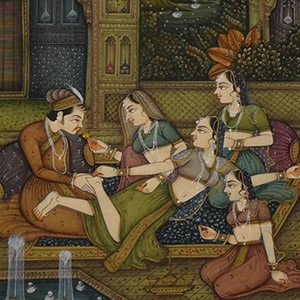
Framed Indian Watercolour Manuscript Leaf
Early 20th century A.D.Sold for (Inc. bp): £65
Showing figures in an opulent courtyard, a man seated against a large cushion massaging one woman's foot, another offering him a drink from a small cup, two further women seated nearby, river meandering through a hilly landscape beyond, text above and below, flowers in the border; mounted in a reveal and a glazed wooden frame. 900 grams, 41 x 28 cm
Fine condition.
Acquired on the UK art market, 1980s-1990s. The Woodbridge collection of Indo-Persian art.
