
Loading, please wait...
LOT 2097
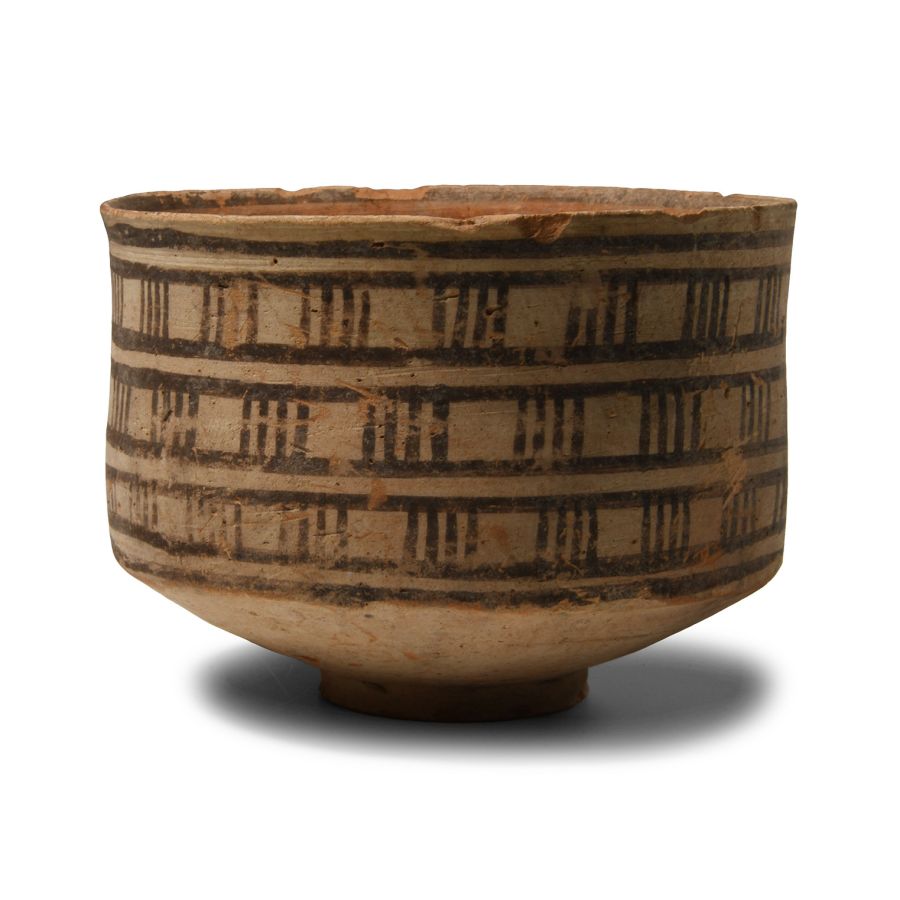
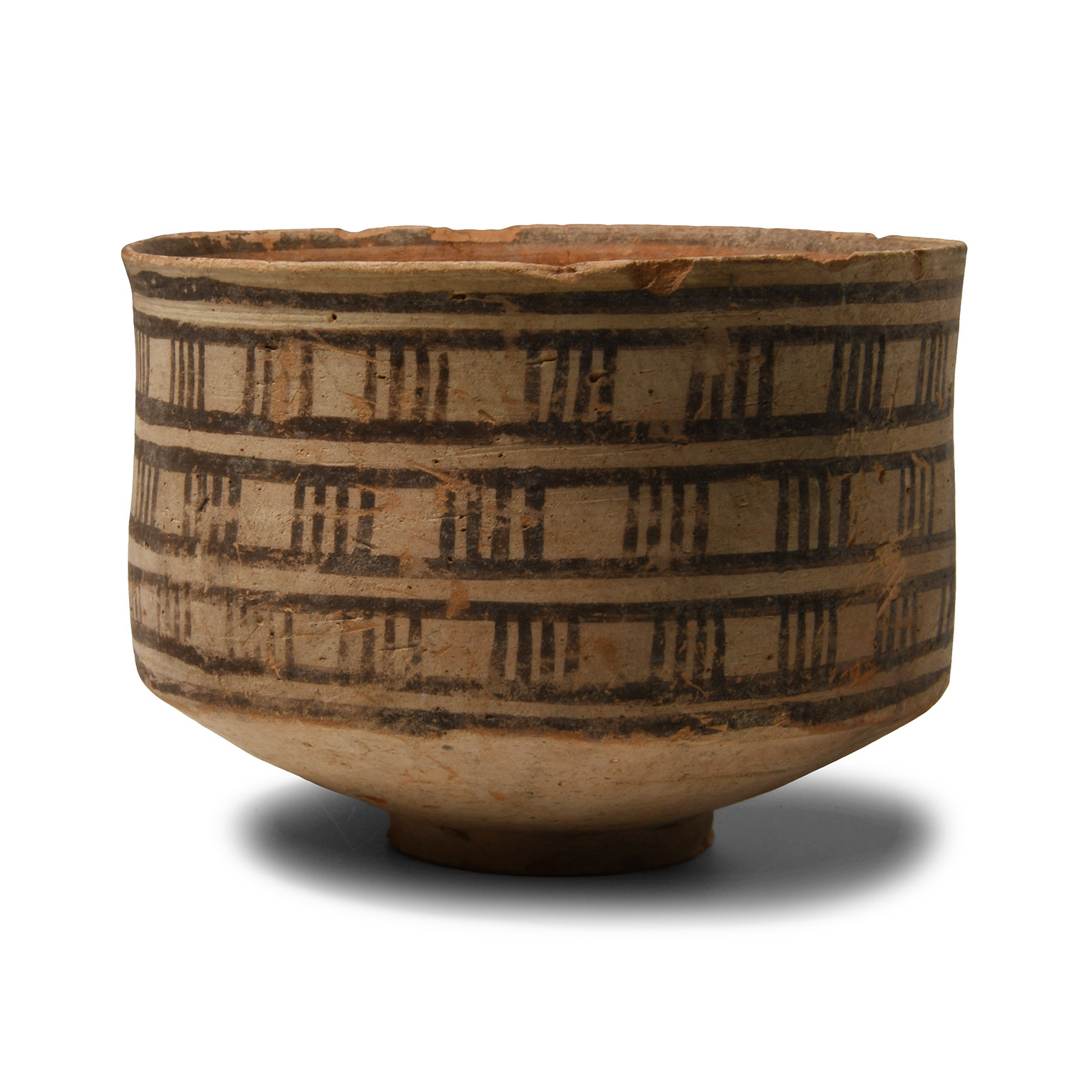
Indus Valley Mehrgarh Terracotta Cup with Ladder-Work Design
3RD-2ND MILLENNIUM B.C.
3 3/4 in. (146 grams, 94 mm).
Biconvex in profile with narrow foot, painted segmented design to the sidewall. [No Reserve]
ProvenanceFrom a collection acquired on the UK art market from various auction houses and collections mostly before 2000.
From an important Cambridgeshire estate; thence by descent.
See Satyawadi, S., Proto-Historic Pottery of Indus Valley Civilisation: Study of Painted Motifs, Perspectives in Indian Art and Archaeology, vol.2, New Delhi, 1994.
CONDITIONTimeLine Auctions follows a vetting process to ensure the authenticity and legality of all items, reinforcing our commitment to integrity and responsible trading. Each antiquity, antique, and coin lot undergoes thorough examination by a vetting committee of at least ten external specialists, professional trade association members, scientists, and archaeologists: Our Vetting Process
AUCTIONS:
TimeLine is a leading auction house specialising in antiquities, ancient art, collectables, natural history, coins, medals, and books. Our auctions offer museums, collectors, historians, and enthusiasts the opportunity to acquire unique and historically significant pieces.
LOT 2097
Indus Valley Mehrgarh Terracotta Cup with Ladder-Work Design
Sold for (Inc. bp): £46
-
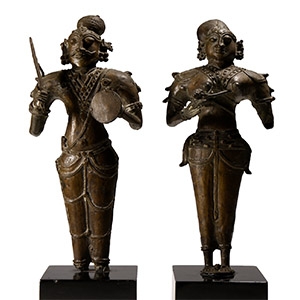
South Indian Bronze Tribal Figures
18th century A.D. or laterSold for (Inc. bp): £572
A male and female pair modelled standing facing, wearing jewel-studded arm bangles, earrings, pendants and skin-tight trousers, the man holding a sword and small round shield, the woman breastfeeding an infant; each mounted on a custom-made display base. 1.55 kg total, 27-27.5 cm high including stand
Acquired in the 1960s. Ex Italian collection. Ex London gallery stock. -
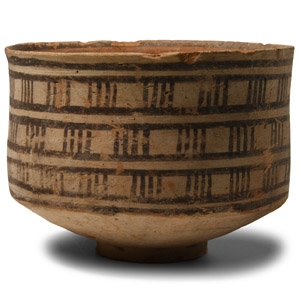
Indus Valley Mehrgarh Terracotta Cup with Ladder-Work Design
3rd-2nd millennium B.C.Sold for (Inc. bp): £46
Biconvex in profile with narrow foot, painted segmented design to the sidewall. 146 grams, 94 mm
From a collection acquired on the UK art market from various auction houses and collections mostly before 2000. From an important Cambridgeshire estate; thence by descent. -
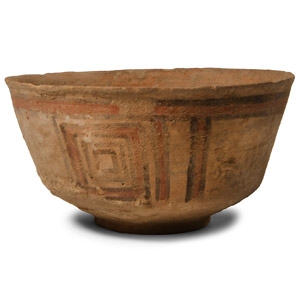
Indus Valley Decorated Terracotta Cup
3rd-2nd millennium B.C.Sold for (Inc. bp): £52
Squat in profile with everted rim, carination and basal ring; painted geometric design to sidewall. 155 grams, 60 mm high
Acquired 1980-2015. Ex Abelita family collection.
