
Loading, please wait...
LOT 2391
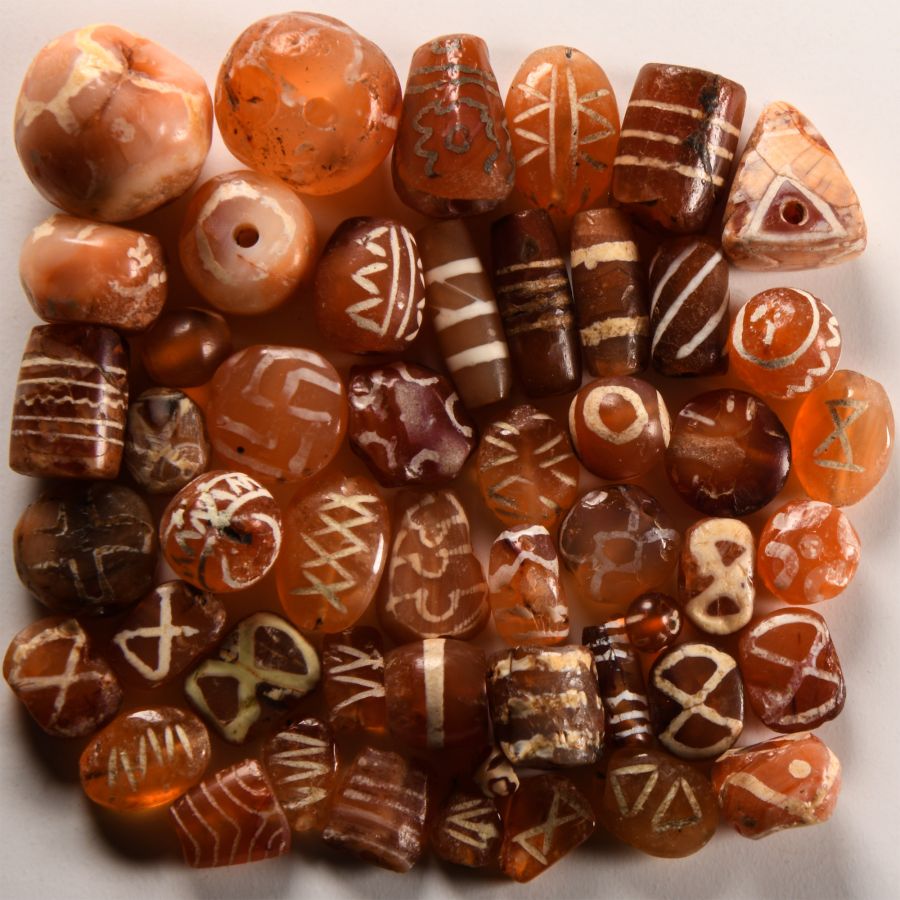
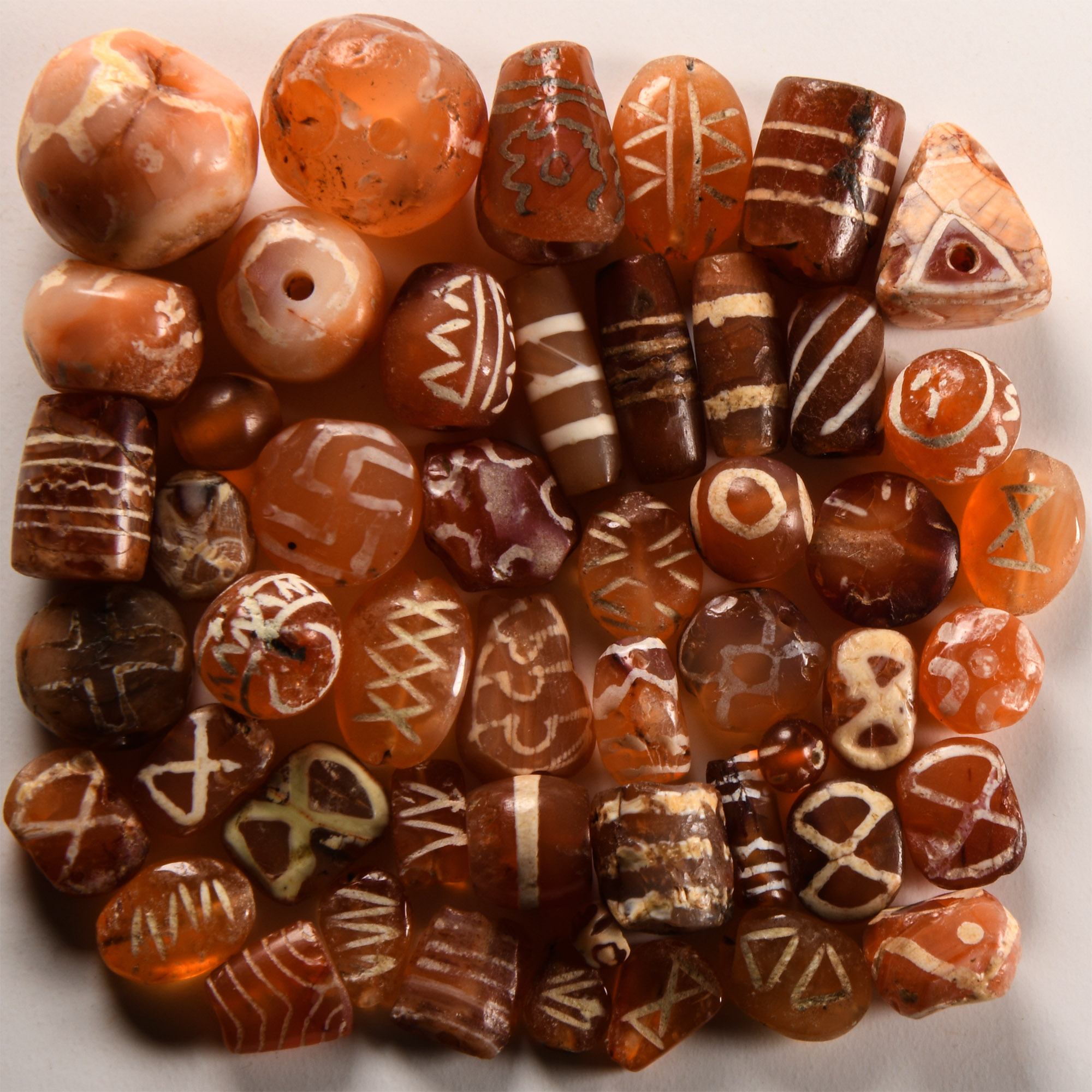
Indus Valley Etched Orange Carnelian Necklace Bead Group
CIRCA 2ND MILLENNIUM B.C. OR LATER
1/8 - 5/8 in. (41 grams total, 6-14 mm).
Composed of polished carnelian beads including spherical, conical, drum, oval and other types, etched with geometric designs. [50, No Reserve]
ProvenanceUK gallery, early 2000s.
CONDITIONTimeLine Auctions follows a vetting process to ensure the authenticity and legality of all items, reinforcing our commitment to integrity and responsible trading. Each antiquity, antique, and coin lot undergoes thorough examination by a vetting committee of at least ten external specialists, professional trade association members, scientists, and archaeologists: Our Vetting Process
AUCTIONS:
TimeLine is a leading auction house specialising in antiquities, ancient art, collectables, natural history, coins, medals, and books. Our auctions offer museums, collectors, historians, and enthusiasts the opportunity to acquire unique and historically significant pieces.
LOT 2391
Indus Valley Etched Orange Carnelian Necklace Bead Group
Sold for (Inc. bp): £195
-
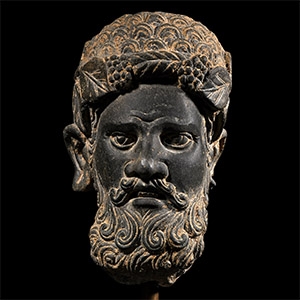
Gandharan Head of Dionysus
2nd-4th century A.D. or laterSold for (Inc. bp): £1,040
A carved schist head with tightly curled hair, wreath to the brow with a vine-leaf at each temple, curled moustache and beard, ears with long lobes; mounted on a custom-made stand. 3.75 kg, 29.5 cm
Acquired 1960-1980s. From an important London, W1, collection. Private collection, England.
With the arrival of Greek colonists into Central Asia and Northern India and the establishment of the Indo-Greek kingdom, came Greek culture and religion which merged with that of the local population. Greek deities, such as Dionysus, were often merged with Buddhist deities, or worshipped in their own right. The image of Dionysus as a mature male with beard and wreath is often referred to as the Indian Dionysus as it depicts the god after his triumphant return from the East with his retinue of Maenads. The adventures of Dionysus in India are recounted in the Greek epic poem, the Dionysiaca. The image of Dionysus returning from India in a chariot pulled by tigers was a favourite for Classical artists and often appeared on sarcophagi as an allegory for the rebirth of the soul. Drinking wine, dancing, and music making were popular subjects for the embellishment of early Buddhist religious centres. The Buddha condemned intoxicants, and music and dance were considered unfit for the monastic community, although they were tolerated in lay contexts. The reason for the depiction of scenes of revelry, along with the Greek god Dionysus, may be the earlier, pre-Buddhist practices celebrating abundance and agricultural prosperity, which involved wine drinking. Dionysus may have been transformed and and understood in the Gandharan context as the South Asian god Indra, whom lay followers would have known as the deity who rules over the paradise known as the Trayastrimsa heaven. As the lay Buddhist community was more concerned with having a positive rebirth (enlightenment being out of reach for all but the most learned of monks) the idea of being reborn in a heaven associated with Indra would no doubt have been attractive. It is thought that the influence of Dionysus on Indian culture may have inspired the development of the Hindu deities Shiva and Krishna, both of whom share similar characteristics to the Greek god. -

Indus Valley Terracotta Fertility Idol
3rd-2nd millennium B.C.Sold for (Inc. bp): £85
With bell-shaped ribbed body and squat head; applied brow-ridge, eyes and beaked nose; pointillé detailing to the eyes; arms bowed, hands holding an amphora to the chest. 692 grams, 20.8 cm
From a collection acquired on the UK art market from various auction houses and collections mostly before 2000. From an important Cambridgeshire estate; thence by descent. -

Large Indus Valley Terracotta Vessel with Animal Motifs
Circa 2200 B.C.Estimate: £6,000 - 8,000 (‡+bp*)
Opening Bid: £3,000
Pale cream fabric, funicular lower body and broad rounded shoulder, band of painted ornament including ibises, a tiger and hatched panels. 2.28 kg, 29 cm wide
Acquired in the mid 1980s-1990s. Private collection, Switzerland, thence by descent. Private collection, since the late 1990s. Accompanied by an academic report by Dr Raffaele D’Amato. This lot has been checked against the Interpol Database of stolen works of art and is accompanied by search certificate number no.12187-222202.
