
Loading, please wait...
LOT 2116
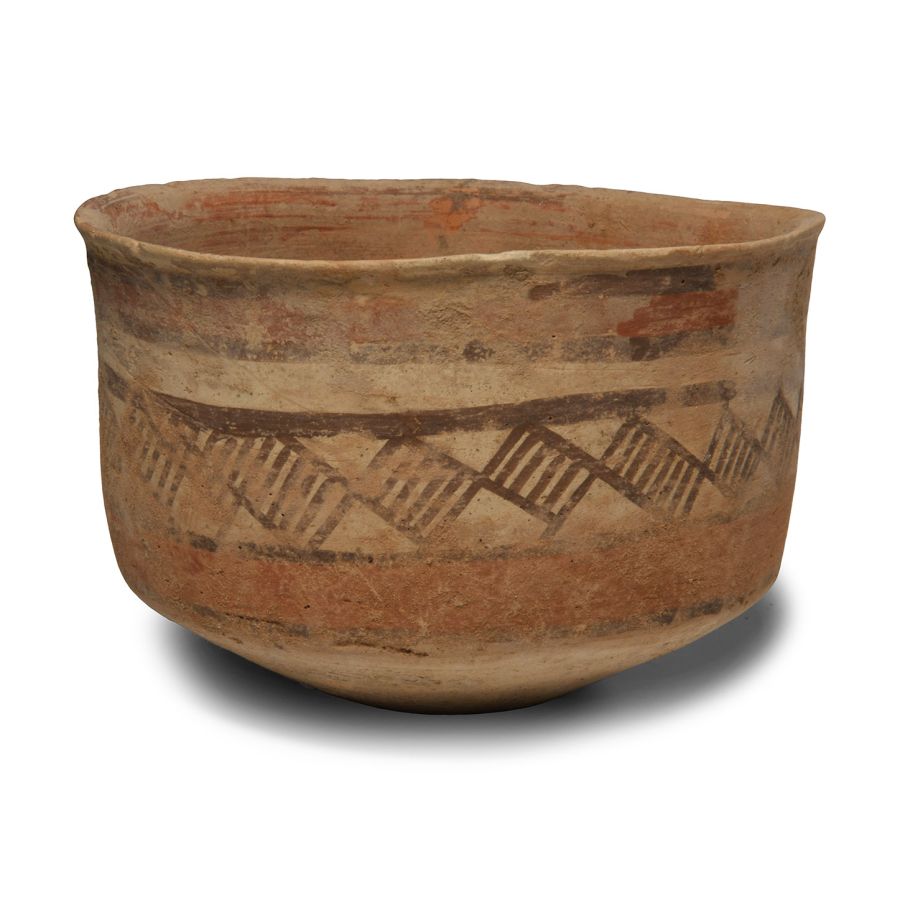
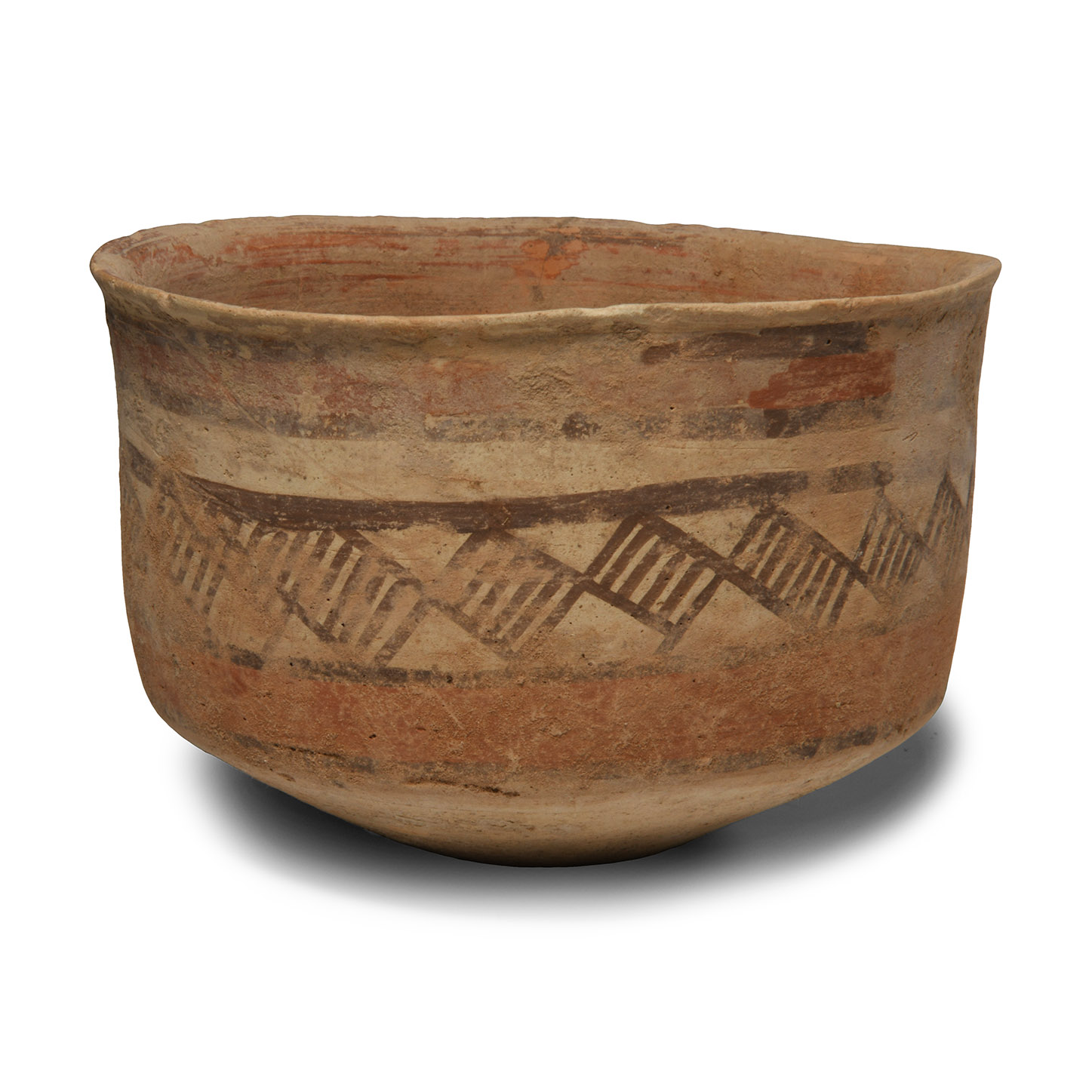
Indus valley Decorated Terracotta Cup
3RD-2ND MILLENNIUM B.C.
3 in. (198 grams, 77 mm high).
With everted rim, angled lower body and basal ring; painted hatched guilloche to the sidewall. [No Reserve]
ProvenanceAcquired 1980-2015.
Ex Abelita family collection.
TimeLine Auctions follows a vetting process to ensure the authenticity and legality of all items, reinforcing our commitment to integrity and responsible trading. Each antiquity, antique, and coin lot undergoes thorough examination by a vetting committee of at least ten external specialists, professional trade association members, scientists, and archaeologists: Our Vetting Process
AUCTIONS:
TimeLine is a leading auction house specialising in antiquities, ancient art, collectables, natural history, coins, medals, and books. Our auctions offer museums, collectors, historians, and enthusiasts the opportunity to acquire unique and historically significant pieces.
-
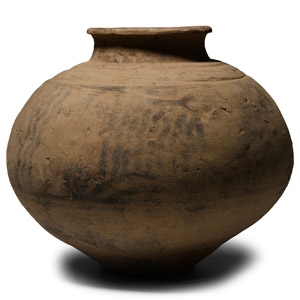
Indus valley Terracotta Jar Decorated with Waves
3rd-2nd millennium B.C.Sold for (Inc. bp): £72
Biconvex body with broad mouth, impressed lines to the shoulder, painted panels of wavy lines below. 1.74 kg, 21 cm high
Acquired 1980-2015. Ex Abelita family collection. -
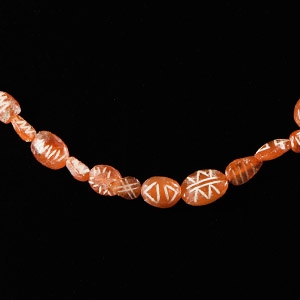
Indus Valley Etched Orange Carnelian Bead Necklace String
Circa 2nd millennium B.C. and laterSold for (Inc. bp): £312
Composed of graduated polished beads etched with a white geometric design on both faces; restrung. 16.5 grams, 44 cm long
UK gallery, early 2000s.
Etched carnelian beads are characteristic of the Indus Valley culture and have been produced since the third millennium B.C. They are a typical product of the Harappa culture, but they are also attested in later millennia and produced elsewhere in Southeast Asia. The oldest specimens come from the Indus Valley and from Mesopotamia. A few specimens were found in the so-called royal cemetery of Ur, where they were identified in the excavation publication as coming from India. -
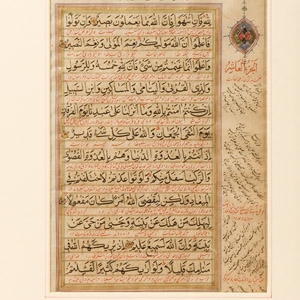
Indian Framed Dalail Khayrat Manuscripts
18th-19th century A.D.Estimate: £180 - 240 (+bp*)
Opening Bid: £100
Both framed and glazed with information cards to the reverses: a Northern Indian Mughal Qur'an leaf dated 1780 A.D., with prayers copied from Mulla Fathullah's Tafsir commentary in Naskh script, interlinear Persian translation throughout in red Nasta'liq in the margins, together with illuminated devices, with gold embellishment; an illuminated manuscript from a Dala'il prayer book, written in Naskh script framed by golden clouds, central borders of meandering vines; each with explanatory label to reverse of frame. 1 kg total, 28.7 x 23.5 cm each
Acquired by the vendor's father on the UK art market, before 1990.
