
Loading, please wait...
LOT 2105
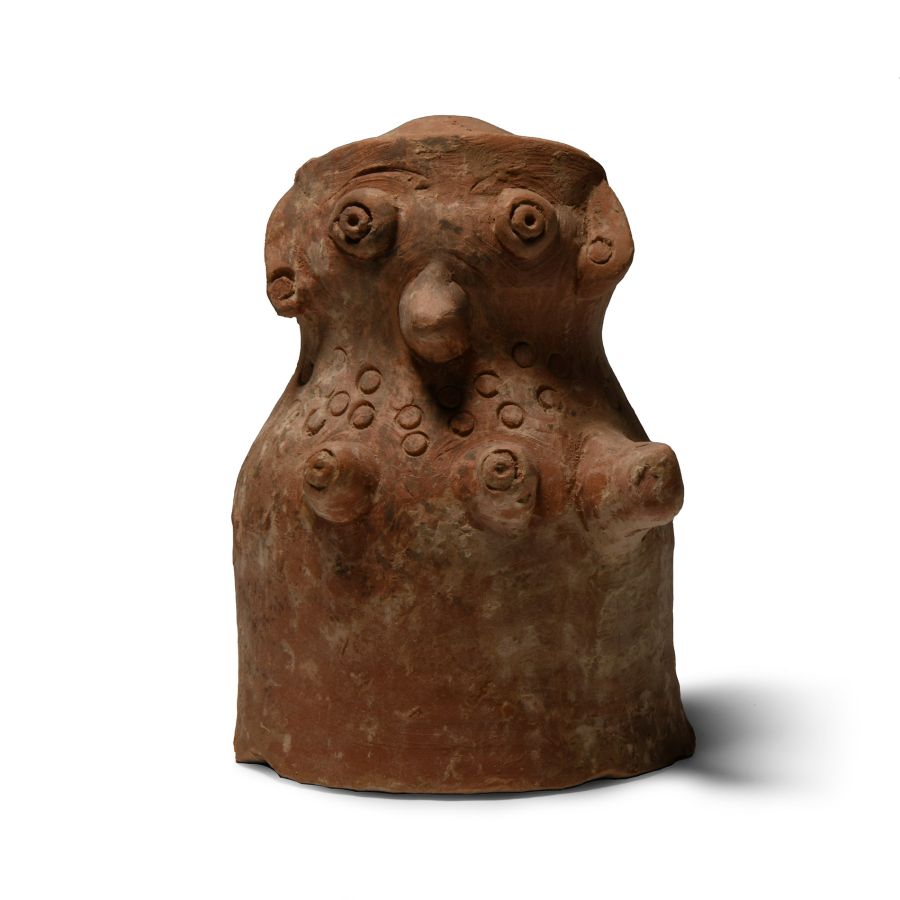
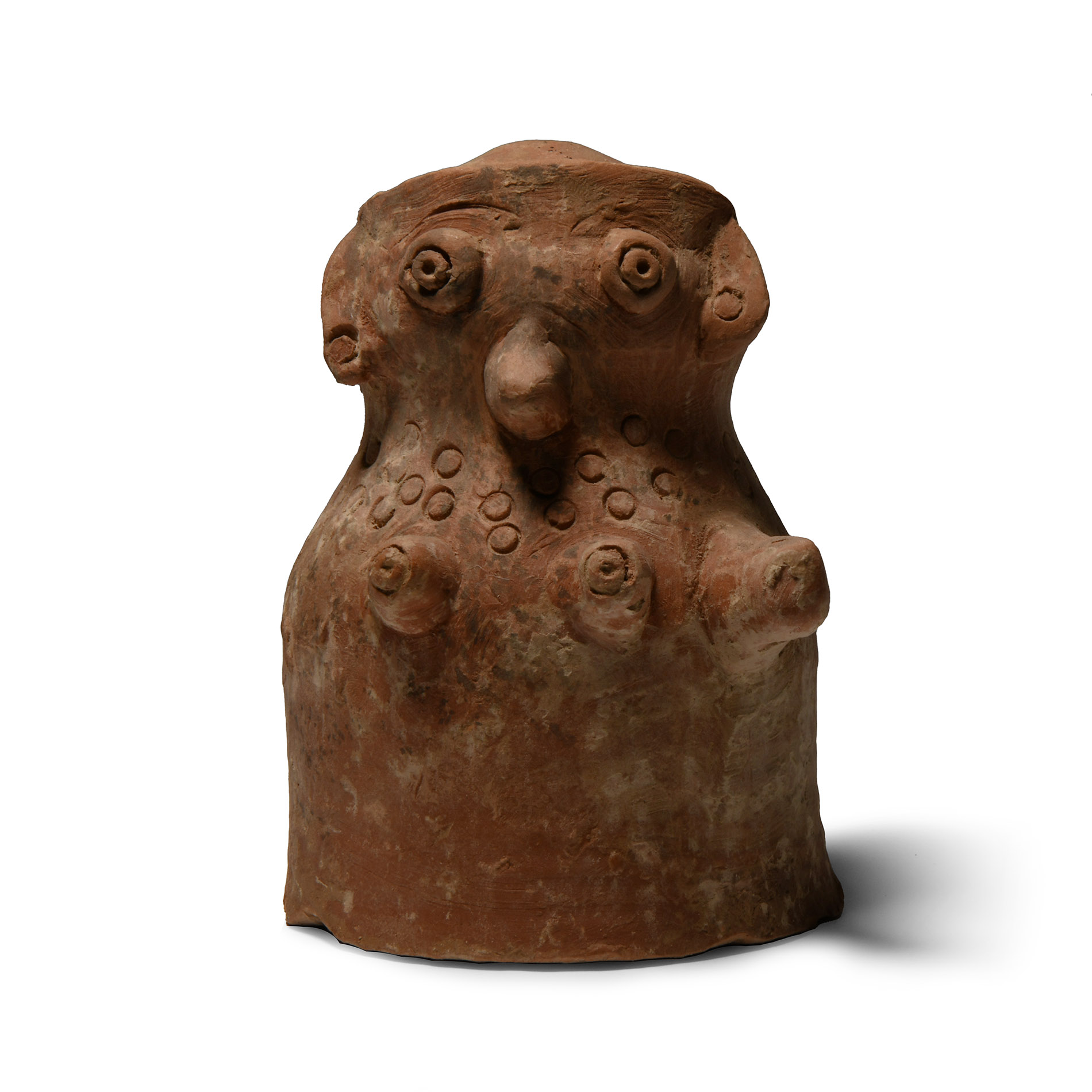
Indus Valley Clay Fertility Figurine
33RD-13TH CENTURY B.C. OR LATER
5 7/8 in. (711 grams, 15 cm).
Tubular figurine depicting a stylised female with one arm extended, conical breasts and eyes, necklace of impressed points and similar detail to the ears, applied facial features. [No Reserve]
ProvenanceFrom a collection acquired on the UK art market from various auction houses and collections mostly before 2000.
From an important Cambridgeshire estate; thence by descent.
TimeLine Auctions follows a vetting process to ensure the authenticity and legality of all items, reinforcing our commitment to integrity and responsible trading. Each antiquity, antique, and coin lot undergoes thorough examination by a vetting committee of at least ten external specialists, professional trade association members, scientists, and archaeologists: Our Vetting Process
AUCTIONS:
TimeLine is a leading auction house specialising in antiquities, ancient art, collectables, natural history, coins, medals, and books. Our auctions offer museums, collectors, historians, and enthusiasts the opportunity to acquire unique and historically significant pieces.
-
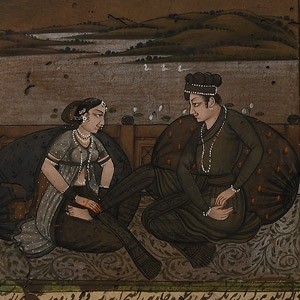
India Framed Watercolour Painting
Early 20th century A.D.Sold for (Inc. bp): £13
With watercolour scene of a man and woman seated against cushions in a courtyard, river meandering through hilly landscape beyond, panels of text above and below, green border around the whole; set in a glazed wooden frame. 714 grams, 33 x 26 cm
Fair condition.
Acquired on the UK art market, 1980s-1990s. The Woodbridge collection of Indo-Persian art. -
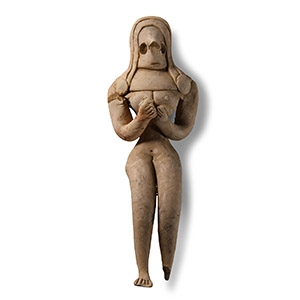
Indus Valley Pottery Fertility Figure
Circa 1st millennium B.C.Sold for (Inc. bp): £130
White clay with applied details to the hair, collar, arms and breasts. 41 grams, 10.8 cm
Ex M Schoyen collection, 1990s. -
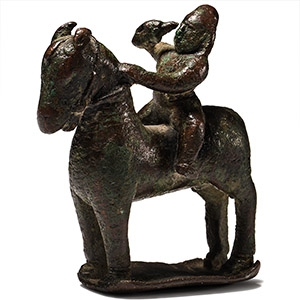
Ancient Indian Bronze Horse and Rider Figure
4th-6th century A.D.Estimate: £2,000 - 3,000 (‡+bp*)
Opening Bid: £556
Formed in the round standing on an oblong base; stylised detailing to the anatomy and trappings of both figures. 92 grams, 52 mm
Acquired in Europe before 1992. This lot has been checked against the Interpol Database of stolen works of art and is accompanied by search certificate no.11813-206792.
