
Loading, please wait...


LOT 2086
Indo-Persian Miniature Painting
20TH CENTURY A.D.
18 in. (1.15 kg, 45.5 cm).
Framed and glazed displaying a figural panel inserted into four vertical columns of cursive script separated by red and blue bands, continued on the reverse.
ProvenanceProperty of a London gallery.
CONDITIONTimeLine Auctions follows a vetting process to ensure the authenticity and legality of all items, reinforcing our commitment to integrity and responsible trading. Each antiquity, antique, and coin lot undergoes thorough examination by a vetting committee of at least ten external specialists, professional trade association members, scientists, and archaeologists: Our Vetting Process
AUCTIONS:
TimeLine is a leading auction house specialising in antiquities, ancient art, collectables, natural history, coins, medals, and books. Our auctions offer museums, collectors, historians, and enthusiasts the opportunity to acquire unique and historically significant pieces.
LOT 2086
Indo-Persian Miniature Painting
Estimate £1,000 - 1,400€1,160 - 1,620 (for guidance only)$1,350 - 1,890 (for guidance only)
-
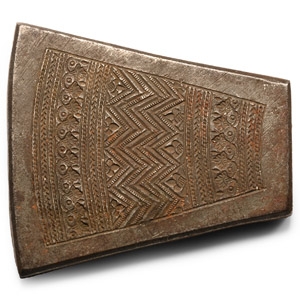
Indian Decorative Iron Mould
14th-16th century A.D.Sold for (Inc. bp): £7
Rectangular with rounded lower edge, intricate three panel design divided with rope-pattern; used for making embossed panels out of sheet-metal. 120 grams, 59 mm
UK private collection before 2000. On the UK art market. Property of a London gentleman. -
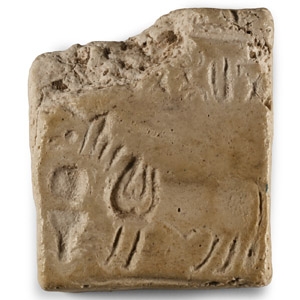
Indus Valley Limestone Stamp Seal with Quadruped
2nd millennium B.C.Sold for (Inc. bp): £78
Rectangular in plan with incuse image of an ox beside a tree, objects in the field. 14.3 grams, 37 mm
Acquired on the Paris art market in 1989. From the personal collection of a West London, UK, gentleman. -
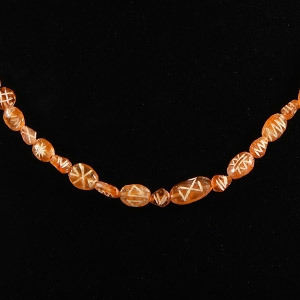
Indus Valley Etched Orange Carnelian Bead Necklace String
Circa 2nd millennium B.C. and laterSold for (Inc. bp): £312
Composed of restrung graduated and polished beads, each etched with a white geometric design on both faces. 12.1 grams, 50 cm long
UK gallery, early 2000s.
Etched carnelian beads are characteristic of the Indus Valley culture and have been produced since the third millennium B.C. They are a typical product of the Harappa culture, but they are also attested in later millennia and produced elsewhere in Southeast Asia. The oldest specimens come from the Indus Valley and from Mesopotamia. A few specimens were found in the so-called royal cemetery of Ur, where they were identified in the excavation publication as coming from India.
