
Loading, please wait...
LOT 2110
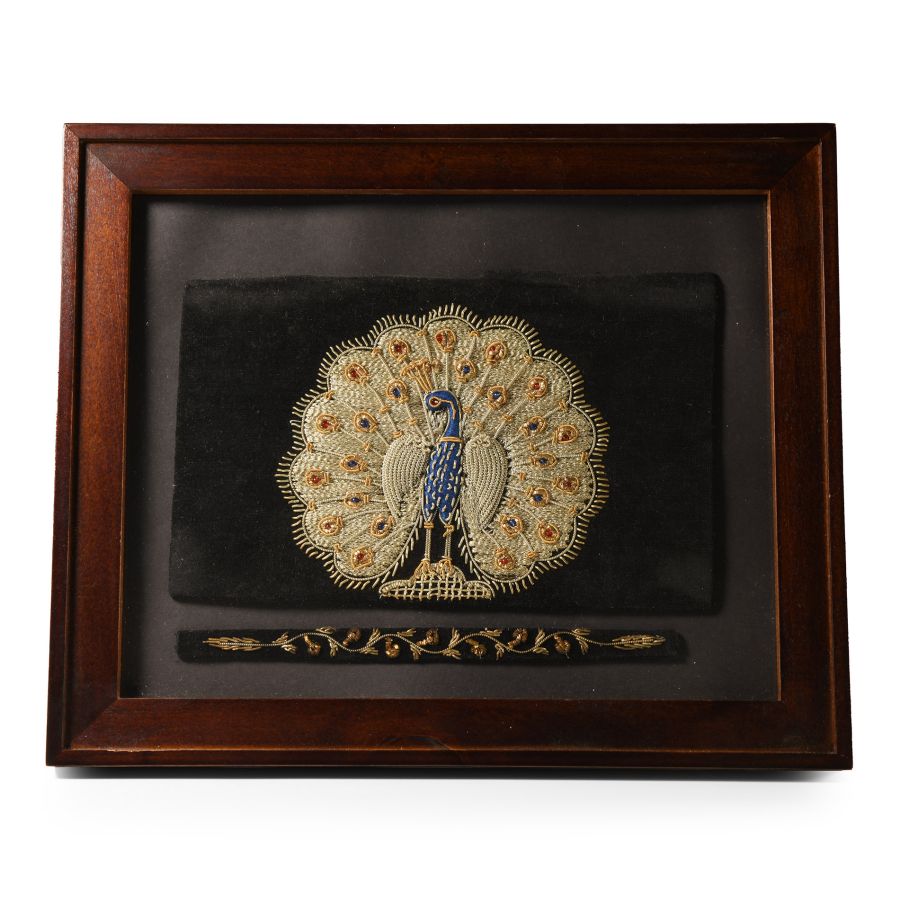
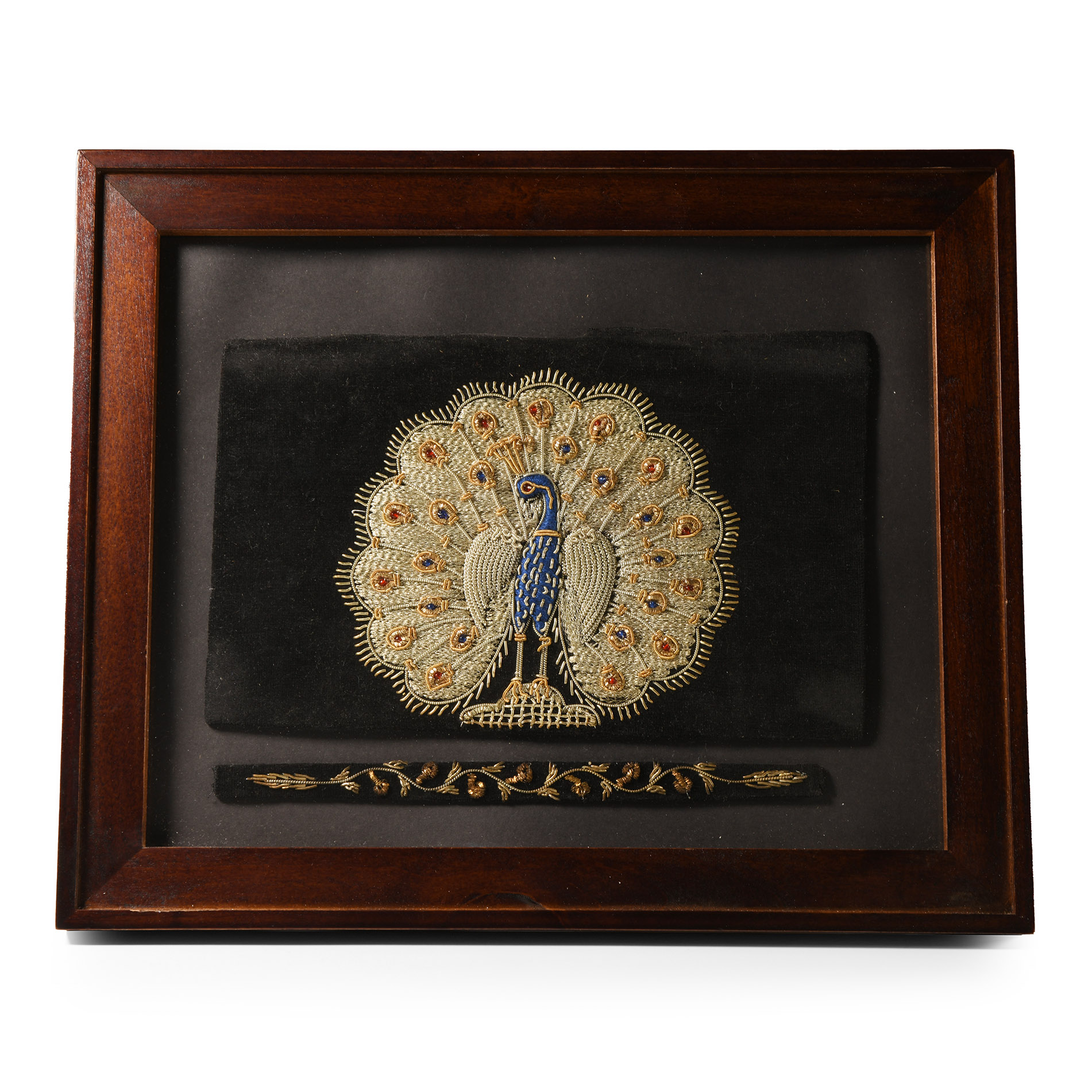
Indian Textile Embroidery of a Peacock
19TH -20TH CENTURY A.D.
175/8 x 9 5/8 in. (740 grams total, 29.5 x 24.5 cm).
Velvet panel with embroidered figure of a peacock in stem stitch, couching, satin stitch and other techniques; second fabric panel with fronds in stem and other stitches; the threads with metallic content, threaded beads.
ProvenanceProperty of a London, UK gentleman.
CONDITIONTimeLine Auctions follows a vetting process to ensure the authenticity and legality of all items, reinforcing our commitment to integrity and responsible trading. Each antiquity, antique, and coin lot undergoes thorough examination by a vetting committee of at least ten external specialists, professional trade association members, scientists, and archaeologists: Our Vetting Process
AUCTIONS:
TimeLine is a leading auction house specialising in antiquities, ancient art, collectables, natural history, coins, medals, and books. Our auctions offer museums, collectors, historians, and enthusiasts the opportunity to acquire unique and historically significant pieces.
-
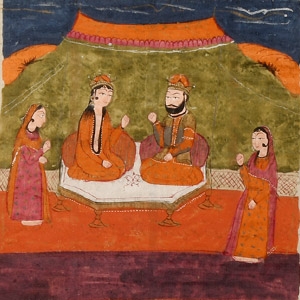
Indo-Persian Miniature Painting
20th century A.D.Estimate: £1,000 - 1,400 (+bp*)
Opening Bid: £500
Framed and glazed displaying a figural panel inserted into four vertical columns of cursive script separated by red and blue bands, continued on the reverse. 1.15 kg, 45.5 cm
Property of a London gallery. -
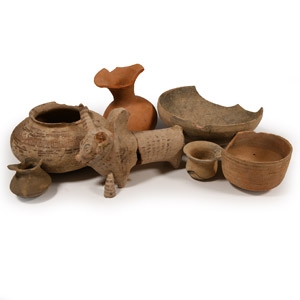
Indus Valley and Other Pottery Group
3rd millennium B.C. and laterSold for (Inc. bp): £91
Including a biconvex jar with painted detailing, and other items. 2.1 kg total, 6.2-18.5 cm
Ex London, UK, gallery, in the 1990s. -
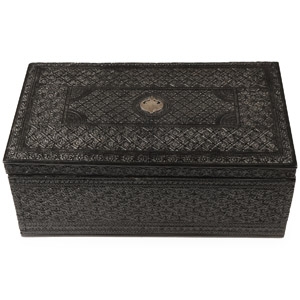
Northern Indian Nagina Ebony Writing Box with 'M H' Initials
Circa 1840 A.D.Sold for (Inc. bp): £195
Finely carved with repeating foliate and geometric designs on top and sides; the hinged lid set with a silver mount engraved with initials 'M H'; repaired. 2.3 kg, 35 x 20.5 x 14.3 cm
Acquired from the UK art market. Private Scottish collection.
