
Loading, please wait...
LOT 1971
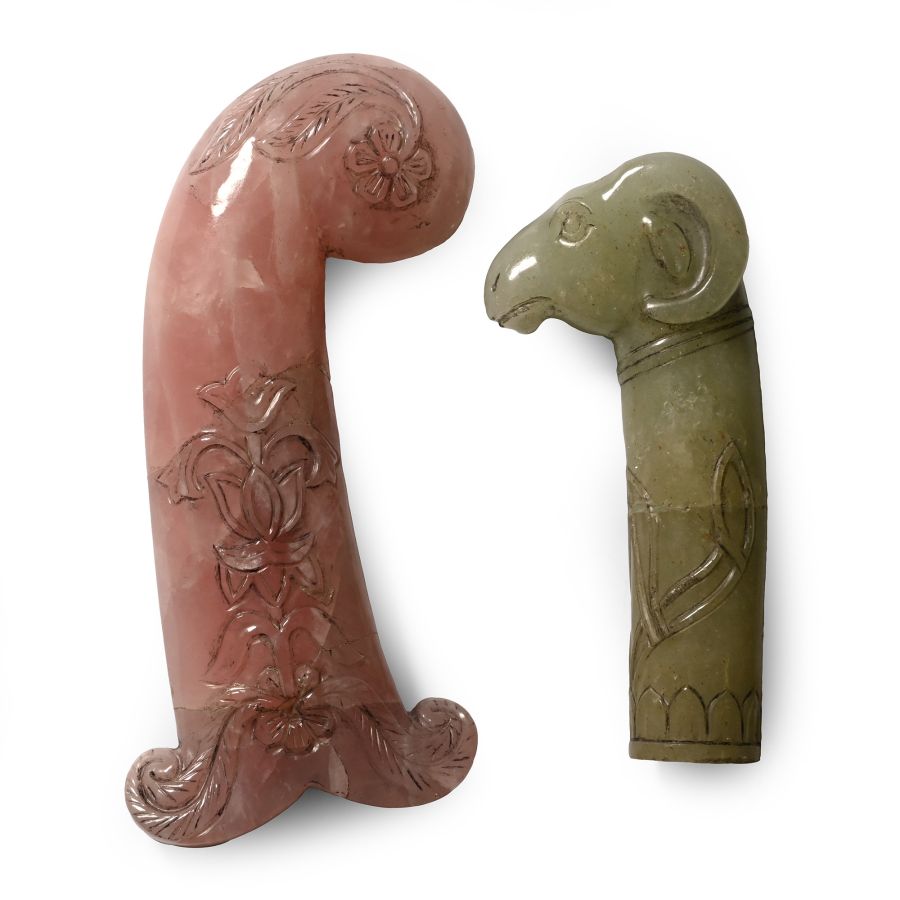
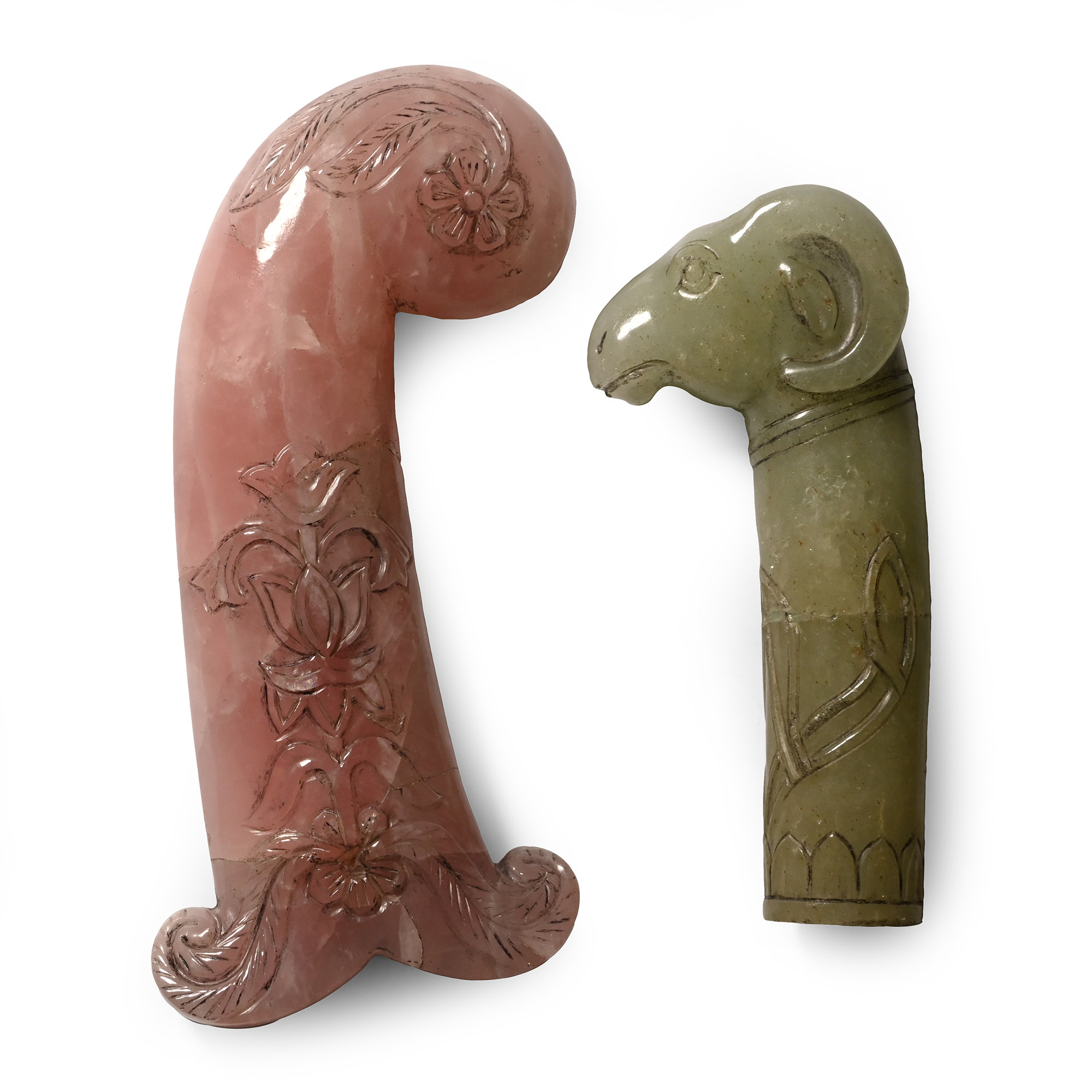
Indian Style Stone Dagger Handle Group
20TH CENTURY A.D.
4 3/4 - 5 7/8 in. (536 grams total, 12.2-15 cm).
Comprising two curved handles, both with low-relief decoration and one with ibex-head finial. [2, No Reserve]
ProvenanceFrom the family collection of a Hampstead gentleman; formerly acquired in the 1980s.
This lot is accompanied by an illustrated lot declaration signed by the Head of the Antiquities Department, Dr Raffaele D'Amato.
TimeLine Auctions follows a vetting process to ensure the authenticity and legality of all items, reinforcing our commitment to integrity and responsible trading. Each antiquity, antique, and coin lot undergoes thorough examination by a vetting committee of at least ten external specialists, professional trade association members, scientists, and archaeologists: Our Vetting Process
AUCTIONS:
TimeLine is a leading auction house specialising in antiquities, ancient art, collectables, natural history, coins, medals, and books. Our auctions offer museums, collectors, historians, and enthusiasts the opportunity to acquire unique and historically significant pieces.
-
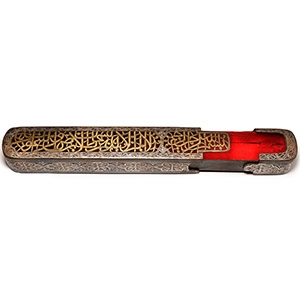
Western Asiatic Style Inlaid Bronze Calligraphic Brush or Pen Box
20th century A.D.Sold for (Inc. bp): £117
A narrow openwork box with sliding mechanism, the inside lined with red velvet. 353 grams, 20.8 cm
From the family collection of a Hampstead gentleman; formerly acquired in the 1980s. This lot is accompanied by an illustrated lot declaration signed by the Head of the Antiquities Department, Dr Raffaele D'Amato. -
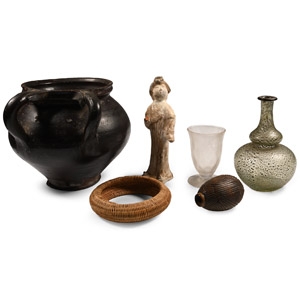
Post Medieval Mixed Artefact Group
20th century A.D.Sold for (Inc. bp): £7
Comprising: a Chinese style courtly lady figurine; a glass cup with wide foot; a piriform wooden bottle with incised geometric decoration; a weaved bracelet; a speckled glass bottle; a large ceramic jar with two handles. 728 grams total, 5.7-17 cm
Acquired from older English collections via the UK art market since the mid 1970s. From the private collection of Peran Dachinger, thence by descent. From the family collection of a Maida Vale lady, UK. This lot is accompanied by an illustrated lot declaration signed by the Head of the Antiquities Department, Dr Raffaele D'Amato. -
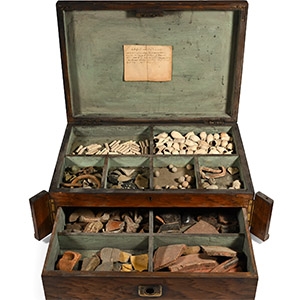
Cased Collection of Civil War and Other Artefacts from Excavations at Newark and Leicester Siege Sites
Circa 1645-1646 A.D.Sold for (Inc. bp): £260
Comprising: clay pipe stems; clay pipe bowls; pistol and musket balls; lead whorls and other items; thimbles, and domestic items; fragments of glazed pottery, bellarmine jug, tiles and other items; in an 18th century or later wooden display box with six compartments above and sliding drawer with four more compartments, brass escutcheon to obverse; brass hinges to lid, frontal plate with two lateral pivoting reeded panels, each engaging with peg on the underside of the lid; brass drop-handle to each endwall; brass lock (no key); lid with reserved panel, heater shield with arms featuring hatched bars and a vertical arrow; old collector's paper note with legend 'Artefacts excavated from camps and fortifications along the circumvallation from the 3rd siege of the toun [sic] of Newark 1645-1646 from Beacon Hill - Leicester's camp - Marlborough old line - backoly - Molly Hornwork Kings line - See R. Clamps plan' 18.4 kg total, box: 45 x 31 x 16.5 cm
Excavated from camps and fortifications from the 3rd siege of Newark (1645-1646); Beacon Hill, a Leicester camp; Marlborough old line, Backely; and Molls Hornwork, Kings Line. From the private collection of John Fox, Nottingham, Nottinghamshire, UK, antiquarian and archaeologist; his collection assembled in the 1950s-1970s. This lot is accompanied by an illustrated lot declaration signed by the Head of the Antiquities Department, Dr Raffaele D'Amato.
A hornwork was a defensive construction, a flat face between two bastions.
