
Loading, please wait...
LOT 1416
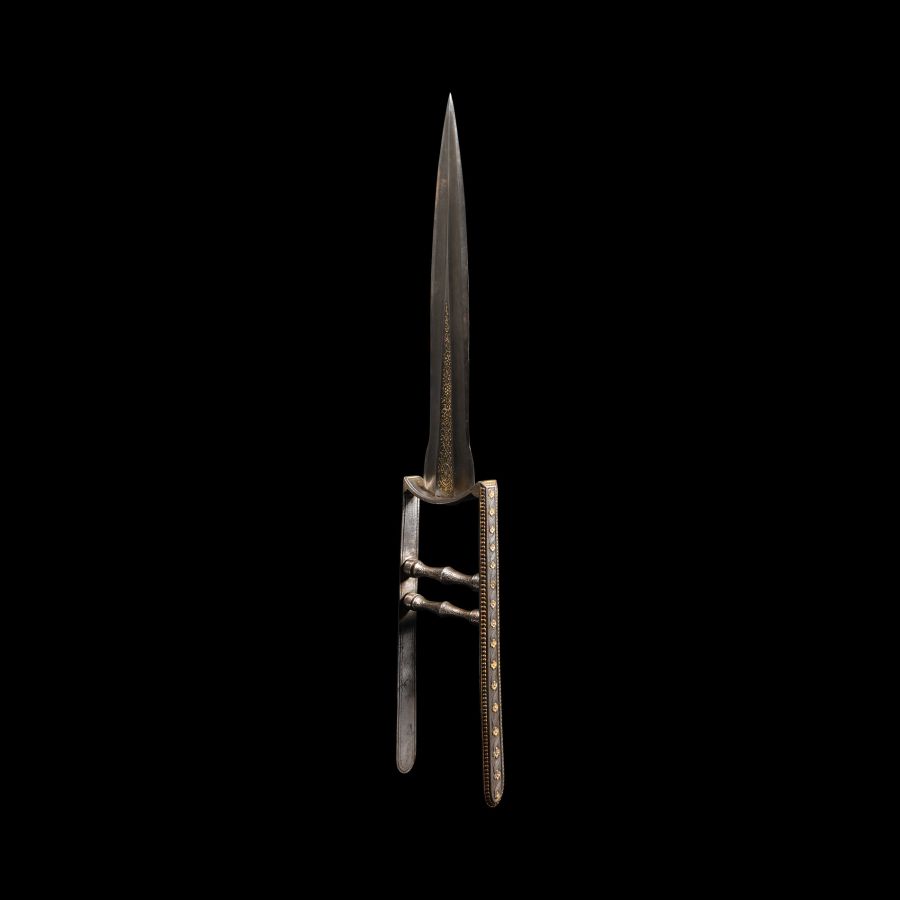
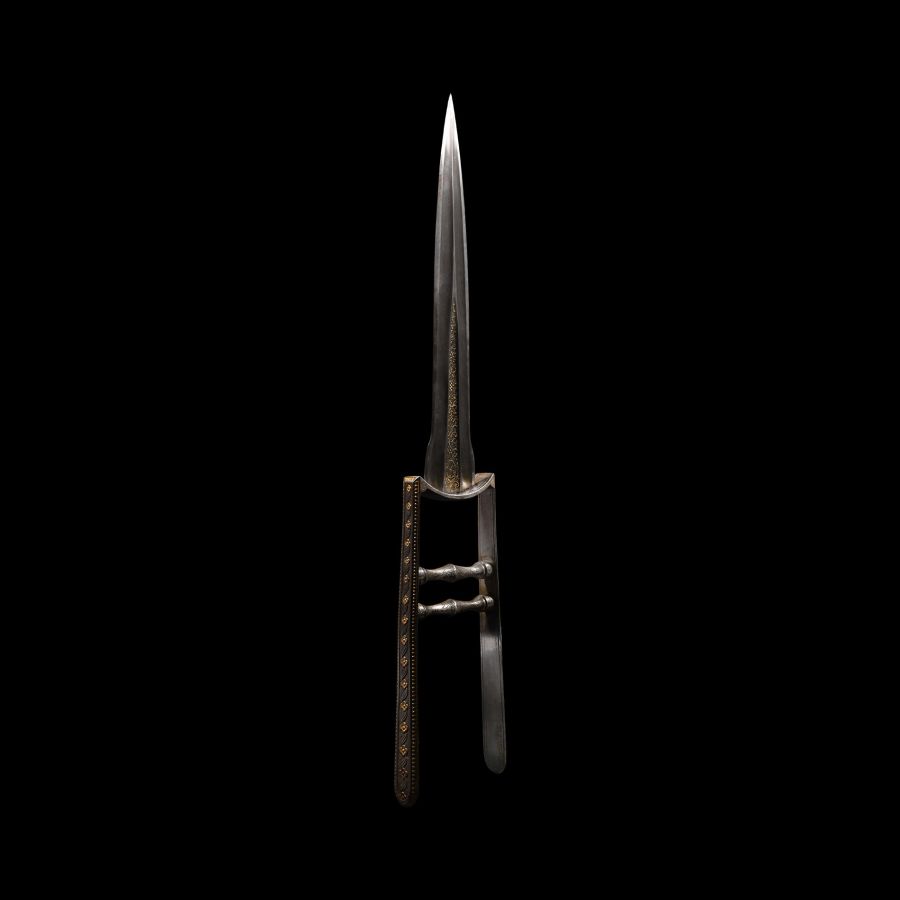
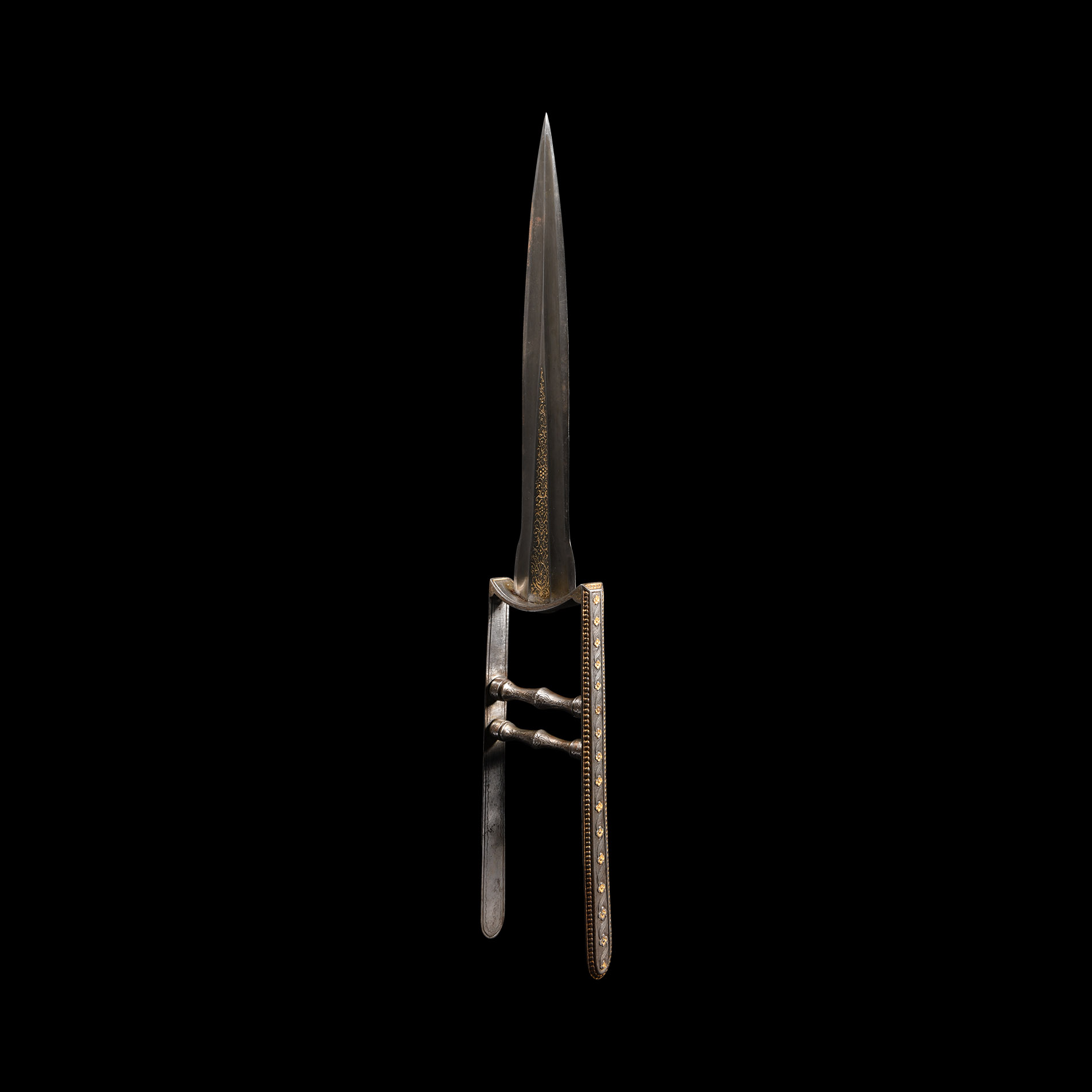
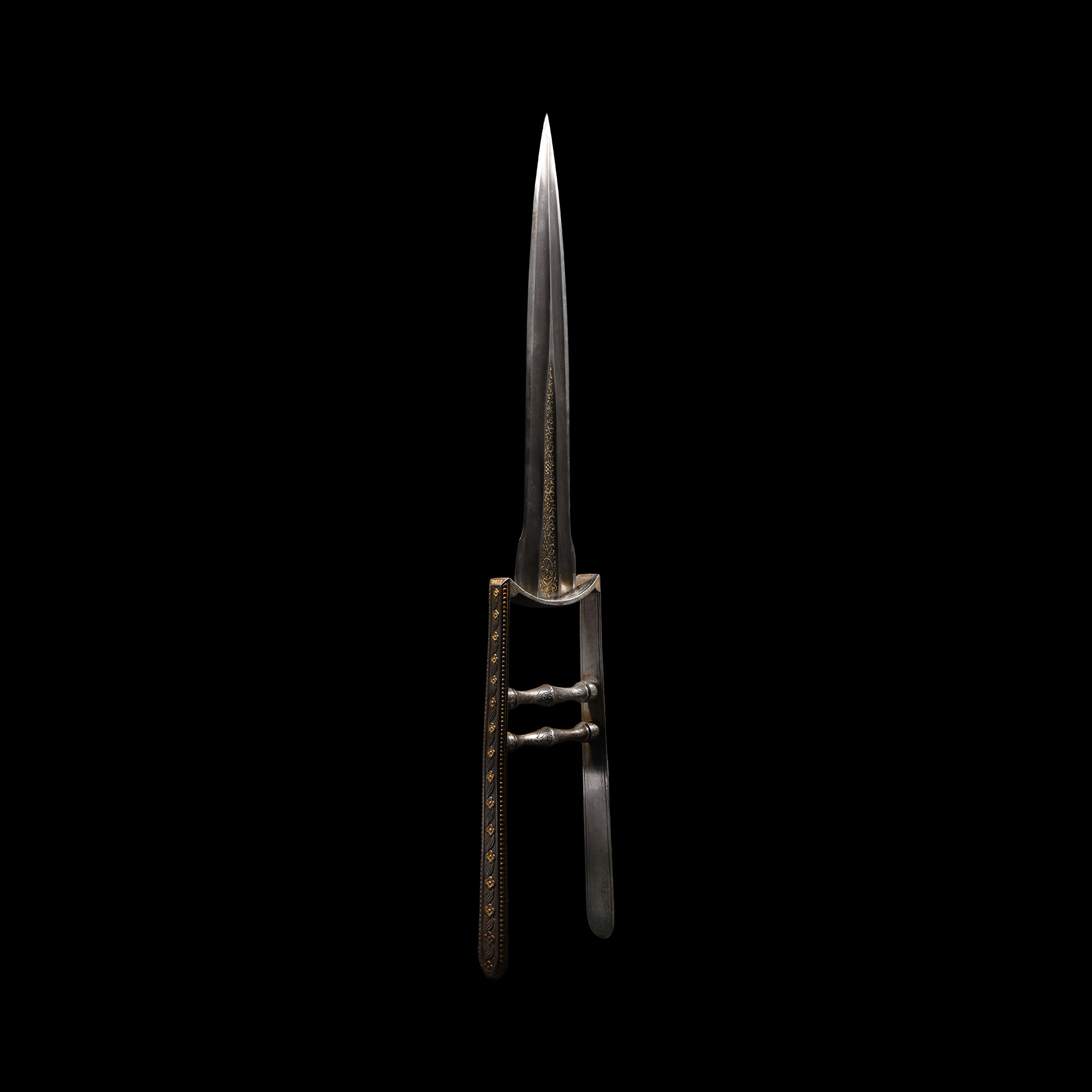
Indian Quatar Iron Dagger
18TH-19TH CENTURY A.D.
18 7/8 in. (488 grams, 48 cm).
Comprising a broad blade tapering to an armour-piercing point, the steel side bars and balustered grips decorated with copper Koftgari work flowers and scrolls.
ProvenanceProperty of a London gallery.
LiteratureCf. Mierzejewska, A., Chodiński, A.R., Broń Orientu, (Weapons of the Orient) Catalogue of the Toruń Regional Museum, Toruń, 2009, fig.35, p.48.
FootnotesUnique to South Asia, the quatar or katar was a dagger that held at the crossbars with a clenched fist. The weapon was meant to be thrust into the opponent or prey from a close range. Rajput and Mughal royalty used this weapon to hunt tigers and even crocodiles to demonstrate their bravery and martial skill.
CONDITIONTimeLine Auctions follows a vetting process to ensure the authenticity and legality of all items, reinforcing our commitment to integrity and responsible trading. Each antiquity, antique, and coin lot undergoes thorough examination by a vetting committee of at least ten external specialists, professional trade association members, scientists, and archaeologists: Our Vetting Process
AUCTIONS:
TimeLine is a leading auction house specialising in antiquities, ancient art, collectables, natural history, coins, medals, and books. Our auctions offer museums, collectors, historians, and enthusiasts the opportunity to acquire unique and historically significant pieces.
LOT 1416
Indian Quatar Iron Dagger
Estimate £1,000 - 1,400€1,160 - 1,620 (for guidance only)$1,350 - 1,890 (for guidance only)
-
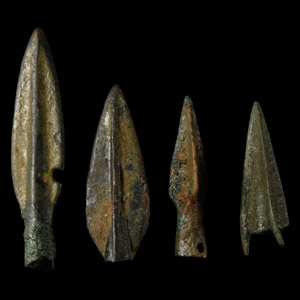
Greek Bronze Arrowhead Collection
Circa 5th-3rd century B.C.Sold for (Inc. bp): £111
Comprising: two leaf-shaped with raised midribs; one triangular with barbs; one triangular with short socket. 18 grams total, 34-52 mm
From an old UK collection, acquired on the UK art market. Property of a Shropshire private collector. -
Cuman-Qipchak Iron Shield Rim Group
12th-13th century A.D.Sold for (Inc. bp): £104
Square in section and curved in profile with pierced lobes and attachment rivets. 252 grams total, 7.2-43 cm
UK gallery, early 2000s.
These kind of shields are often found in the burials of nomadic warriors of Eastern Europe accompanied by certain sets of weapons — four-part helmets, quiver kits, sabers and a spearhead. Such graves contained the remains of similar wooden shields with metal parts. Determining the dating of these burial complexes in the framework of the Golden Horde time, the Archaeologists dwell in detail on the attribution of the helmets and the remnants of the shields, linking their appearance in the Northeast Black Sea Coast with the resettlement here of the black hoods from Southern Russia in 1260s. -
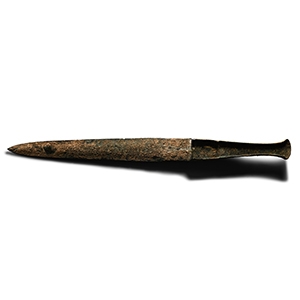
Canaanite Bronze Dirk
13th-12th century B.C.Estimate: £400 - 600 (‡+bp*)
Opening Bid: £200
With lentoid-section blade, tongue-shaped in plan, integral tapering hilt with flared finial, lateral flanges to accept a panel of bone or wood to each face forming the grip. 174 grams, 34 cm
Ex Joseph J. Gancie (1923-2010), Washington, Silver Spring, Maryland. with Alex Cooper Auctioneers Inc., sale 1035, 27 January 2013, lot 162a.
The dirk belongs to the type III in the Medvedskaya classification, used in Near East from the 13th to the 6th century B.C. The type is the 32a of the Maxwell-Hyslop study. The Asiatic daggers of this type are confined to Syria and Persia, but Transcaucasia also provides an interesting analogy from Kalekent on the Baku peninsula, where a pointed straight-sided dagger blade has a flanged hilt with the whole of the side flanges bent over the centre.
