
Loading, please wait...
LOT 0286
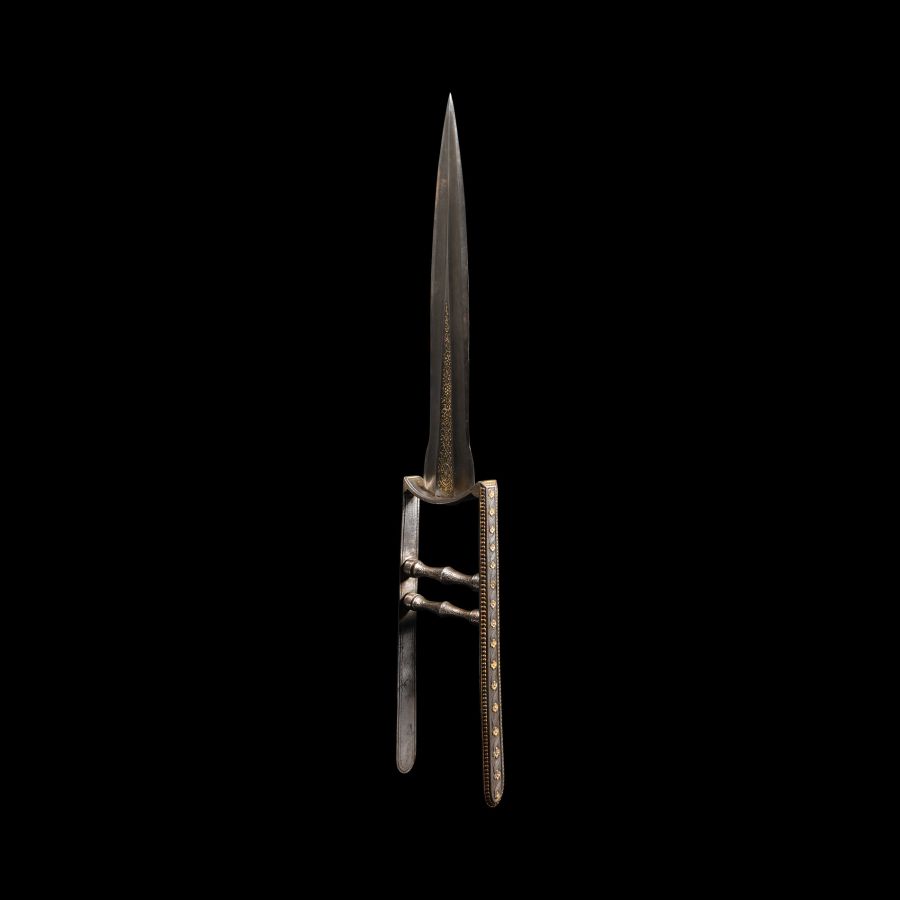
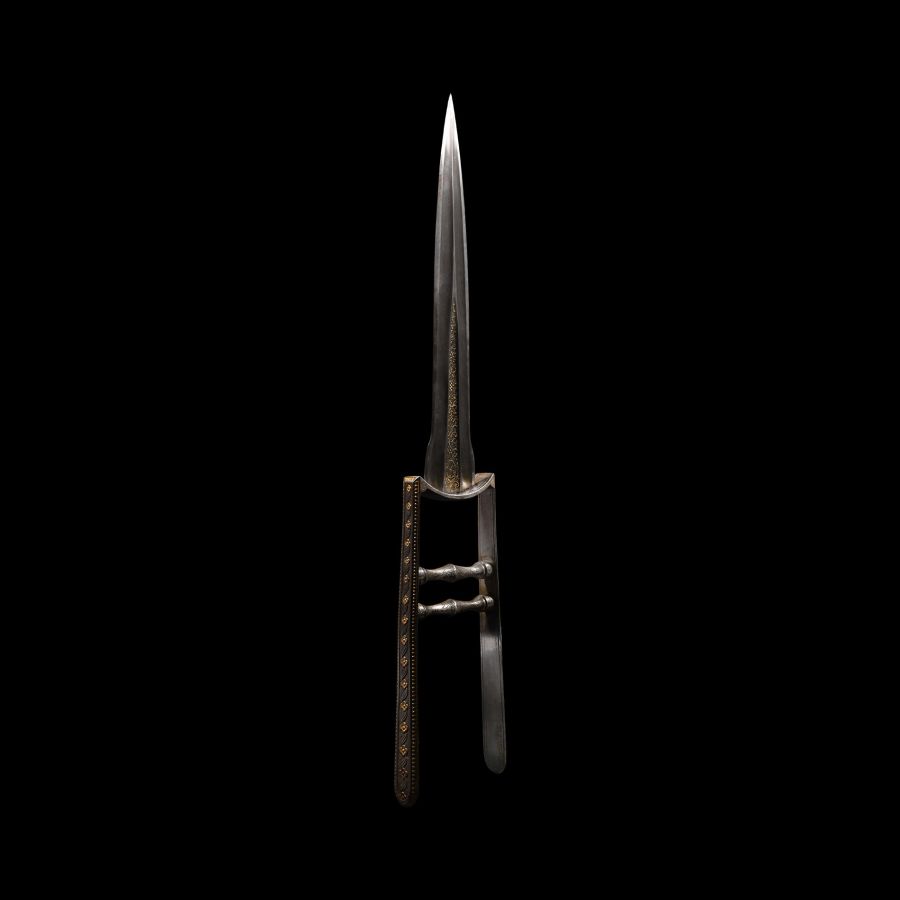
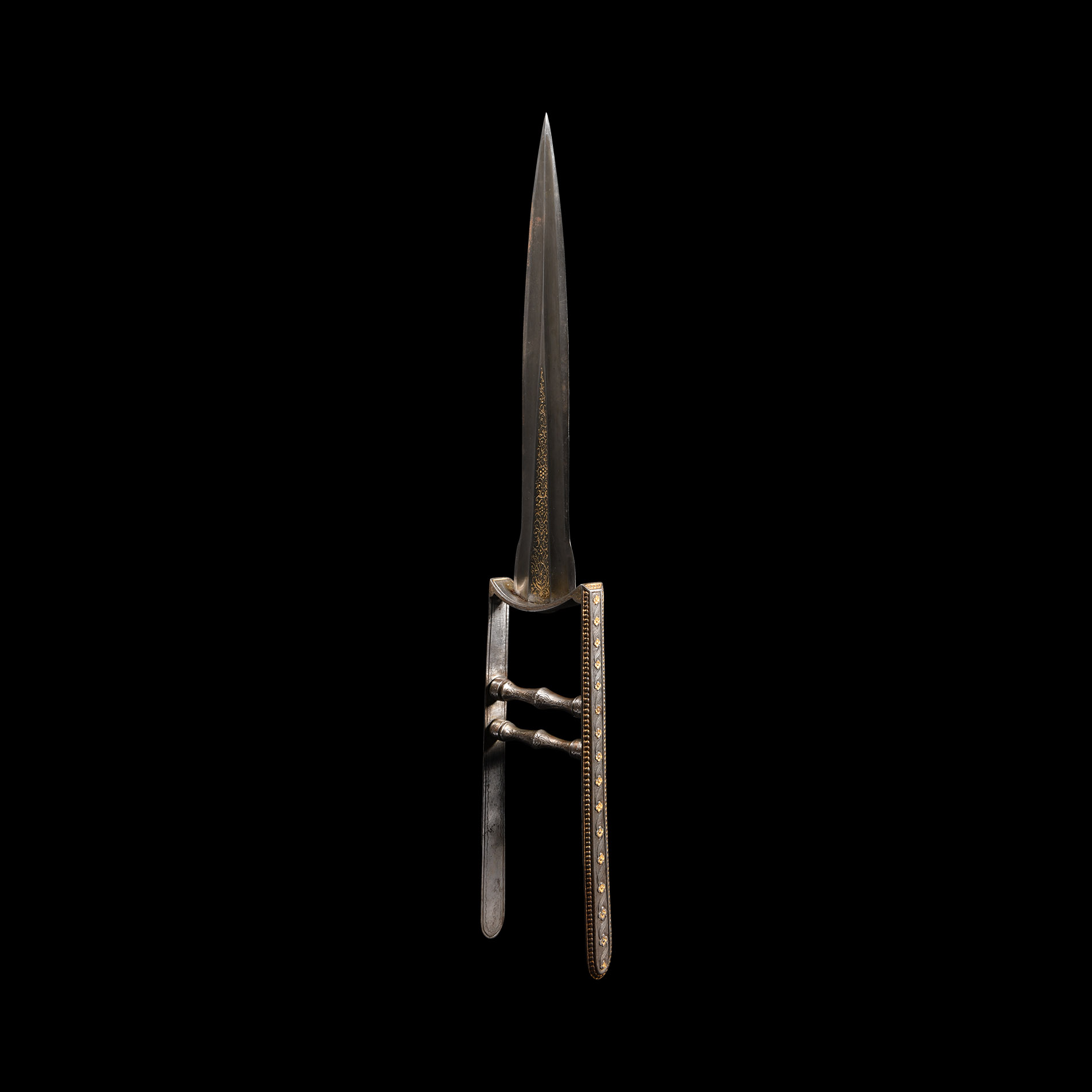
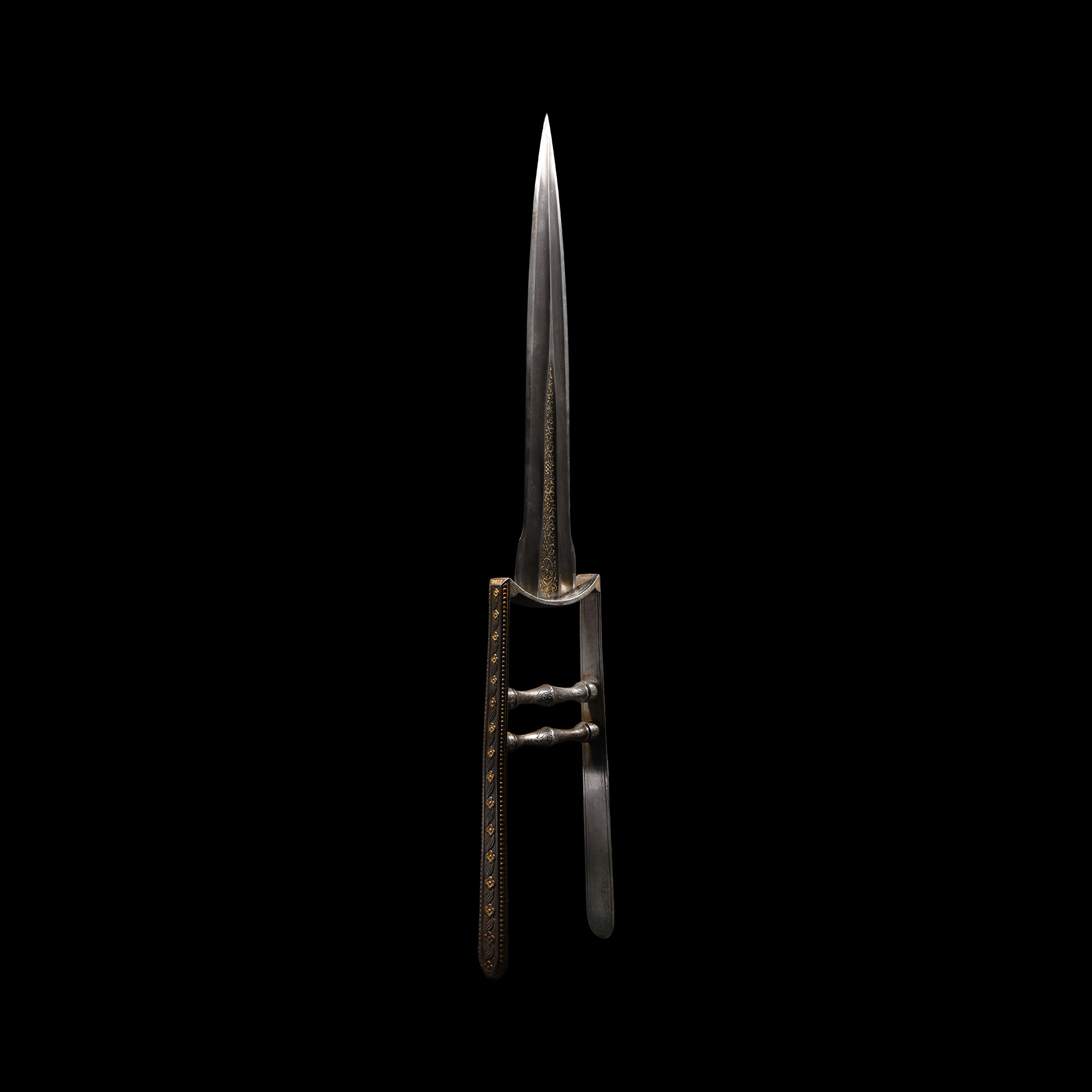
Indian Quatar Iron Dagger
18TH-19TH CENTURY A.D.
18 7/8 in. (488 grams, 48 cm).
Comprising a broad blade tapering to an armour-piercing point, the steel side bars and balustered grips decorated with copper Koftgari work flowers and scrolls.
ProvenanceProperty of a London gallery.
LiteratureCf. Mierzejewska, A., Chodiński, A.R., Broń Orientu, (Weapons of the Orient) Catalogue of the Toruń Regional Museum, Toruń, 2009, fig.35, p.48.
FootnotesUnique to South Asia, the quatar or katar was a dagger that held at the crossbars with a clenched fist. The weapon was meant to be thrust into the opponent or prey from a close range. Rajput and Mughal royalty used this weapon to hunt tigers and even crocodiles to demonstrate their bravery and martial skill.
CONDITIONTimeLine Auctions follows a vetting process to ensure the authenticity and legality of all items, reinforcing our commitment to integrity and responsible trading. Each antiquity, antique, and coin lot undergoes thorough examination by a vetting committee of at least ten external specialists, professional trade association members, scientists, and archaeologists: Our Vetting Process
AUCTIONS:
TimeLine is a leading auction house specialising in antiquities, ancient art, collectables, natural history, coins, medals, and books. Our auctions offer museums, collectors, historians, and enthusiasts the opportunity to acquire unique and historically significant pieces.
LOT 0286
Indian Quatar Iron Dagger
Estimate £1,000 - 1,400€1,160 - 1,620 (for guidance only)$1,350 - 1,890 (for guidance only)
-
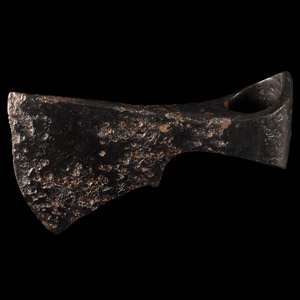
Viking Iron Bearded Axehead
9th-12th century A.D.Sold for (Inc. bp): £234
Composed of a flanged and rounded butt, shaped lower edge and convex cutting edge. 688 grams, 16.2 cm
Ex American collection, acquired 1980-200. The Kusmirek Collection, UK. -
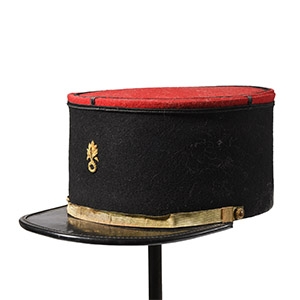
French Foreign Legion Kepi
Circa 1930-1940s A.D.Sold for (Inc. bp): £104
Black and red cloth with gold-coloured banding and 'button'; red lining and typed label reading 'Sergent BUYUKISPIR Haluk 1o R.E. Quartier Viénot C.S.L.E./S.I.H.L.E....'. 197 grams, 24.5 cm wide
Acquired from Czerny's Auctions, Italy, lot 104, 2016. The Kusmirek Collection, UK. Accompanied by copy of Czerny's invoice and information. -
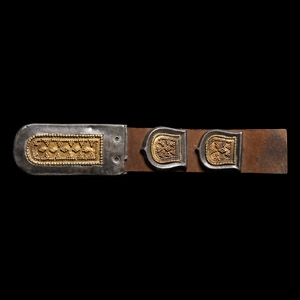
Avar-Byzantine Silver-Gilt Sword Belt Mount Group
7th-9th century A.D.Estimate: £200 - 300 (+bp*)
Opening Bid: £89
Comprising three belt mounts later remounted onto brown leather comprising: a rectangular strap end with rounded terminal, decorated with granulated borders, lozenges and chevrons; two roughly D-shaped mounts with apex flourish and waisted sides, also decorated with granulated lozenges and chevrons. 26.5 grams, 12.2 cm long
Fine condition.
Acquired in the 1980s-1990s. Ex an important central London gallery, London W1.
This type of belt element decorated with granulation, is present in the Avar graves of the second half of the 7th century, and was most likely produced in the workshops of the Eastern Roman Empire, from where they reached the Avar lands as imperial gifts (tomb of Kunbàboni) or spoils of war. They were part of multiple belts, to which sabers and knives were attached, commonly used among Avars, Bulgars and Romans during the 7th and 8th centuries AD.
