
Loading, please wait...


LOT 2402
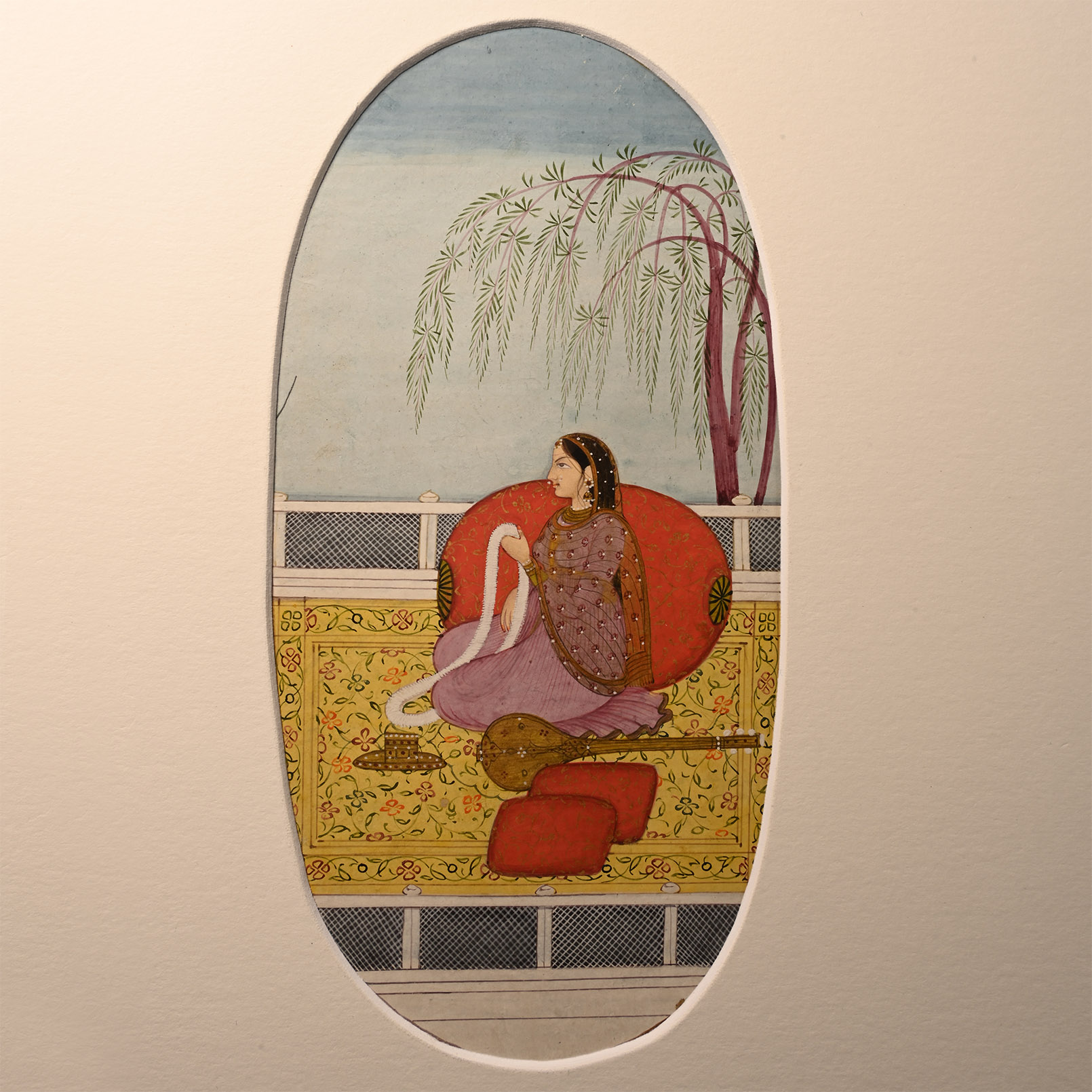
Indian Painting of a Noblewoman
KANGRA REGION, CIRCA 1780 A.D.
12 1/4 x 9 7/8 in. (152 grams, 31 x 25.2 cm).
In a rectangular white card reveal with ellipsoid opening, hand-painted watercolour scene depicting a noblewoman in a garden, resting against a large decorated pillow, wearing a transparent shawl with floral detailing over a lavender-coloured robe, sitar and water vessel beside her and two red pillows on a decorated yellow mat with flowers and tendrils; fences in foreground and behind the figure, and willow tree beyond; liquid gold detailing to the shawl, sitar and vessel.
ProvenanceAcquired on the UK art market.
Scottish private collection.
TimeLine Auctions follows a vetting process to ensure the authenticity and legality of all items, reinforcing our commitment to integrity and responsible trading. Each antiquity, antique, and coin lot undergoes thorough examination by a vetting committee of at least ten external specialists, professional trade association members, scientists, and archaeologists: Our Vetting Process
AUCTIONS:
TimeLine is a leading auction house specialising in antiquities, ancient art, collectables, natural history, coins, medals, and books. Our auctions offer museums, collectors, historians, and enthusiasts the opportunity to acquire unique and historically significant pieces.
-
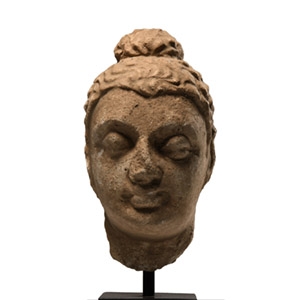
Gandharan Terracotta Head
2nd-4th century A.D.Estimate: £400 - 600 (+bp*)
Opening Bid: £180
Modelled in the round with the hair pulled around the ushnisha top-knot, slender arching eyebrows, almond-shaped eyes with prominent eyelids, pursed lips; mounted on a custom-made display stand. 661 grams total, 20 cm high including stand
Acquired on the London art market. Private collection, 1970s. -
.jpg)
Indus Valley Polychrome Ceramic Vessel Collection with Animals
3rd-2nd millennium B.C.Sold for (Inc. bp): £468
Each of the three vessels of carinated form and displaying repainted polychrome geometric and zoomorphic motifs within panels; including one cup with a D-shaped handle. 402 grams total, 65-94 mm
Acquired in England in the 2000s. Ex Everitt collection, acquired by descent 2017. -
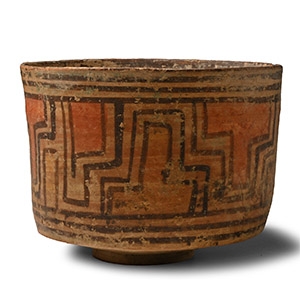
Indus Valley Terracotta Vessel with Geometric Designs
Circa 2200 B.C.Estimate: £500 - 700 (‡+bp*)
Opening Bid: £200
Drum-shaped in profile with basal ring, band of interlocking T-shaped and other painted cells; rim chipped. 117 grams, 95 mm
Joseph G Gerena Fine Art, New York, 27 October 2003. Acquired by the present owner from the above.
