
Loading, please wait...
LOT 2079
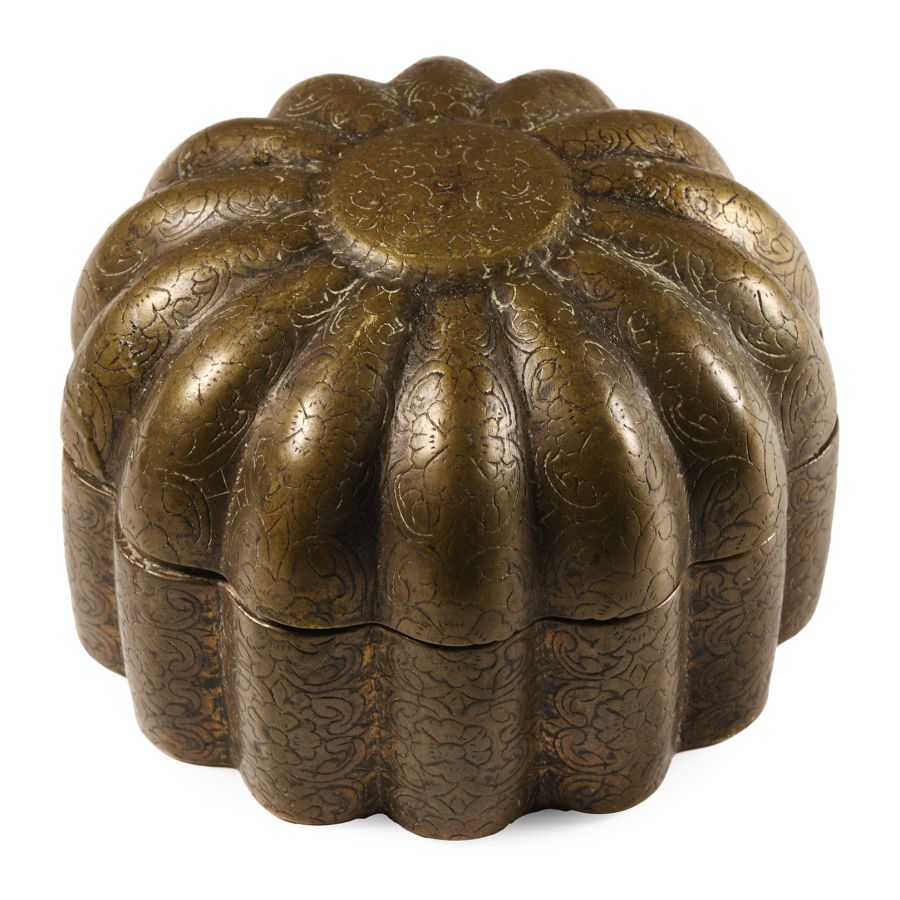
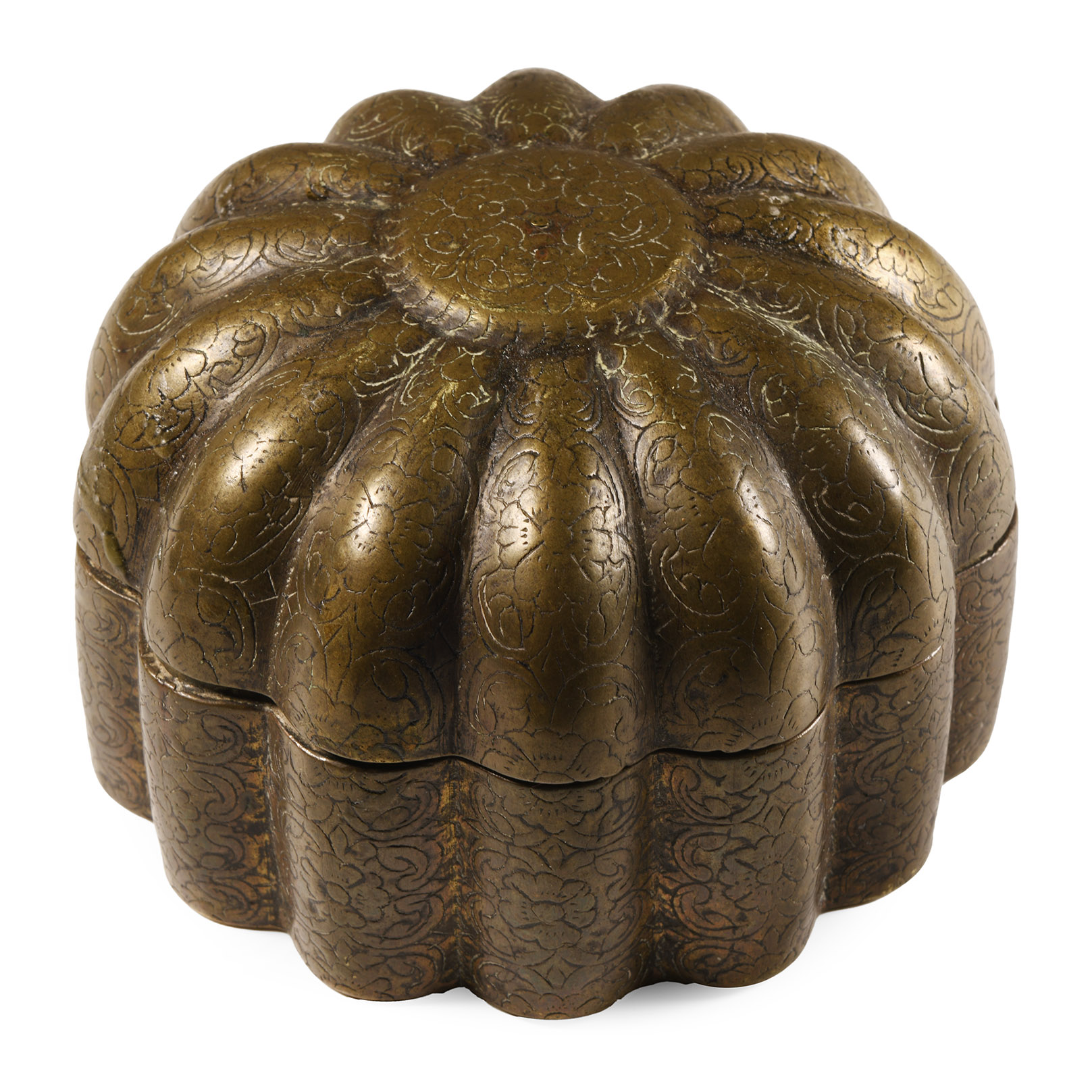
Indian Inscribed Bronze Container
19TH CENTURY A.D.
4 1/2 in. (488 grams, 11.4 cm wide).
Hollow-formed domed caddy with detachable lid, ribbed in plan with incised scrolls and tendrils.
ProvenanceEx London, UK, gallery, 1971-early 2000s.
CONDITIONTimeLine Auctions follows a vetting process to ensure the authenticity and legality of all items, reinforcing our commitment to integrity and responsible trading. Each antiquity, antique, and coin lot undergoes thorough examination by a vetting committee of at least ten external specialists, professional trade association members, scientists, and archaeologists: Our Vetting Process
AUCTIONS:
TimeLine is a leading auction house specialising in antiquities, ancient art, collectables, natural history, coins, medals, and books. Our auctions offer museums, collectors, historians, and enthusiasts the opportunity to acquire unique and historically significant pieces.
-
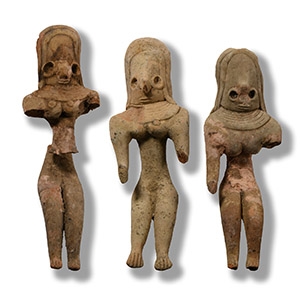
Indus Valley Seated Terracotta Fertility Idol Group
2nd-1st millennium B.C. or laterSold for (Inc. bp): £78
Including two white clay figures with applied details to the hair, collar, arms and breasts, both with one arm absent and one repaired; and two further fragments of similar. 119 grams total, 6.5-11.2 cm
From a collection acquired on the UK art market from various auction houses and collections mostly before 2000. From an important Cambridgeshire estate; thence by descent. -
.jpg)
Indian Framed Watercolour Portrait of 'Amin Kakin'
19th century A.D.Sold for (Inc. bp): £234
Framed and glazed, displaying a portrait of a male figure, possibly Amin Kakin, against a plain background, on paper. 473 grams, 28.5 x 22.2 cm
Acquired by the vendor's father on the UK art market, before 1990. -
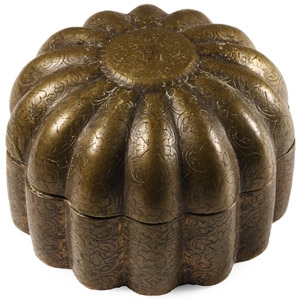
Indian Inscribed Bronze Container
19th century A.D.Sold for (Inc. bp): £117
Hollow-formed domed caddy with detachable lid, ribbed in plan with incised scrolls and tendrils. 488 grams, 11.4 cm wide
Ex London, UK, gallery, 1971-early 2000s.
