
Loading, please wait...
LOT 1389
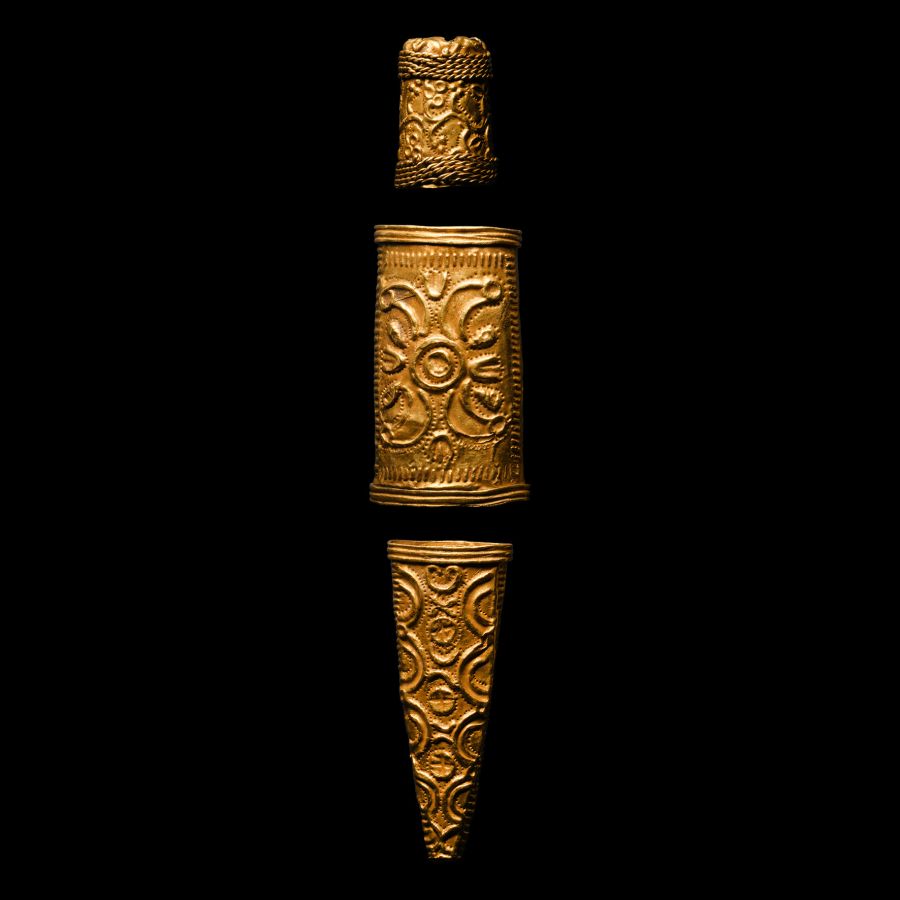
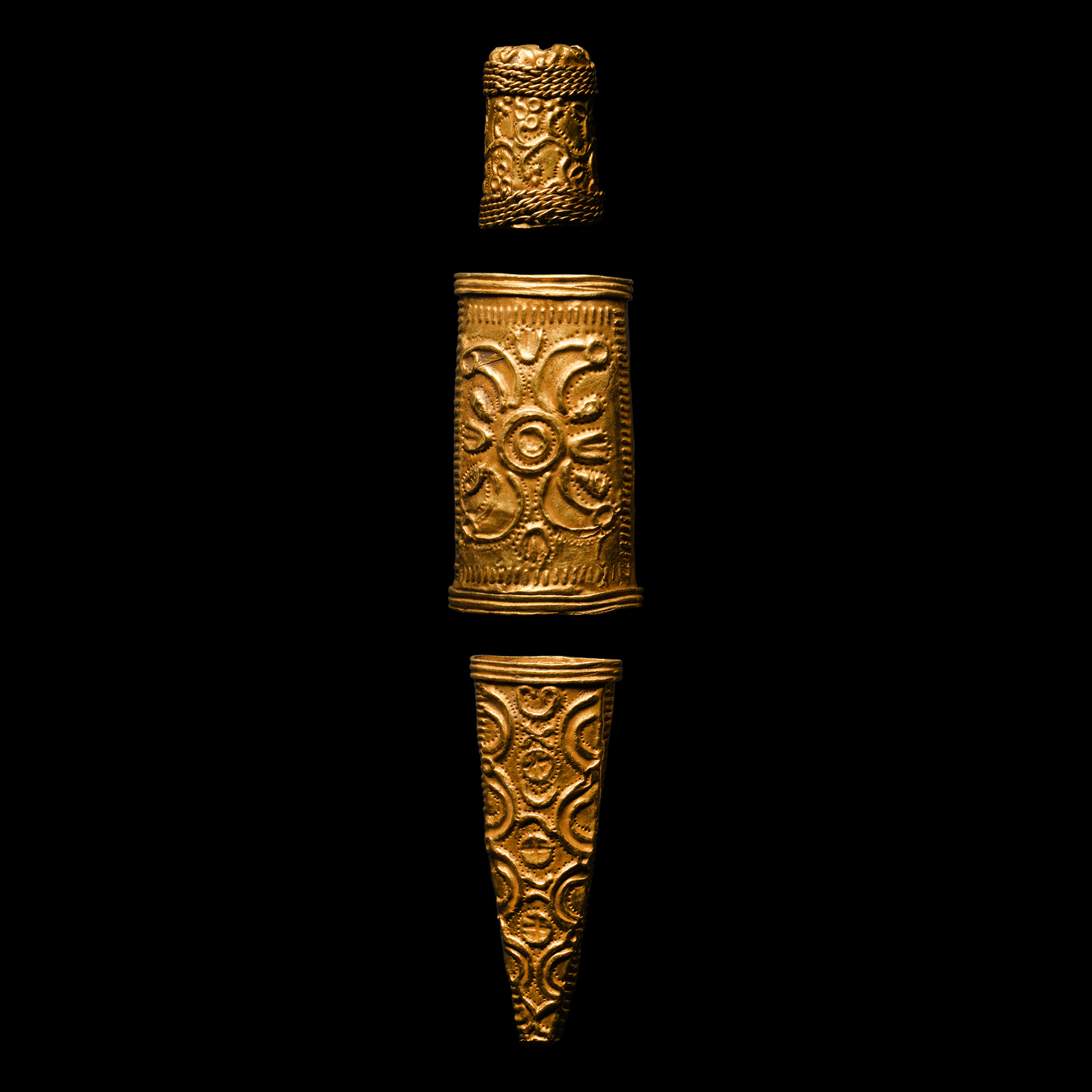
Indian Gold Dagger Scabbard Suite
17TH-18TH CENTURY A.D.
1 1/4 - 2 1/2 in. (27 grams total, 29-64 mm).
Belonging to a dagger and its scabbard, comprising: a tubular pommel cap with filigree ropework, repoussé floral motifs; an elliptical-section scabbard throat with billetted border, reeded edges and floral motif; a triangular chape with reeded strip to the mouth. [3]
ProvenanceFrom the collection of a North American gentleman, formed in the 1990s.
CONDITIONTimeLine Auctions follows a vetting process to ensure the authenticity and legality of all items, reinforcing our commitment to integrity and responsible trading. Each antiquity, antique, and coin lot undergoes thorough examination by a vetting committee of at least ten external specialists, professional trade association members, scientists, and archaeologists: Our Vetting Process
AUCTIONS:
TimeLine is a leading auction house specialising in antiquities, ancient art, collectables, natural history, coins, medals, and books. Our auctions offer museums, collectors, historians, and enthusiasts the opportunity to acquire unique and historically significant pieces.
LOT 1389
Indian Gold Dagger Scabbard Suite
Estimate £2,500 - 3,500€2,900 - 4,060 (for guidance only)$3,380 - 4,730 (for guidance only)
-
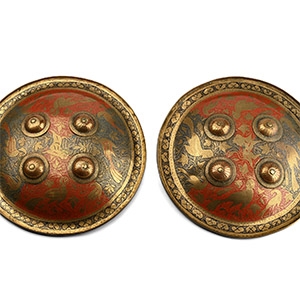
Indo-Persian Enamelled Brass Shield Pair
20th century A.D.Sold for (Inc. bp): £156
Each with flange rim and four applied bosses to the face for attachment of the rear straps, design of reserved foliage, birds and harpies on an enamelled field. 996 grams total, 27.3 cm
Property of a Berkshire, UK, gentleman collector. -
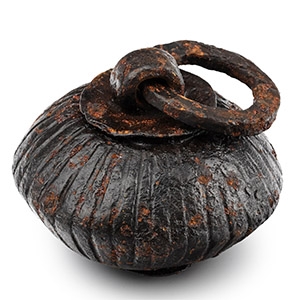
Medieval Iron Flail Head
14th-15th century A.D.Sold for (Inc. bp): £195
Biconvex in profile with loop and ring, segmented surface. 277 grams, 50 mm
From the family collection of a London gentleman; formed in the late 1940s-1950s; thence by descent. From the property of a late Lincolnshire, UK, gentleman. -
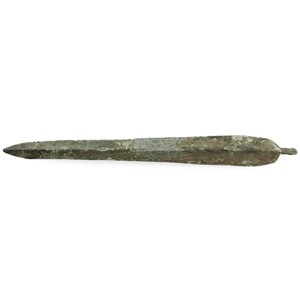
Luristan Bronze Spearhead
1st millennium B.C.Sold for (Inc. bp): £72
With lentoid-section blade, median rib and curved shoulders, tapering towards the end, rectangular stub tang. 262 grams, 36 cm
English private collection, late 1970s-early 1980s. From the property of a late Lincolnshire, UK, gentleman.
