
Loading, please wait...
LOT 2094
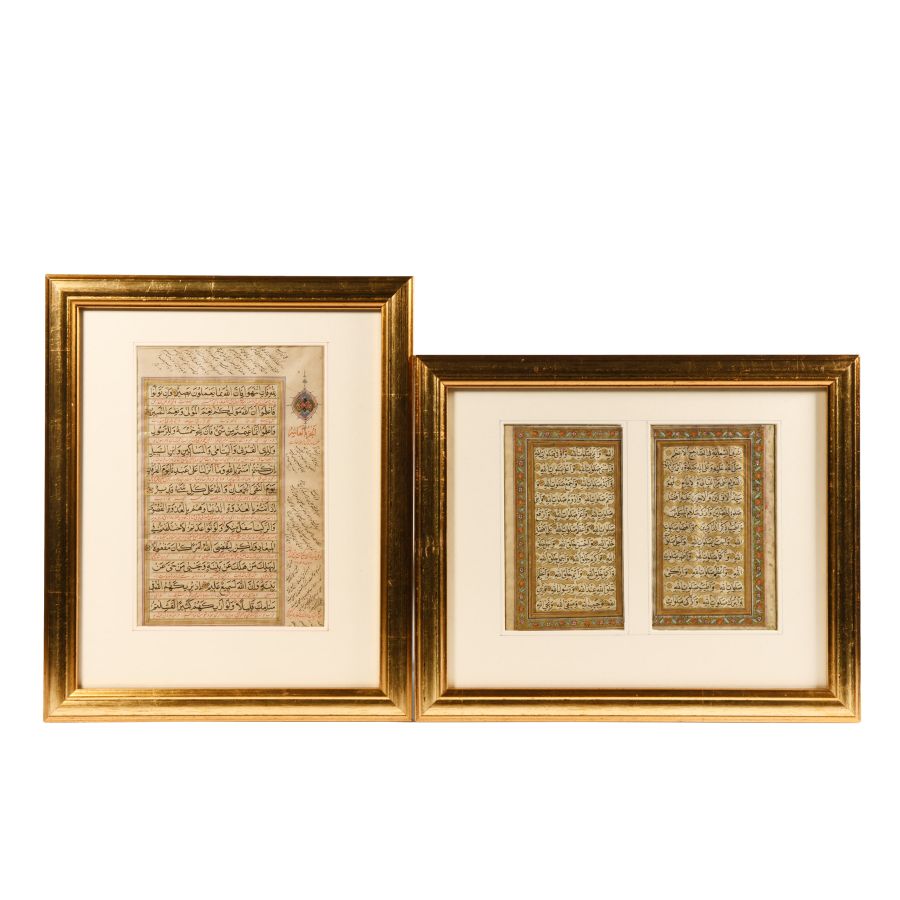
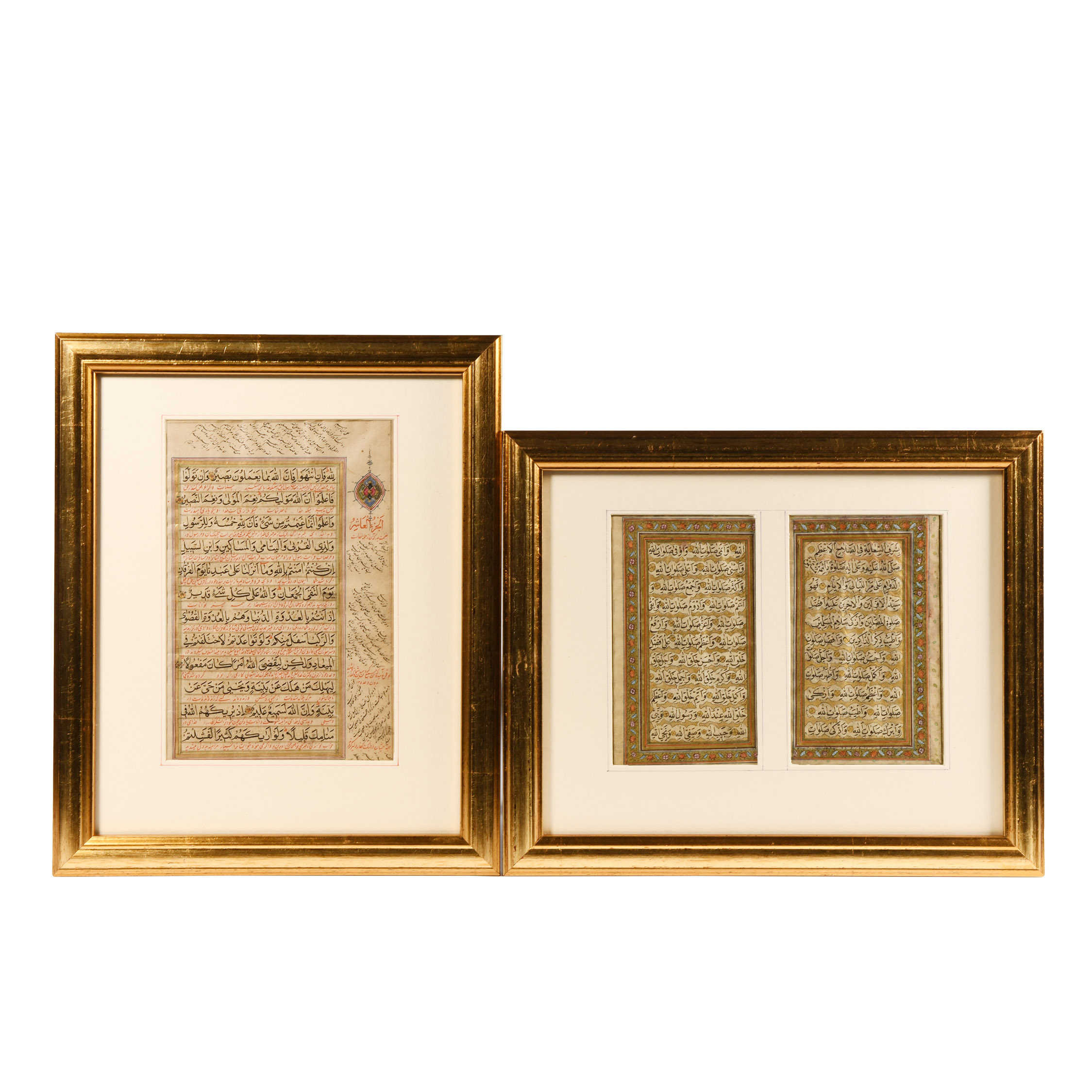
Indian Framed Dalail Khayrat Manuscripts
18TH-19TH CENTURY A.D.
11 1/4 x 9 1/4 in. (1 kg total, 28.7 x 23.5 cm each).
Both framed and glazed with information cards to the reverses: a Northern Indian Mughal Qur'an leaf dated 1780 A.D., with prayers copied from Mulla Fathullah's Tafsir commentary in Naskh script, interlinear Persian translation throughout in red Nasta'liq in the margins, together with illuminated devices, with gold embellishment; an illuminated manuscript from a Dala'il prayer book, written in Naskh script framed by golden clouds, central borders of meandering vines; each with explanatory label to reverse of frame. [2]
ProvenanceAcquired by the vendor's father on the UK art market, before 1990.
CONDITIONTimeLine Auctions follows a vetting process to ensure the authenticity and legality of all items, reinforcing our commitment to integrity and responsible trading. Each antiquity, antique, and coin lot undergoes thorough examination by a vetting committee of at least ten external specialists, professional trade association members, scientists, and archaeologists: Our Vetting Process
AUCTIONS:
TimeLine is a leading auction house specialising in antiquities, ancient art, collectables, natural history, coins, medals, and books. Our auctions offer museums, collectors, historians, and enthusiasts the opportunity to acquire unique and historically significant pieces.
LOT 2094
Indian Framed Dalail Khayrat Manuscripts
Estimate £180 - 240€210 - 280 (for guidance only)$240 - 320 (for guidance only)
-
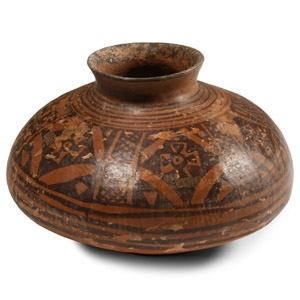
Indus Valley Mehrgarh Terracotta Jar with Geometric Design
3rd-2nd millennium B.C.Sold for (Inc. bp): £143
Squat in profile with flared mouth and low foot; painted horizontal rings to the equator and neck, geometric panels to the shoulder. 369 grams total, 14 cm
From a collection acquired on the UK art market from various auction houses and collections mostly before 2000. From an important Cambridgeshire estate; thence by descent. -
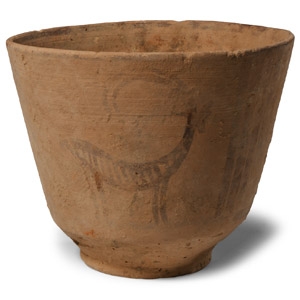
Indus Valley Decorated Terracotta Cup
3rd-2nd millennium B.C.Sold for (Inc. bp): £65
With slightly flared profile, carination and dimple base, painted frieze of ibexes to the sidewall. 142 grams, 80 mm high
Acquired 1980-2015. Ex Abelita family collection. -
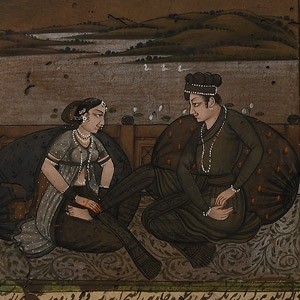
India Framed Watercolour Painting
Early 20th century A.D.Sold for (Inc. bp): £13
With watercolour scene of a man and woman seated against cushions in a courtyard, river meandering through hilly landscape beyond, panels of text above and below, green border around the whole; set in a glazed wooden frame. 714 grams, 33 x 26 cm
Fair condition.
Acquired on the UK art market, 1980s-1990s. The Woodbridge collection of Indo-Persian art.
