Loading, please wait...

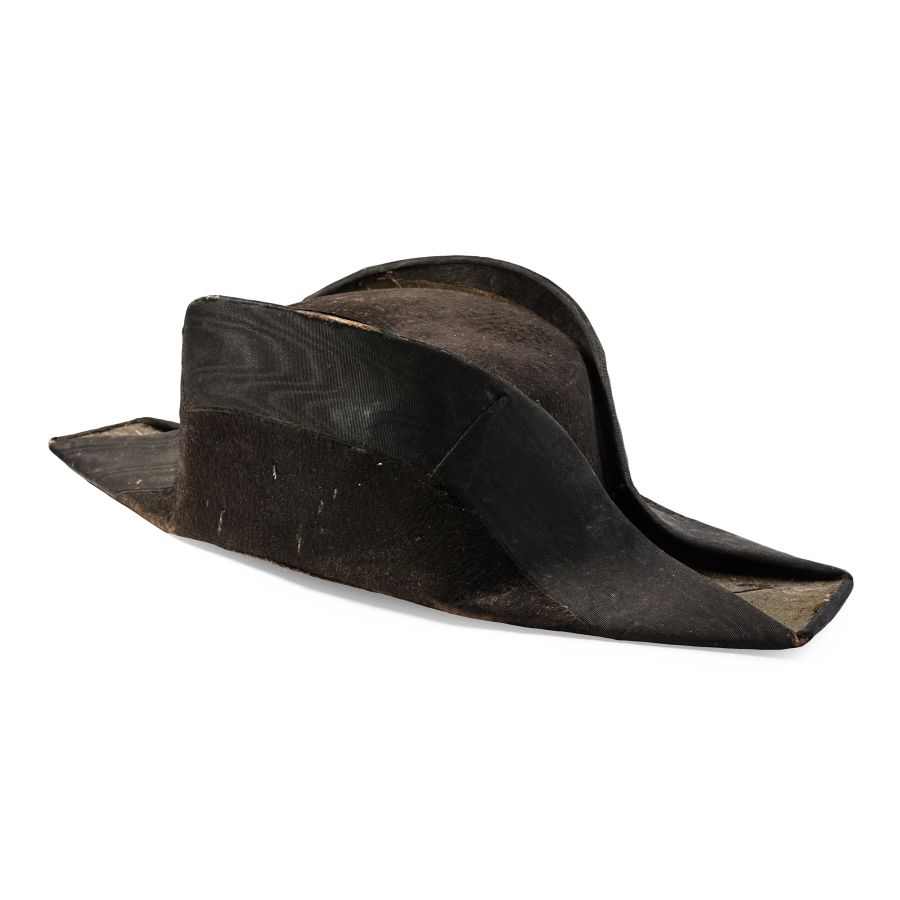
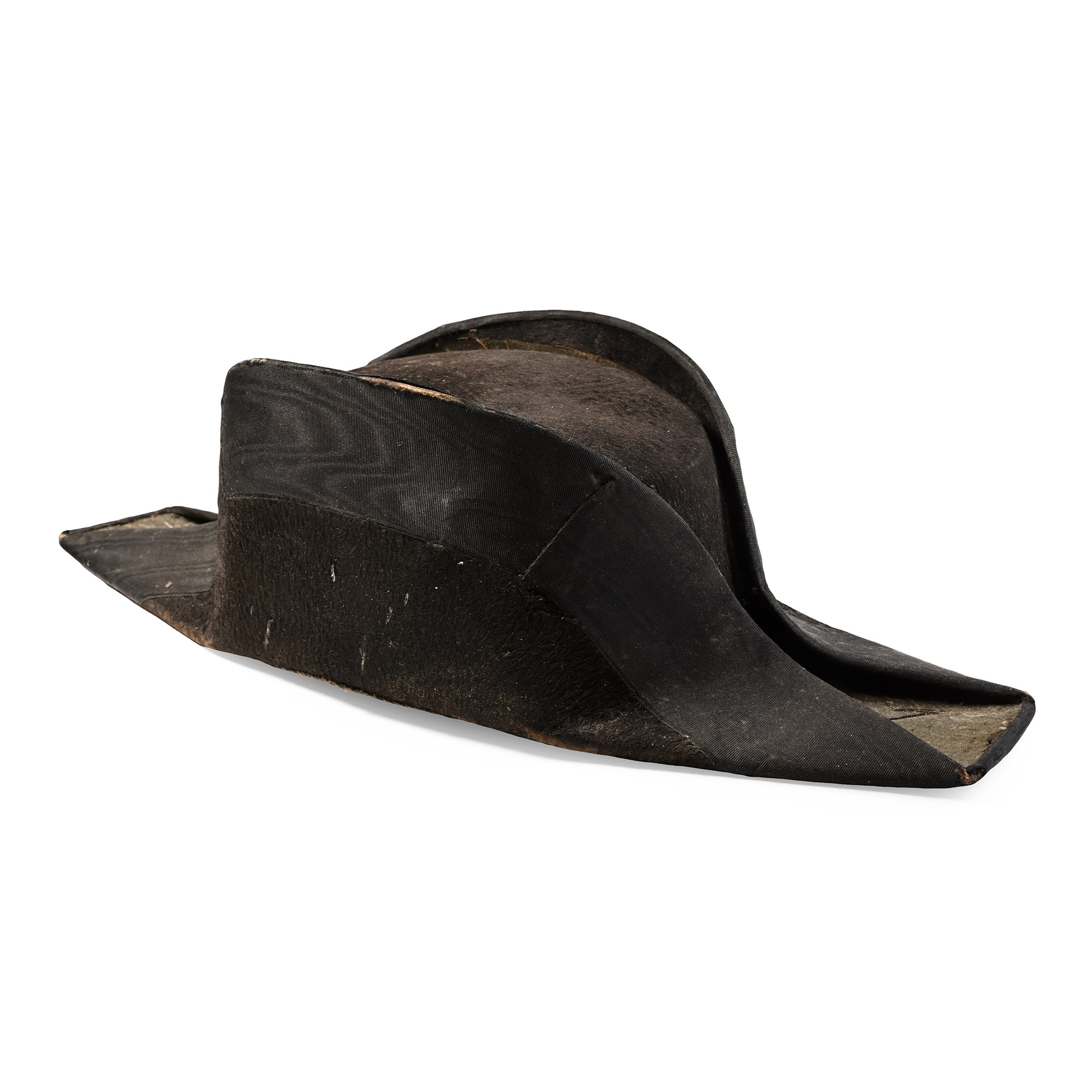
Imperial German Naval Officer's Hat by W. Lucas Hoflieferant Berlin Imperial German Naval Officer's Hat by W. Lucas Hoflieferant Berlin Imperial German Naval Officer's Hat by W. Lucas Hoflieferant Berlin
Use mousewheel to zoom in and out, click to enlarge
Details

LOT 1967

Imperial German Naval Officer's Hat by W. Lucas Hoflieferant Berlin

19TH CENTURY A.D.

15 1/8 in. (172 grams, 38.5 cm).

Cocked hat with maker's badge inside. [No Reserve]

Provenance

From the private collection of author and historian Dr DeWitt Bailey, one of the global authorities on the confederate army in the US civil war; thence by descent to his grandson.

CONDITION
VETTING:

TimeLine Auctions follows a vetting process to ensure the authenticity and legality of all items, reinforcing our commitment to integrity and responsible trading. Each antiquity, antique, and coin lot undergoes thorough examination by a vetting committee of at least ten external specialists, professional trade association members, scientists, and archaeologists: Our Vetting Process


AUCTIONS:

TimeLine is a leading auction house specialising in antiquities, ancient art, collectables, natural history, coins, medals, and books. Our auctions offer museums, collectors, historians, and enthusiasts the opportunity to acquire unique and historically significant pieces.

LOT 1967

Imperial German Naval Officer's Hat by W. Lucas Hoflieferant Berlin

Sold for (Inc. bp): £72

Print page

RELATED LOTS
  • Bronze Replica of Venus Rosewater Dish Platter
    Bronze Replica of 'Venus Rosewater Dish' Platter
    20th century A.D.

    Sold for (Inc. bp): £26

    Copying the original 'Temperantia' made by Francois Briot in the 16th century, showing scenes of classical mythology and having a large central medallion with Sophrosyne; three mounting lugs on the reverse. 2.17 kg, 38.6 cm


    From a private Tyneside collection, formed since the early 2000s.

    Lot Details

  • Icon with Riza of Entrance to Jerusalem
    Icon with Riza of Entrance to Jerusalem
    20th century A.D.

    Sold for (Inc. bp): £39

    Painted on a wooden board and covered with a brass riza, with mounting panel to the reverse, depicting the entrance of Christ in Jerusalem on Palm Sunday riding a donkey; crowd within the city wall; followers of Christ in the gateway; Christ with golden nimbus and letters 'ω', 'C' reversed and 'Н'; Greek script title above reciting: 'Η ΒΑΙΦΟΡΟC (Βαϊοφόρος)' (the one who is riding the mule); the background with rocks, tree and the walls of Jerusalem; arabesque decoration to the borders and corners; accompanied by a wooden stand. 762 grams total including stand, Icon: 30.5 x 22.5 cm


    Ex David Miller, Hemel Hempstead, London, UK. From the private collection of a West London, UK, gentleman, formed since the early 2000s.

    The scene represents a well-known part of the Gospels that describe the entry of Jesus into Jerusalem. He makes a grand entrance into the city on a donkey to fulfil the prophecy of Zechariah, “Tell the city of Zion, look, your king is coming to you! He is humble and rides on a donkey and on a colt, the foal of a donkey.” The scene is synthetized in the Greek expression ‘Βαϊοφόρος'.

    Lot Details

  • Museum Reproduction of Tudor Silver Henry Darnley Ring
    Museum Reproduction of Tudor Silver Henry Darnley Ring
    20th century A.D.

    Sold for (Inc. bp): £13

    With roundels to the shoulders, broad plaque with 'MH' monogram in a ring of billets; inner face with heater shield bearing a lion rampant over '1565' and 'HENRI DARNLEY' legend. 5.48 grams, 21.20 mm overall, 17.66 mm internal diameter (approximate size British O 1/2, USA 7 1/4, Europe 15.61, Japan 15)


    Acquired on the UK art market. Property of a Suffolk, UK, gentleman.

    The tale of Mary Queen of Scots is a fascinating story of the Queen of Scotland which began when Mary was born on the 8th of December 1542. The only legitimate surviving child of King James V of Scotland, Mary ascended to the throne when she was only six days old upon her father’s death. Most of Mary’s childhood was spent in France, whilst Scotland was ruled by regents, due to an agreement proposed by King Henry II of France that Mary would eventually marry his son, Dauphin Francis. On 4 April 1558, Mary signed a secret agreement bequeathing Scotland and her claim to England to the French crown if she died, and twenty days later, she married the Dauphin at Notre Dame de Paris. When Henry II died in 1559, fifteen-year-old Francis and sixteen-year-old Mary became King and Queen of France. Upon her husband’s death in 1560 and now a widow, Mary returned to Scotland the following year. As a devout Catholic, she was regarded with suspicion by many of her subjects, as well as by her cousin Elizabeth I, the Queen of England. Mary then turned her attention to finding a new husband and in 1565, she married her half cousin, Henry Stewart, known as Lord Darnley, and they went on to have a son, James VI and I. In 1567, an explosion occurred at Darnley’s residence and he was found murdered, thought to have been smothered, in the garden. Lord Bothwell was believed to have orchestrated his murder; however was later acquitted and after abducting her, married Mary a month later. Following an uprising against the couple, Mary was forced to abdicate the throne in favour of her son and fled to England to seek protection from the Queen. This began the journey of Mary’s well known imprisonment and eventual execution by her cousin, Queen Elizabeth at Fotheringhay Castle. In 1820, a gold ring was found within the ruins of Fotheringhay Castle and was said to be the wedding ring of Mary, Queen of Scots and Lord Darnley. The bezel engraved with initials ‘M’ and ‘H’ and a true lover’s knot. The reverse engraved with the Royal Arms of Scotland, the lion rampant beneath a crown and the inscription ‘Henry. L’ Darnley’.

    Lot Details

Stay up-to-date with the latest from TimeLine Auctions by joining our mailing list