
Loading, please wait...
LOT 0993
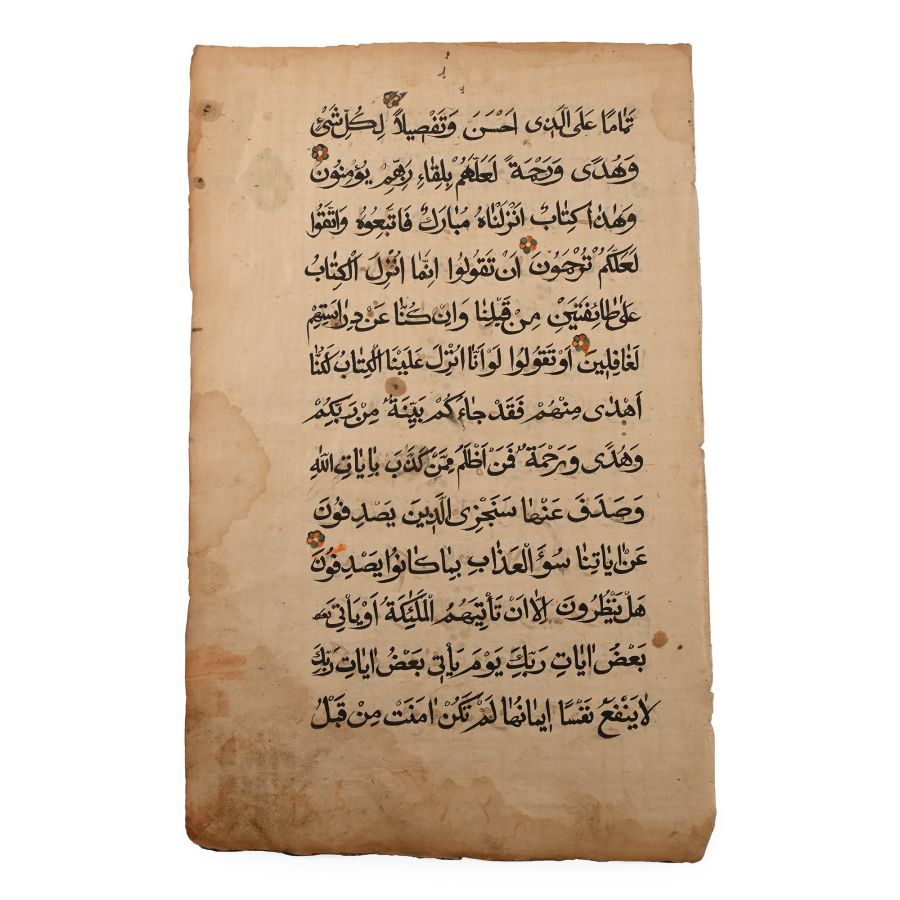
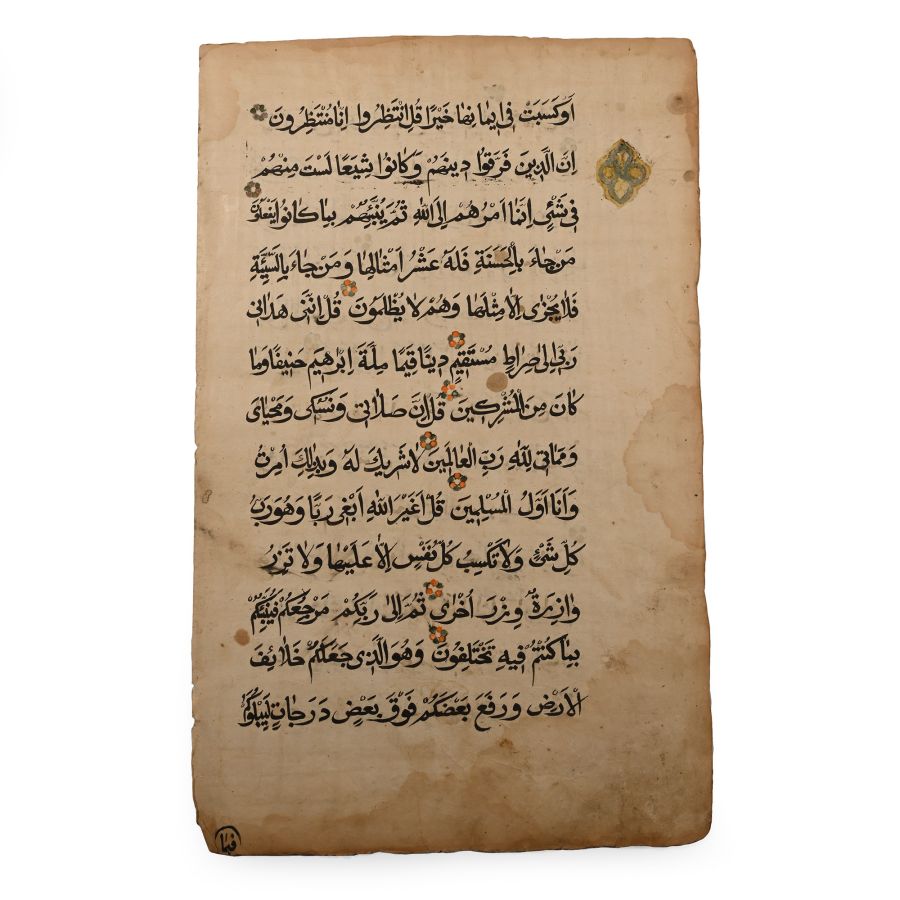
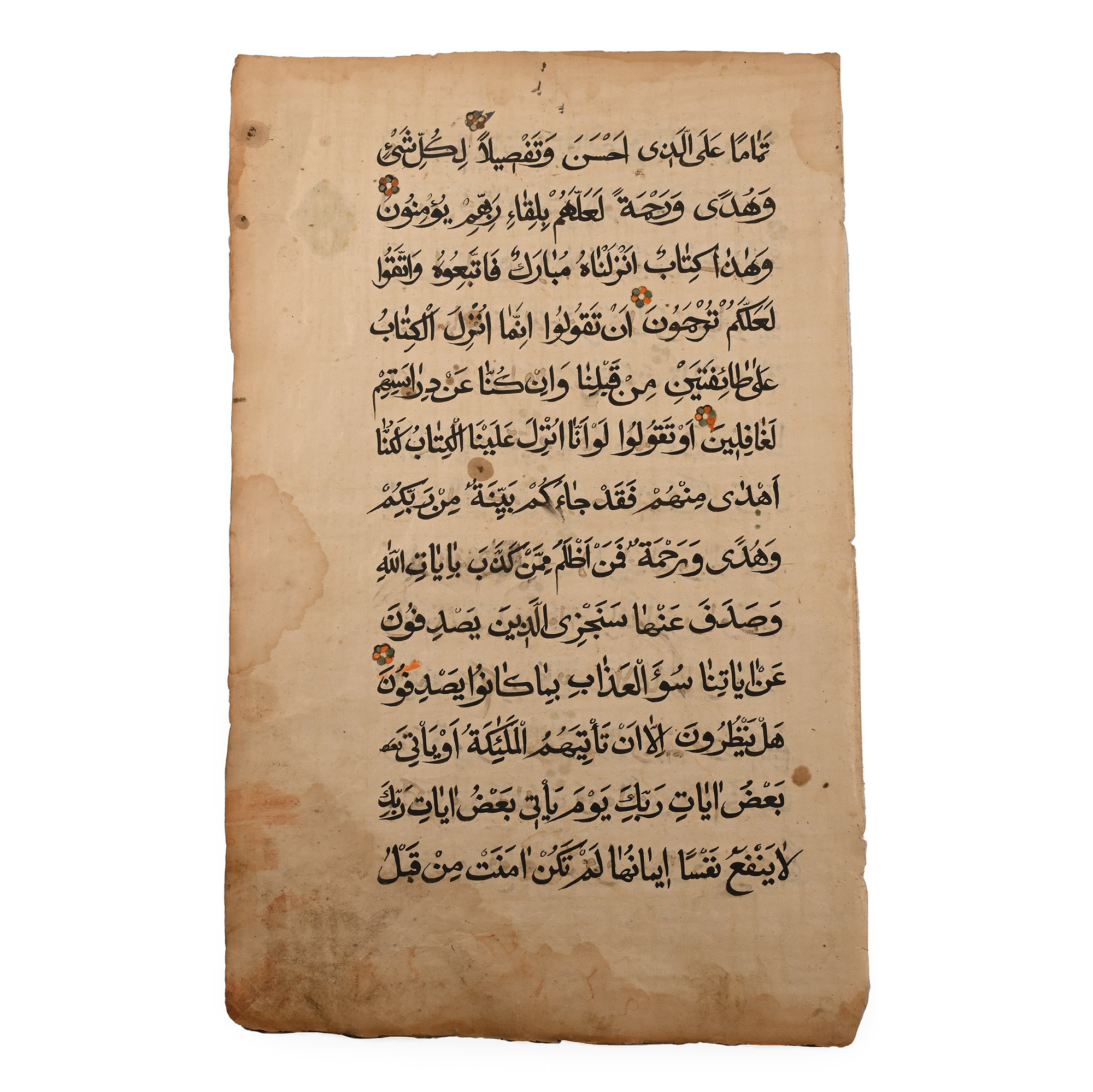
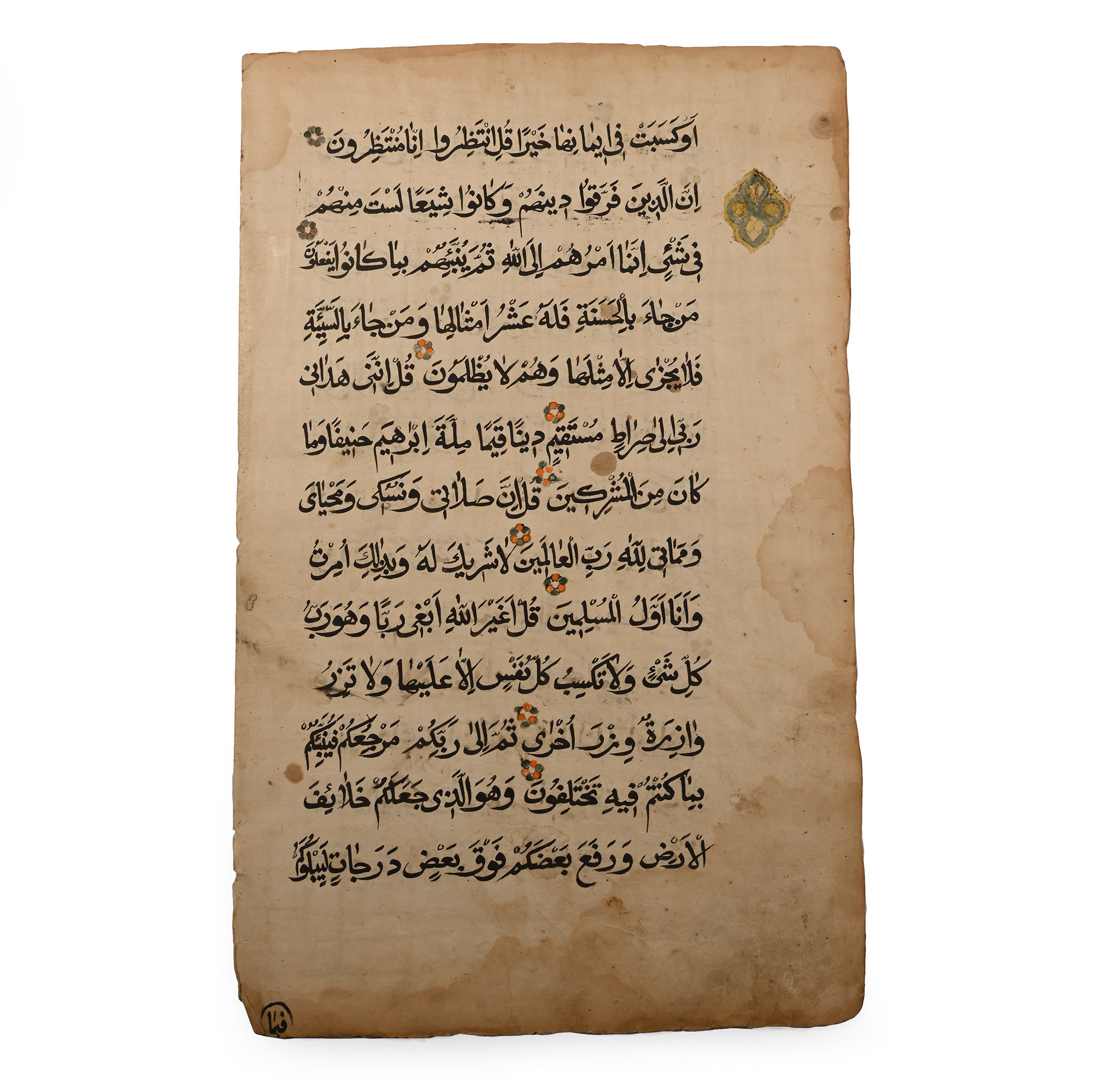
Illuminated Quran Page
18TH-19TH CENTURY A.D.
13 1/2 x 8 1/2 in. (4 grams, 34.2 x 21.5 cm).
Loose paper leaf with handwritten text in Naskh script; polychrome rosettes and other detailing to the text, quatrefoil in the margin. [No Reserve]
ProvenanceEx M. Cummings collection, UK, 1980s-1990s.
This lot has been cleared against the Art Loss Register database, and is accompanied by an illustrated lot declaration signed by the Head of the Antiquities Department, Dr Raffaele D'Amato.
TimeLine Auctions follows a vetting process to ensure the authenticity and legality of all items, reinforcing our commitment to integrity and responsible trading. Each antiquity, antique, and coin lot undergoes thorough examination by a vetting committee of at least ten external specialists, professional trade association members, scientists, and archaeologists: Our Vetting Process
AUCTIONS:
TimeLine is a leading auction house specialising in antiquities, ancient art, collectables, natural history, coins, medals, and books. Our auctions offer museums, collectors, historians, and enthusiasts the opportunity to acquire unique and historically significant pieces.
-
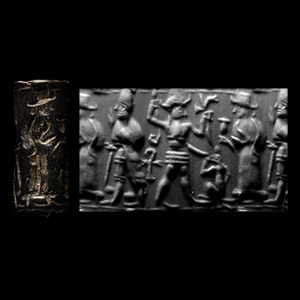
Western Asiatic Haematite Cylinder Seal
2nd-1st millennium B.C.Estimate: £400 - 600 (+bp*)
Opening Bid: £200
With frieze of standing robed figures, central figure wearing a headdress with cow horns and wielding an axe(?), an ankh behind him; before him a standing figure wearing long robes and a cow-horn headdress, holding a vessel in his hands and a snake(?) suspended around his neck, a small crouching figure between the two figures; behind a standing figure holding one hand up in adoration and wearing a tall conical headdress, holding a short staff in the other hand; supplied with a museum-quality impression. 2.28 grams, 19 mm
From the 'S' collection, acquired 1970-1990s. The collection was seen and studied by W.G. Lambert, late Professor of Assyriology at the University of Birmingham, 1970-1993. This lot has been cleared against the Art Loss Register database, and is accompanied by an illustrated lot declaration signed by the Head of the Antiquities Department, Dr Raffaele D'Amato. -
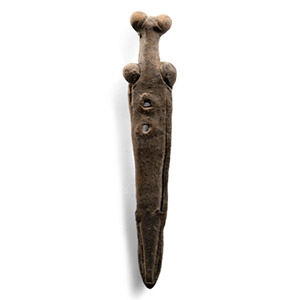
Western Asiatic Votive Terracotta Dagger
1st century B.C.Estimate: £400 - 600 (‡+bp*)
Opening Bid: £180
Model dagger with two-lobed pommel and similar guard, applied bands to the scabbard, two attachment points. 5.83 grams, 88 mm
Japanese private collection, assembled in the 1990s. Acquired from the above in 2010. European private collection. This lot has been cleared against the Art Loss Register database, and is accompanied by an illustrated lot declaration signed by the Head of the Antiquities Department, Dr Raffaele D'Amato. -
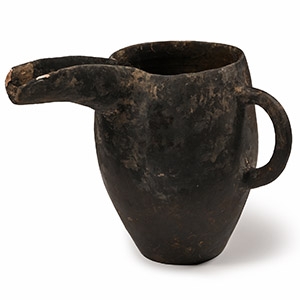
Amlash Terracotta Vessel with Spout
1st millennium B.C.Sold for (Inc. bp): £33
Comprising a piriform body with flat base, two loop handles and a long, curving U-shaped spout extending from the rim. 415 grams, 16 cm wide
From a Mayfair gallery 1990s. Ex London, UK, collection. This lot has been cleared against the Art Loss Register database, and is accompanied by an illustrated lot declaration signed by the Head of the Antiquities Department, Dr Raffaele D'Amato.
