
Loading, please wait...

LOT 0067
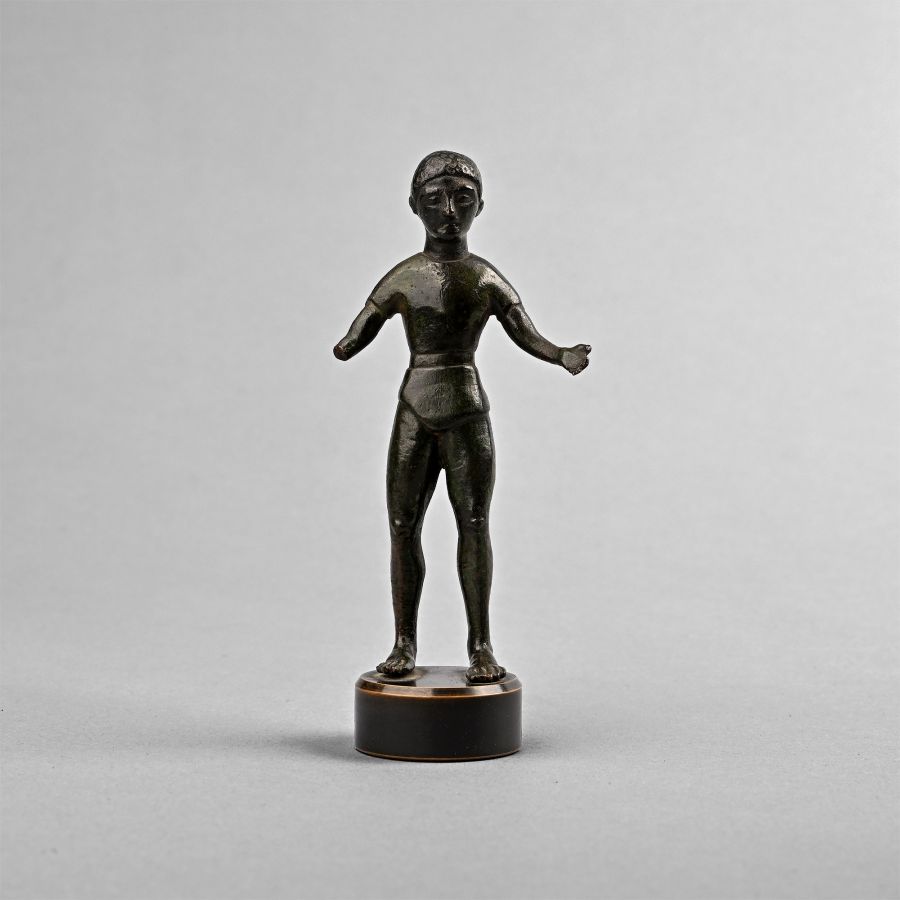
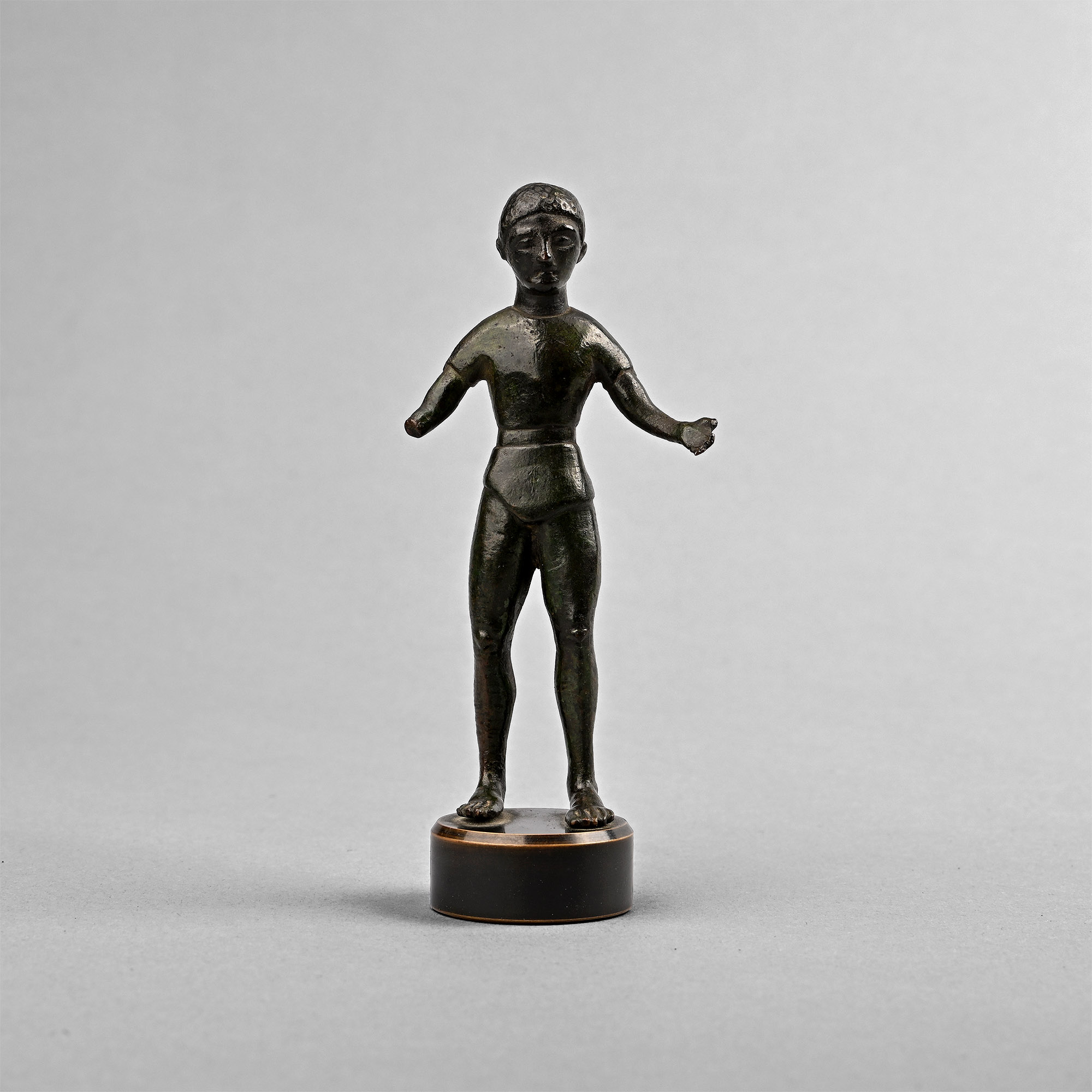
Iberian Bronze Statuette of Youth
6TH-4TH CENTURY B.C.
4 5/8 in. (215 grams total, 11.8 cm high including stand).
Youthful male standing, wearing a belted tunic with apron, arms spread wide, barefoot, bare-headed with short textured hair; mounted on a custom-made base.
ProvenancePrivate collection, Paris, France, assembled in the 1950s-1960s.
with Tessier-Sarrou & Associés, Paris, 2015.
European private collection.
Accompanied by a copy of an Art Loss Register certificate, no.S00107108.
Accompanied by a copy of French cultural export passport no.167803.
This lot has been checked against the Interpol Database of stolen works of art and is accompanied by a search certificate number no.12650-264612.
Cf. similar in the Metropolitan Museum of Art under accession no.19.192.49.
CONDITIONTimeLine Auctions follows a vetting process to ensure the authenticity and legality of all items, reinforcing our commitment to integrity and responsible trading. Each antiquity, antique, and coin lot undergoes thorough examination by a vetting committee of at least ten external specialists, professional trade association members, scientists, and archaeologists: Our Vetting Process
AUCTIONS:
TimeLine is a leading auction house specialising in antiquities, ancient art, collectables, natural history, coins, medals, and books. Our auctions offer museums, collectors, historians, and enthusiasts the opportunity to acquire unique and historically significant pieces.
LOT 0067
Iberian Bronze Statuette of Youth
Estimate £3,000 - 4,000€3,480 - 4,640 (for guidance only)$4,050 - 5,400 (for guidance only)
-
Daunian Ceramic Bell-Shaped Idol
7th-6th century B.C.Estimate: £400 - 600 (‡+bp*)
Opening Bid: £222
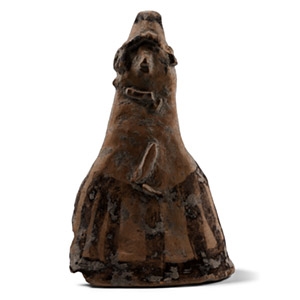
A male figure with a bell-shaped lower body painted with horizontal stripes, an applied phallus above; column-like upper body and head with stylised facial features, tall conical headdress. 140 grams, 12.5 cm
Private collection of Mrs R.K., Basel, Switzerland. with Galerie Rhéa, Zurich, Switzerland. -
Scythian Gold Applique
4th-3rd century B.C.Sold for (Inc. bp): £975
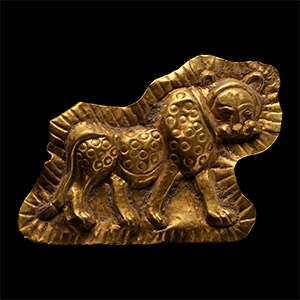
Sheet-gold panel with repoussé advancing leopard motif surrounded by a hatched border. 1.94 grams, 44 mm
Ex Mayfair gallery, London, UK, pre 1999. -
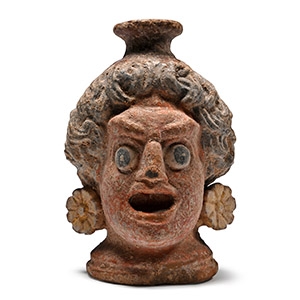
Greek Terracotta Head of an Actor
Circa 4th century B.C.Estimate: £3,500 - 4,500 (‡+bp*)
Opening Bid: £1,750
An expressive polychrome vase formed as the head of an actor wearing rosette earrings, open mouth and applied pupils, short neck with everted rim above and a small strap handle to the rear. 69.3 grams, 75 mm
Ex Louis-Gabriel Bellon, France, (1819-1899). with Galerie Rhéa, Zurich, Switzerland. This lot has been checked against the Interpol Database of stolen works of art and is accompanied by a search certificate number no.12667-236389.
